





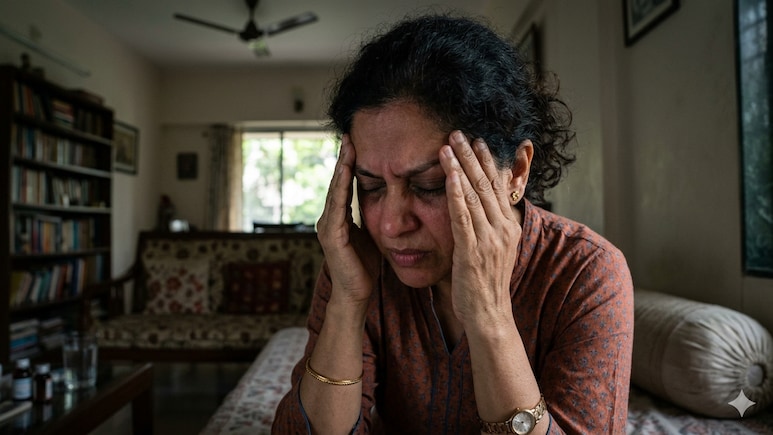
- Migraine affects nearly one in four people in India, severely impacting lives
- Aura signals a migraine attack, causing vision disturbances and intense pain
- Patients often misdiagnosed, leading to ineffective treatments and rebound headaches
One of the hardest things to watch as a neurologist is seeing a patient's world shrink. That is what migraine does to nearly one in four people in India. It actively steals major life milestones while simultaneously chipping away at the comfort of a normal routine. I am not talking about the inconvenience of a bad headache but about a full-scale neurological assault.
A patient of mine, Sarah (name changed), a successful graphic designer in her mid-thirties, came to me looking completely exhausted. She had been told for years that it was just "stress," and she believed it. Her story was not just about 'bad headaches'; it was about a decade lost to fear, darkness, and the constant, creeping dread of the next attack.
She described it perfectly; it is not the pain that is the worst part, it is the warning. She would be at work, designing and suddenly a blind spot would appear in her vision, shimmering like hot pavement. She knew it would be just minutes before her life would come to a standstill.
That is aura. And for Sarah, it was the prelude to a one-sided, throbbing pain so intense that the scent of her own favorite coffee would make her vomit. The only escape was a dark, silent room. For hours. Sometimes days. How can one run a career, raise a family, or even just enjoy a sunny afternoon when that is your reality?
For over a decade, her condition went undiagnosed. It was dismissed as stress or a sinus infection or just something women get. She had been powering through with ibuprofen, taking more until the pills themselves were causing rebound headaches. Unfortunately, it is a trap that I see patients fall into all the time. By the time they get to a Specialist, they are not just fighting the migraine; they are fighting a secondary condition caused by a desperate attempt to treat the first.
Also Read: Chronic Pain And Migraines Can Get Worse Due To Heat: Doctors Share Why And Tips To Manage
Rescue Plan For Migraine Patients
We live in a genuinely momentous time for migraine treatment. From a clinical standpoint, the paradigm has shifted dramatically from simply managing pain to achieving pain freedom and significantly improving patients' quality of life. Advances in our understanding of migraine have highlighted the role of key inflammatory proteins such as calcitonin gene-related peptide (CGRP). Newer CGRP-targeted therapies act as remarkable tools, helping patients find relief more effectively and with fewer side effects that limited older medications. Having a reliable "rescue" plan is the first step in breaking the cycle of fear that migraine creates.
Preventive Therapy Matters More?
But truly effective care cannot be just reactive. The second transformative approach is preventive therapy. The objective is to reduce the frequency, severity, and duration of attacks over the long term. For patients who experience migraines frequently, a tailored preventive plan is essential. This is where we see the most profound changes. When we can reduce a patient's migraine days from eight or ten a month down to just two or three, we are not just treating a disease; we are giving them back weeks of their lives.
Also Read: Neurologist Explains: Why Headaches Spike In Summer And How To Manage Them
Of course, a prescription is never the whole story. The most successful outcomes arise when this modern therapeutic approach is integrated into a holistic plan that includes lifestyle management like trigger management, consistent sleep, regular meals, and stress modulation. The new treatment plan, however, is the key. It provides stability and freedom that allows patients to successfully engage in other healthy habits.
With advanced treatment options, we can move beyond just managing a chronic illness and give patients the tools to truly control it. This can help many, perhaps millions, reclaim their productive lives.
(By Dr Tridib Chandra Chowdhury, Senior Consultant Neurologist, Manipal Hospital & Fortis Hospital, Kolkata)
Disclaimer: The opinions expressed within this article are the personal opinions of the author. NDTV is not responsible for the accuracy, completeness, suitability, or validity of any information on this article. All information is provided on an as-is basis. The information, facts or opinions appearing in the article do not reflect the views of NDTV and NDTV does not assume any responsibility or liability for the same.
Track Latest News Live on NDTV.com and get news updates from India and around the world

