

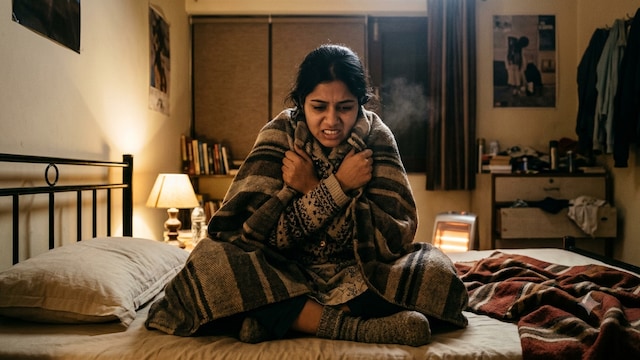
People living with chronic health conditions and those who are vulerable socioeconomically may face a disproportionately high risk of dying during extreme weather condition, a new study has found. Published in Nature Communications, the research suggests that people experiencing both clinical and social vulnerabilities had more than ten times the excess mortality associated with extreme heat and cold compared with people who had neither vulnerability or only one of them. The findings come at a time when climate change risk is increasing the frequency and intensity of extreme heat events across the world. While extreme cold events have generally become less frequent, cold exposure continues to pose a public health risk. The researchers warn that rising global temperatures could increase the overall proportion of deaths attributable to extreme temperatures, making it particularly important to protect people who are already at higher risk.
People With Existing Health Conditions May Be More Vulnerable To Extreme Temperatures
The human body has several mechanisms to maintain a stable internal temperature. During hot weather, it relies on sweating and vasodilation, a process in which blood vessels widen to release heat. In cold conditions, blood vessels narrow through vasoconstriction, while the body generates additional heat through thermogenesis. However, these temperature-regulating mechanisms may not work as effectively in people with certain chronic illnesses. Conditions affecting the heart, kidneys and metabolic system, among others, can make it harder for the body to cope with extreme temperatures. Social circumstances can further increase these risks. People living in poorly insulated homes, for instance, may struggle to stay warm during cold spells or keep indoor temperatures comfortable during heatwaves. Limited access to air conditioning, heating and other protective resources can add to the physiological stress caused by extreme weather.
Although previous research has examined the health effects of temperature extremes, evidence on how clinical and socioeconomic vulnerabilities interact at an individual level has remained limited.
Study Analysed Data From More Than 2.8 Lakh Adults
For the study, researchers examined individual-level health data from 275,763 adults in Finland and 9,681 adults in the UK. They assessed mortality during periods of extreme heat and cold, comparing it with mortality during periods of moderate temperatures. The Finnish dataset also allowed researchers to examine emergency hospital visits.
Clinical vulnerability was identified using 17 chronic diseases or disease groups, including diabetes, cancer, cardiovascular conditions and kidney diseases. Social vulnerability was assessed using neighbourhood-level deprivation scores. This distinction is important because the study did not directly measure participants' individual incomes, housing quality or access to heating and cooling.
The researchers classified extreme temperatures as the hottest and coldest 2.5 per cent of seven-day periods in each population. The study observded that in Finland, seven-day average temperatures above 20.4 degree C were associated with a 1.4-fold higher mortality rate than moderate temperatures. Periods with average temperatures below -11.4 degree C were associated with a 1.1-fold higher mortality rate, although the estimated increase in cold-related mortality was not statistically significant in the main analysis. The UK cohort showed broadly similar patterns.
Combined Clinical And Social Vulnerabilities Raised Excess Mortality More Than Tenfold
One of the study's most significant findings was the difference in temperature-associated mortality among people with multiple vulnerabilities. In both the Finnish and UK datasets, excess mortality associated with extreme heat and cold combined was more than tenfold higher among people with both clinical and socioeconomic vulnerabilities than among those with neither vulnerability or only one. This particularly vulnerable subgroup included 15,326 participants in Finland and 354 in the UK. The researchers noted that the relatively small number of participants in the UK subgroup meant some estimates were less precise.
Interestingly, the difference in excess temperature-associated mortality was relatively small between people with neither vulnerability and those with only one. The substantially higher risk emerged among people experiencing both.
The findings suggest that chronic illness and socioeconomic disadvantage may interact, leaving some individuals less able to withstand the physical stress of extreme weather. However, the researchers cautioned that the study identified associations rather than proving that temperature exposure directly caused the additional deaths.
Climate Change Could Increase The Proportion Of Temperature-Related Deaths
The researchers also used climate modelling to examine how future global warming could affect temperature-related mortality. Their projections suggested that an increase in global warming from approximately 1 degree C to 4 degree C could raise the proportion of deaths attributable to extreme temperatures from around 1 per cent to more than 5 per cent in both Finland and the UK.
This represents an approximately fivefold increase. The researchers suggested that rising heat-related mortality could outweigh any reductions in deaths associated with extreme cold as the climate warms.
The projections highlight a growing public health concern: even if severe cold events become less frequent, the increase in heat exposure could lead to a greater overall mortality burden.
Extreme Weather Also Affected Emergency Hospital Visits
The study also examined non-fatal health outcomes in Finland. Compared with moderate-temperature periods, extreme cold was associated with a 9 per cent lower rate of emergency hospital visits, while extreme heat was associated with a 5 per cent higher rate. The researchers observed stronger associations among people with both clinical and social vulnerabilities than among those with neither vulnerability or only one. However, fewer hospital visits during cold periods should not necessarily be interpreted as evidence of fewer health problems. Severe weather can restrict people's ability to travel or access emergency services, potentially reducing the number of recorded hospital visits.
Higher temperatures were also associated with increased emergency visits for infectious and digestive diseases. The researchers suggested that warmer conditions could support the survival and multiplication of certain pathogens, although the study did not directly investigate this mechanism.
Emergency visits for skin, neurological and mental health disorders, as well as external causes, also increased with higher temperatures. Heat and humidity can contribute to dehydration and skin problems, while the researchers discussed possible links between heat exposure, changes in behaviour and accidents. These explanations remain potential mechanisms rather than findings directly established by the study.
Why Socioeconomic Disadvantage Matters During Heatwaves And Cold Spells
The relationship between socioeconomic vulnerability and temperature-related mortality may partly reflect differences in people's ability to protect themselves from extreme weather. People living in deprived neighbourhoods may have fewer resources to install or use air conditioning, heating systems and other protective equipment. Poor insulation and ventilation can also make indoor environments uncomfortable or unsafe during temperature extremes. For someone with an existing cardiovascular, respiratory or kidney condition, prolonged exposure to extreme heat or cold may add physiological stress and worsen an already fragile health condition. However, the researchers did not directly assess individual housing conditions or access to temperature-control facilities. These factors were proposed as possible explanations for the observed association between neighbourhood deprivation and excess mortality.
The findings also suggest that extreme temperatures may act as acute stressors, potentially accelerating deaths among people who already face a high short-term risk of mortality.
What Are The Limitations Of The Study?
The findings should be interpreted in the context of the populations included in the research. The study examined cohorts from Finland and the UK, and its results may not apply in the same way to countries with substantially different climates, housing conditions, healthcare systems and socioeconomic structures.The datasets were also based on occupational cohorts and were not fully representative of the general populations of either country. People who were unemployed or had work-related disabilities were excluded at baseline. As a result, the participants may have been healthier than the wider population, potentially leading to an underestimation of the health effects of extreme temperatures. The climate projections also did not account for future demographic changes, evolving environmental conditions or adaptations such as improved housing, cooling infrastructure and public health interventions. These factors could influence how populations respond to rising temperatures.
Finally, the research was observational. It identified associations between temperature exposure, vulnerability and health outcomes, but cannot establish a direct cause-and-effect relationship.
Why The Findings Matter
The study highlights the need for public health measures that account for differences in people's ability to cope with extreme weather. Heatwave and cold-weather preparedness plans may need to prioritise people with chronic illnesses who also face socioeconomic disadvantages. Improving access to cooling and heating, strengthening housing insulation and ventilation, and ensuring vulnerable communities can access timely medical care could help reduce exposure-related risks. As global temperatures continue to rise, protecting people who face overlapping health and social disadvantages may become an increasingly important part of climate adaptation and public health planning.
Disclaimer: This content including advice provides generic information only. It is in no way a substitute for a qualified medical opinion. Always consult a specialist or your own doctor for more information. NDTV does not claim responsibility for this information.