

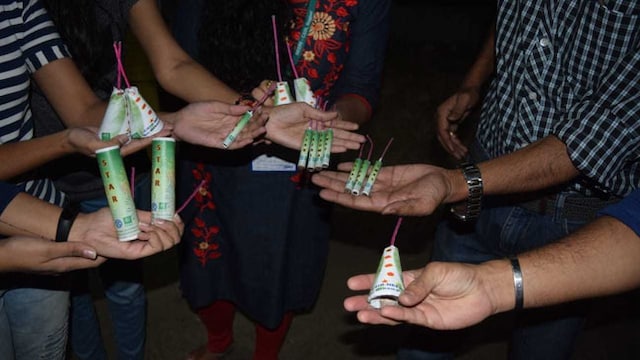
Diwali, the festival of lights, is a time of joy, celebration and togetherness. However, every year, the festivities are accompanied by a familiar environmental challenge: a sudden deterioration in air quality due to firecrackers. With growing awareness of the health consequences of air pollution, green crackers have emerged as a supposedly safer alternative to conventional fireworks. But an important question remains: Are green crackers genuinely safe for our lungs, particularly for people already living with chronic respiratory diseases? The answer requires a closer look at the science of air pollution, the changing environmental landscape in our cities and the vulnerability of people with compromised respiratory health.
1. Green Crackers: Less Pollution Does Not Mean No Pollution
Green crackers have been developed to reduce the environmental impact of conventional fireworks through modified chemical formulations and improved combustion efficiency. According to CSIR-National Environmental Engineering Research Institute (CSIR-NEERI), these formulations are designed to reduce particulate emissions by at least 30% compared with conventional crackers, although the reduction varies with the formulation and product.
The reduction in harmful chemicals, including the elimination or substitution of certain toxic metals such as barium, is an encouraging development. However, green crackers are not pollution-free. Their combustion continues to release particulate matter (PM2.5 and PM10), sulphur dioxide, nitrogen oxides and other respiratory irritants. Of particular concern are fine and ultrafine particles, which can penetrate deep into the respiratory tract, reach the smaller airways and alveolar regions, and trigger inflammation. Therefore, while green crackers represent progress in reducing emissions, they should not be considered completely safe for respiratory health.
2. The Bigger Concern: Diwali Celebrations in an Already Polluted Environment
The respiratory impact of firecrackers cannot be considered in isolation. It must be understood against the background of India's increasingly challenging environmental conditions.
- Many urban centres are already exposed to multiple sources of air pollution, including:
- Vehicular emissions and traffic-related particulate pollution.
- Industrial emissions and construction-related dust.
- Road dust and open burning of municipal waste.
- Biomass and crop-residue burning in certain regions.
- Indoor air pollution from cooking fuels, incense and other combustion sources.
During periods of low wind speed, atmospheric stagnation and unfavourable dispersion conditions, pollutants can accumulate close to the ground. In several Indian cities, seasonal meteorological conditions further aggravate this problem. Diwali-related emissions add another layer to this existing pollution burden. When thousands of crackers are burst across residential neighbourhoods over a short period, the cumulative exposure can become substantial, even when individual crackers produce fewer emissions. For people with healthy lungs, this may result in temporary irritation. For those with underlying respiratory disease, however, even a relatively short period of intense exposure can have significant clinical consequences.
3. Why Are Patients with Chronic Respiratory Diseases Particularly Vulnerable?
This is perhaps the most important aspect of the discussion. Patients with chronic respiratory diseases often have reduced pulmonary reserve, persistent airway inflammation, impaired mucociliary clearance or abnormal gas exchange. Their respiratory systems may already be functioning close to their physiological limits. An additional environmental insult during Diwali can destabilise an otherwise controlled respiratory condition.
3.1 Asthma
Patients with asthma have hyperresponsive airways. Exposure to particulate matter, smoke and irritant gases can trigger bronchoconstriction, airway inflammation and increased mucus production. This may present as:
- Increased wheezing and cough.
- Chest tightness and nocturnal symptoms.
- Increased requirement for rescue inhalers.
- Acute exacerbations requiring systemic corticosteroids or emergency treatment.
- Even patients with apparently well-controlled asthma should avoid direct exposure to firecracker smoke.
3.2 Chronic Obstructive Pulmonary Disease (COPD)
Patients with COPD are particularly susceptible because of pre-existing airway inflammation, mucus hypersecretion, impaired mucociliary clearance and reduced ventilatory reserve. Exposure to firecracker emissions may aggravate breathlessness, increase cough and sputum production, and precipitate acute exacerbations. In patients with advanced COPD, even a modest deterioration in respiratory function can result in significant hypoxaemia, emergency visits and hospitalisation.
3.3 Bronchiectasis and Chronic Bronchitis
Patients with bronchiectasis already have impaired airway clearance and chronic airway infection or inflammation. Environmental pollutants can further irritate the airways, increase cough and sputum production, and potentially aggravate an already unstable clinical condition.
3.4 Interstitial Lung Disease (ILD)
Patients with ILD have compromised pulmonary reserve because of restrictive lung physiology and impaired alveolar gas exchange. Although the precise relationship between short-term firecracker exposure and acute ILD deterioration requires further research, avoiding concentrated smoke and particulate exposure is a sensible precaution, particularly in patients with advanced disease or oxygen dependence.
3.5 Pulmonary Hypertension and Advanced Respiratory Failure
Patients with pulmonary hypertension, chronic hypoxaemia and advanced respiratory failure have limited cardiopulmonary reserve. Increased respiratory distress and hypoxaemia may impose additional stress on an already compromised cardiopulmonary system. These patients should be particularly cautious during periods of poor air quality. The wider evidence consistently demonstrates that particulate pollution can aggravate respiratory symptoms, increase airway inflammation and contribute to emergency visits and hospital admissions among people with pre-existing lung disease.
4. Children and Older Adults: An Additional Vulnerable Population
Children have developing lungs and relatively narrower airways. Exposure to pollutants can cause airway irritation, coughing, wheezing and worsening of pre-existing asthma. Older adults are also vulnerable because of age-related reductions in pulmonary reserve and the frequent coexistence of COPD, cardiovascular disease and other chronic illnesses. Pregnant women deserve particular attention because maternal exposure to air pollution has also been associated with adverse pregnancy outcomes. It is therefore important to make Diwali celebrations inclusive and safe for people of all age groups.
5. Practical Recommendations: How Can We Protect Our Lungs This Diwali?
The objective should not merely be to promote green crackers but to minimise overall exposure to air pollution.
5.1 For the General Population
Prefer celebrations with traditional lamps, rangoli, music and community activities rather than extensive firecracker use. Avoid standing close to areas where crackers are being burst. Monitor local Air Quality Index (AQI) levels and avoid unnecessary outdoor activities during periods of severe pollution. Keep windows and doors closed during periods of intense outdoor smoke. Use a properly sized HEPA air purifier indoors, if available. Avoid adding to indoor pollution through smoking, incense or excessive combustion-based decorations.
5.2 Special Precautions for Patients with Pre-existing Chronic Respiratory Diseases
This group requires a more proactive approach.
1. Maintain disease control: Continue prescribed inhalers, nebulisation and other maintenance medications. Do not discontinue regular treatment because symptoms are currently stable.
2. Follow an asthma or COPD action plan: Patients should know how to recognise early deterioration and when to seek medical attention.
3. Keep rescue medication accessible: Ensure that prescribed reliever inhalers and other emergency medications are readily available. Check inhaler technique and medication expiry dates.
4. Avoid outdoor exposure during peak pollution: Patients with moderate-to-severe asthma, COPD, bronchiectasis and ILD should preferably remain indoors during periods of heavy firecracker activity.
5. Use appropriate respiratory protection: A well-fitting N95 respirator may reduce inhalation of particulate matter when outdoor exposure is unavoidable. However, it does not protect against gaseous pollutants and should not be considered a substitute for avoiding exposure.
6. Maintain prescribed oxygen therapy: Patients dependent on supplemental oxygen should continue their prescribed oxygen support. Oxygen equipment must be kept well away from flames, sparks and firecracker activity because oxygen increases fire risk.
7. Recognise warning symptoms early: Increasing breathlessness, persistent wheezing, chest tightness, a significant increase in cough or sputum, or reduced oxygen saturation compared with the patient's usual baseline should prompt medical assessment. Severe breathlessness, confusion or bluish discolouration requires emergency attention.
Importantly, patients should not independently increase corticosteroids, antibiotics or other medications without following their treating physician's advice.
6. A Word About Air Quality Monitoring
Air pollution is not always visible. The absence of an obvious haze does not necessarily indicate clean air. Checking the AQI through reliable monitoring platforms can help families make informed decisions about outdoor activities. This is especially relevant in metropolitan cities where traffic, construction activity and other pollution sources contribute to background particulate exposure. For patients with chronic respiratory diseases, personal symptom monitoring should complement environmental monitoring. A seemingly acceptable AQI does not guarantee that an individual patient will tolerate smoke exposure.
7. The Way Forward: From Greener Crackers to Healthier Celebrations
Green crackers represent an important technological and regulatory step towards reducing the environmental impact of fireworks. However, we must avoid creating a false sense of security by equating reduced emissions with respiratory safety.
The challenge is particularly significant in India, where air pollution is already a major public health concern. For individuals with asthma, COPD, bronchiectasis, ILD and other chronic respiratory disorders, preventing avoidable environmental exposure is an important component of disease management.
As pulmonologists, our message should be clear: The best way to protect the lungs is not simply to replace conventional crackers with green crackers, but to reduce exposure to firecracker smoke altogether.
This Diwali, let us celebrate the festival in its true spirit through lights, lamps, traditional decorations, family gatherings and community celebrations. A little less smoke can mean a lot more breathing comfort. Because the real brightness of Diwali lies not in the fireworks illuminating our skies, but in the health and happiness of the people around us.