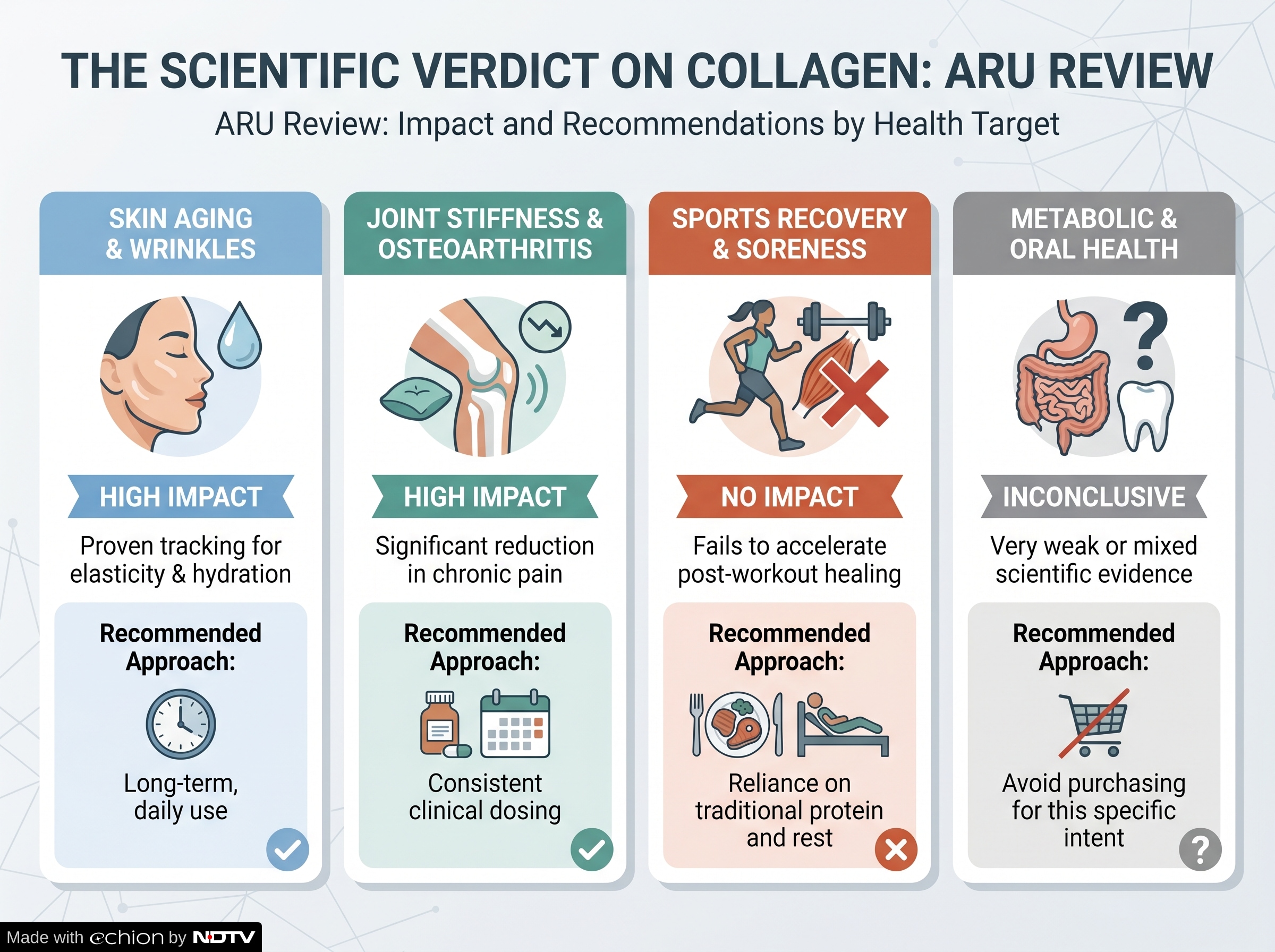
- Collagen supplements effectively improve skin elasticity and hydration with consistent use
- Long-term collagen intake significantly reduces pain and stiffness in osteoarthritis patients
- Collagen shows no meaningful benefits for muscle recovery or athletic performance
From trendy powder tubs filling up social media feeds to morning smoothies infused with targeted peptides, collagen has officially transitioned from a niche vanity product to a daily wellness staple. But for years, the medical community and consumers alike have wondered around the exact same question: Does collagen actually work, or is the investment simply going to be a waste? Marketing campaigns routinely promise youthfulness, glowing skin, and durable joints, yet concrete scientific clarity has been frustratingly difficult to pin down.
Collagen supplements are widely used for anti-ageing and bone health, but clinical outcomes depend heavily on consistency. A landmark umbrella review published in the Aesthetic Surgery Journal Open Forum has completely shifted the conversation. Led by researchers at Anglia Ruskin University (ARU), this massive research project stands as the largest and most comprehensive collagen study of 2026. By rigorously analysing data from 16 systematic reviews and 113 randomised controlled trials, scientists tracked the health outcomes of nearly 8,000 participants globally.
What The Massive Collagen Review Found
The comprehensive review examined thousands of patients to determine exactly where collagen is effective and where it is not. The data indicate that oral collagen is highly effective in maintaining structural health, but has minimal impact on athletic performance. Natural collagen production begins to decline as early as the mid-20s, resulting in structural changes in the dermal layers.
The meta-analysis proved that oral supplementation directly counters this decline, showing measurable, visible improvements in skin elasticity and hydration, effectively making it a credible intervention for those seeking the best collagen for anti-ageing skin health.
Beyond skin care, the review delivered excellent news for those tracking osteoarthritis symptoms. For millions dealing with chronic knee or hip stiffness, the question of whether collagen supplements really work for joints can now be answered with a data-backed yes.
The study confirmed that consistent, long-term collagen intake significantly reduces pain and eases physical stiffness. Here is exactly how it helps:
- Skin Improvement: Proved highly consistent, meaningful tracking for skin moisture, firmness, and dermal density.
- Joint Care: Confirmed a statistically significant reduction in chronic pain and joint stiffness for osteoarthritis patients.
- Dosing Dependency: Highlighted that benefits vanish without daily, long-term commitment; short or intermittent cycles do not yield results.
Also Read: Is Topical Collagen Really Effective? Dermatologist Answers
Why This Matters To Indians
For the rapidly expanding Indian wellness market, these findings carry critical practical implications. A vast majority of the Indian population follows a vegetarian diet, meaning they naturally miss out on primary dietary collagen sources like bone broth or meat.
Consequently, many rely on plant-based "collagen builders". It is essential to understand that these vegetarian alternatives do not contain actual collagen; instead, they provide individual amino acids and vitamin C to support internal synthesis.
For those purchasing actual collagen, ensuring it consists of hydrolysed marine or bovine peptides is crucial to achieving the joint and skin structural benefits verified by global research.
Also Read: When The Body Attacks Its Own Joints: Autoimmune Arthritis Explained
Does Collagen Work For Fitness And Muscle Recovery?
The research specifically evaluated the intersection of collagen peptides and compared it with sports performance recovery, and found no meaningful improvements in muscle healing or post-exercise soreness.
While collagen offers structural support for overall muscle mass during ageing, it acts as a slow-burning structural brick, not a fast-acting recovery aid for sports performance.
Furthermore, claims regarding gum disease, metabolic health, or cosmetic dental benefits were found to be entirely mixed or inconclusive. Here is what collagen doesn't work for:
- Zero Muscle Recovery: Showed no clinical acceleration in repairing muscle tissue fatigue or reducing post-workout soreness.
- No Metabolic Shift: Found zero conclusive evidence linking oral collagen use to improved metabolic rates or fat loss.
- Unproven Claims: Revealed that dental health and internal organ wellness benefits remain completely unsupported by data.
The verdict presents a clear case of division: collagen is far from a magical cure-all, but for individuals tracking the specific collagen supplements' benefits for skin elasticity and hydration or looking for targeted collagen for joint pain relief, the science finally provides concrete validation. But it is key that you don't start consuming collagen over the counter, as whether it is being absorbed in the body or not can't be determined unless you notice visible improvements or potential side effects. You need to consult a nutritionist or dietician for a safe consumption approach to collagen.
Disclaimer: This content including advice provides generic information only. It is in no way a substitute for a qualified medical opinion. Always consult a specialist or your own doctor for more information. NDTV does not claim responsibility for this information.