

)
Alzheimer's disease is often thought of as a disease of ageing. But increasingly, researchers and clinicians are asking another question: why does it affect women disproportionately? Women and men can both develop Alzheimer's disease and other forms of dementia, but women account for a greater share of people living with dementia. Globally, women also bear much of the unpaid caregiving burden.
The World Health Organization (WHO) says women experience a disproportionate burden of dementia and provide around 70% of care hours for people living with the condition.
Age is a major part of the explanation. Women generally live longer than men, and dementia risk increases sharply with advancing age. In India, female life expectancy at birth was about 74 years in 2023, according to World Bank data.
But longevity alone may not tell the whole story. "Alzheimer's disease and other forms of dementia affect both men and women, but women account for a greater proportion of people living with the condition," says Dr Annu Aggarwal, Consultant, Neurology and Specialist Cognitive and Behavioural Neurology, Kokilaben Dhirubhai Ambani Hospital and Medical Research Institute, Mumbai.
Emerging research points towards an interaction between biological factors, hormonal changes, genetics, vascular health and social circumstances.
Why are women more affected by Alzheimer's?
1. Women live longer
The strongest established risk factor for Alzheimer's disease is age. Since women tend to live longer, more women reach the ages at which dementia becomes increasingly common.
But researchers caution against treating longevity as the entire explanation. Dr Aggarwal says, "However, longevity alone does not explain the gender gap." Dementia is already a major global health challenge. WHO estimates that 57 million people were living with dementia in 2021, with nearly 10 million new cases every year. Alzheimer's disease is the most common form, contributing to an estimated 60-70% of dementia cases.
2. Menopause may be part of the puzzle
The transition through perimenopause and menopause brings substantial hormonal changes, particularly a decline in oestrogen. Researchers are investigating whether this transition may influence brain ageing and Alzheimer's risk. Brain-imaging studies have found differences in Alzheimer's-related biomarkers around the menopausal transition, although menopause itself should not be described as a proven direct cause of Alzheimer's disease.
The timing may matter because midlife is increasingly recognised as an important period for dementia prevention. "Menopause and the hormonal changes that occur during this stage of life are also being studied for their possible relationship with cognitive decline," says Dr Aggarwal. This remains an evolving area of research, particularly around how hormonal changes interact with genetics, vascular health and other risk factors.
3. Could genes affect women differently?
One of the best-established genetic risk factors for late-onset Alzheimer's disease is the APOE e4 variant. Having an APOE e4 copy does not mean a person will definitely develop Alzheimer's. It increases risk, but Alzheimer's is influenced by multiple genetic and environmental factors.
Some research suggests the effect of APOE e4 may differ by sex. A large longitudinal analysis found that among cognitively healthy participants, APOE e4 carriers had a stronger association with progression to mild cognitive impairment or Alzheimer's disease in women than in men.
A meta-analysis involving nearly 58,000 participants also investigated sex differences in Alzheimer's risk associated with APOE genotype, adding to evidence that sex may modify genetic risk.
Dr Aggarwal says, "Evidence suggests that the effect of this genetic risk may be stronger in women than in men." However, APOE testing is not a simple prediction tool. Carrying APOE e4 does not mean dementia is inevitable, nor does not carrying it guarantee protection.
4. Heart health is brain health
Some of the factors that raise cardiovascular risk also affect the brain. High blood pressure, diabetes, obesity, high cholesterol, smoking and physical inactivity have all been linked to increased dementia risk. The 2024 Lancet Commission on dementia identified 14 potentially modifiable risk factors, adding untreated vision loss and high LDL cholesterol to previously identified factors. It estimated that addressing these factors could potentially prevent or delay around 45% of dementia cases at a population level.
This does not mean an individual can guarantee they will avoid Alzheimer's by changing their lifestyle. But it does reinforce the importance of managing vascular and metabolic health throughout life. Dr Aggarwal recommends paying attention to blood pressure, blood sugar and weight, alongside physical activity, nutrition, social engagement and cognitive stimulation.
5. The social side of women's brain health
There is another dimension that can be easy to overlook. Women in some communities have historically had less access to education, cognitively stimulating employment and adequate nutrition. These experiences can influence cognitive reserve, the brain's ability to cope with age-related or disease-related changes.
The Lancet Commission identifies lower educational attainment as one of the modifiable factors associated with dementia risk. This does not mean education or employment determines whether a woman develops Alzheimer's. Rather, it highlights why brain health needs to be viewed across the entire life course, rather than beginning only after memory problems appear.
Why Alzheimer's may be missed in women
Diagnosis can also be complicated by women's social roles. A woman who manages a household may compensate for subtle memory or organisational problems for some time. Similarly, a working woman may develop strategies to mask early difficulties at work and home. "Early cognitive changes can also remain unnoticed when a woman is primarily managing domestic responsibilities," Dr Aggarwal says.
Delayed recognition matters because dementia is progressive, and early assessment can identify potentially reversible contributors to cognitive symptoms, address cardiovascular risk factors and help families plan future care. Early changes can include repeatedly forgetting recent information, difficulty finding words, problems managing familiar tasks, becoming confused in familiar places or changes in behaviour and mood.
Not every memory lapse is Alzheimer's. Sleep problems, depression, medication effects, thyroid disorders, nutritional deficiencies and other medical conditions can also affect cognition and should be evaluated by a doctor.
Women are also carrying the caregiving burden
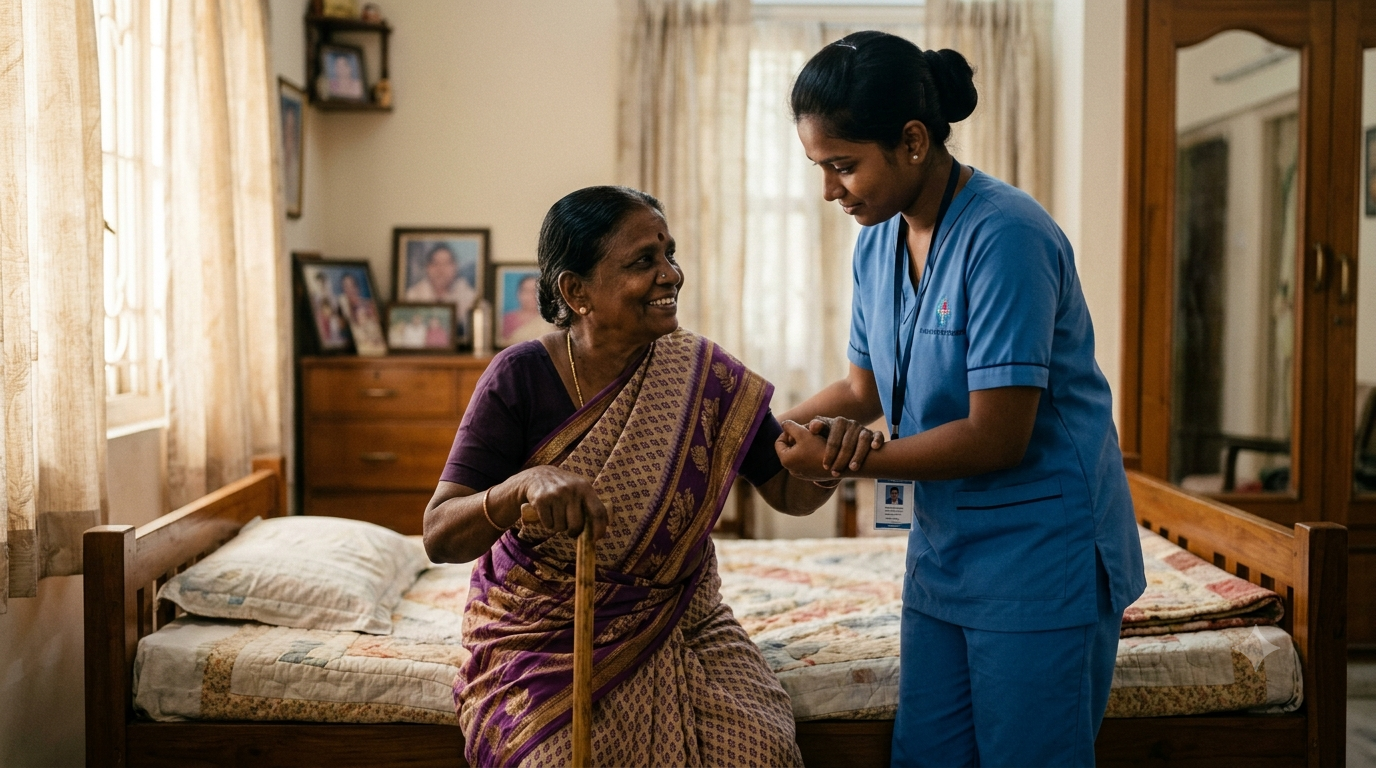
The Alzheimer's story does not end with the woman who develops dementia. Women are also disproportionately likely to become caregivers for relatives with dementia, as wives, daughters and daughters-in-law. WHO estimates that women provide about 70% of informal dementia care hours globally. That unpaid responsibility can have physical, psychological, social and financial consequences. Caregiving may involve reducing working hours, leaving employment or taking on substantial household responsibilities alongside caring for a relative.
WHO specifically highlights the need for information, training, psychological support and social and financial assistance for dementia caregivers. Its iSupport programme is designed to help carers develop practical skills while also protecting their own wellbeing.
What can women do for better brain health?
There is no guaranteed way to prevent Alzheimer's disease. But several steps can support healthier ageing.
Dr Aggarwal recommends:
- Keeping blood pressure and blood sugar under control
- Maintaining a healthy weight
- Staying physically active
- Eating a nutritionally adequate diet
- Remaining socially connected
- Keeping the brain cognitively engaged
- Addressing vascular risk factors early
- Seeking medical assessment for persistent changes in memory or daily functioning
The message from dementia research is increasingly that prevention begins long before old age. The Lancet Commission's findings suggest that opportunities to reduce risk exist from early life through midlife and older age.
Alzheimer's disease may be most visible in older age, but its story for women begins much earlier. Longer life expectancy helps explain why more women live with dementia, but it does not fully explain the difference. Genetics, hormonal transitions, cardiovascular health, education, social circumstances and access to timely healthcare may all intersect.
At the same time, women are often carrying another part of the dementia burden, caring for those who develop it. As Dr Aggarwal puts it, "Alzheimer's disease, therefore, needs to be viewed not only as a neurological condition but also as a women's health concern." That means treating women's brain health as a lifelong priority, from education and cardiovascular prevention to recognising cognitive changes early and supporting the women who provide care.
Disclaimer: This content including advice provides generic information only. It is in no way a substitute for a qualified medical opinion. Always consult a specialist or your own doctor for more information. NDTV does not claim responsibility for this information.