

)
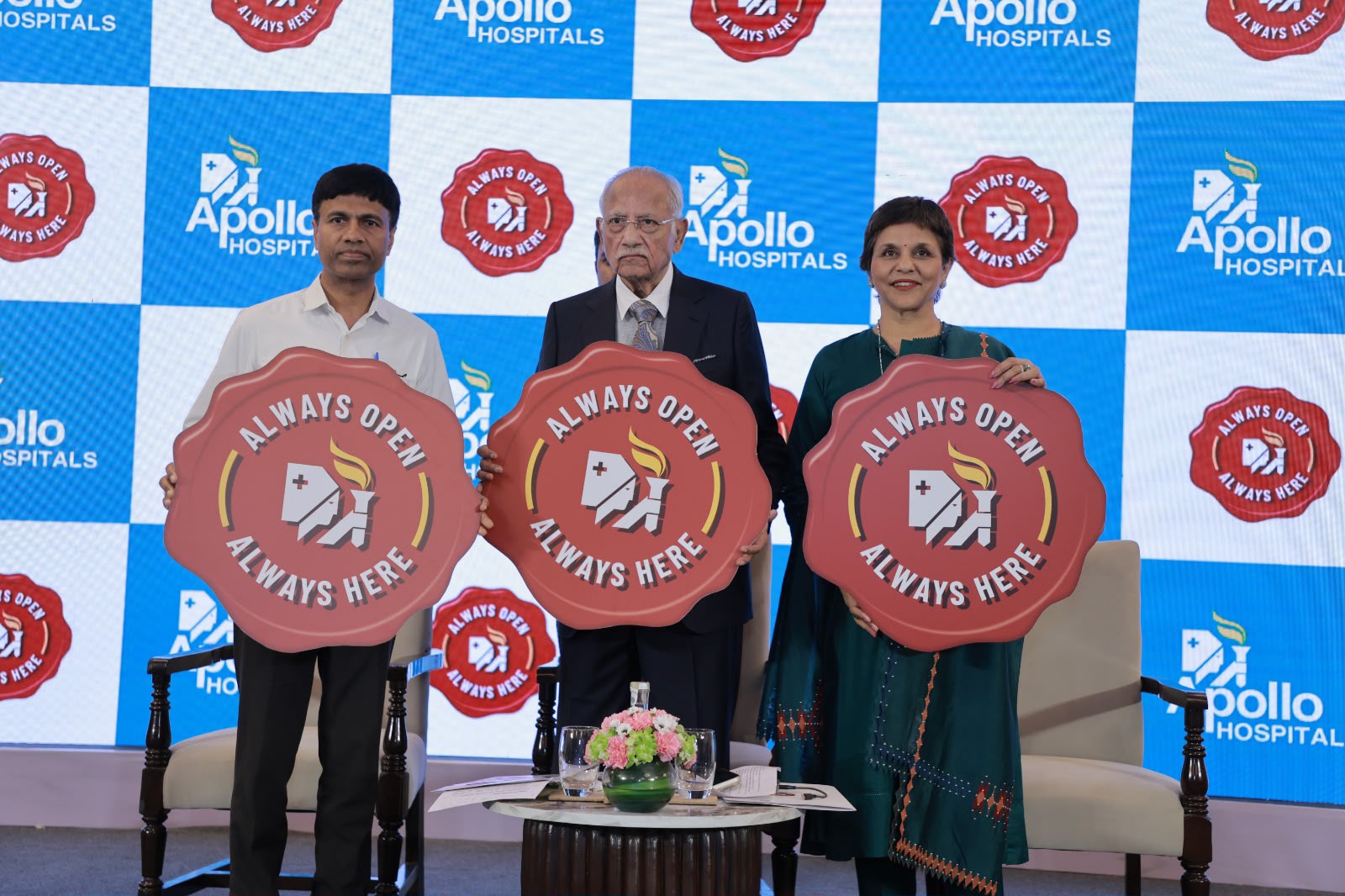
Apollo Hospitals will open its outpatient departments on Sundays as well, extending routine healthcare services to all seven days of the week in a move aimed at tackling one of the less visible barriers to timely medical care, the lack of time.
The initiative, called 'Always Open. Always Here.', will allow patients to access specialist consultations, diagnostic tests, preventive health checks, follow-up consultations and scheduled procedures on Sundays, although the services available and timings will depend on individual hospitals.
"This should have started long ago," Apollo Founder and Chairman Dr Prathap C Reddy said. "People lose their lives simply because an illness goes undiagnosed. Young people can suffer fatal heart attacks from conditions that could potentially have been detected earlier through regular check-ups, and Sunday is often the most convenient day for people to undergo them."
Dr Reddy said healthcare services needed to reflect the way people live and work.
"Hotels, airlines and shops remain open on Sundays. Healthcare should also be accessible when people have the time to seek it. I hope this brings about a major change, encourages other hospitals to adopt the practice and eventually becomes a global norm," he said.
Apollo's emergency, critical care and inpatient services are already available round-the-clock. The new initiative expands that seven-day access to non-emergency care, potentially allowing working professionals and others who find it difficult to take weekday leave to seek medical attention on their day off.
The move comes as Apollo's own health screening data points to a large burden of undiagnosed chronic disease. Its Health of the Nation 2026 report, based on screenings of more than 2.5 million people across its network, found that nearly 26 per cent were hypertensive and 23 per cent diabetic despite showing no symptoms.
That data, Apollo says, highlights the limitations of a healthcare system in which people primarily seek care only after symptoms appear.
What Patients Can Access On Sundays
The Sunday OPD services will include specialist consultations, preventive health checks, diagnostics, follow-up appointments and scheduled procedures. Patients will not necessarily have access to every service at every Apollo facility, with availability dependent on hospital-specific schedules and staffing.
The group said the initiative will largely use its existing clinical infrastructure, doctors, diagnostic facilities, operating theatres and coordinated care teams.
For a working professional, that could mean completing a health check without taking a day off. For families, it could allow planned diagnostic tests or specialist consultations for elderly relatives to be scheduled over the weekend.
Apollo Executive Vice Chairperson Dr Preetha Reddy said the objective was to make healthcare fit more easily into patients' lives.
"For working professionals, caregivers and families managing multiple responsibilities, having the option to see a doctor, complete a health check or continue follow-up care on a Sunday can make a meaningful difference," she said.
Focus On Prevention As Heart Disease Affects Younger Indians
Dr Reddy also linked the initiative to the growing concern over cardiovascular disease among younger Indians.
"When I came to India, I used to see many young people with heart problems. We now know that South Asians are more prone to heart disease at a younger age, which means we have to be much more careful about prevention and early detection," he said.
The Apollo chairman referred to research suggesting that historical and genetic factors contribute to the higher cardiovascular risk among South Asians, arguing that prevention and regular screening therefore need greater emphasis.
The group's screening data also showed the scale of the challenge beyond heart disease, with obesity, hypertension, diabetes and metabolic disorders increasingly being detected among Indians during their most productive years.
Government Push Towards Preventive Healthcare
Apollo's Sunday-care initiative comes alongside a broader government push to expand primary and preventive healthcare.
Dr M Srinivas, Member of NITI Aayog, said more than 90 crore people have an Ayushman Bharat Health Account, with efforts underway to onboard health information for electronic health records.
He also pointed to more than 1.8 lakh Ayushman Arogya Mandirs operating across the country, where screening and primary care services include checks for hypertension, diabetes and cancer.
The Employees' State Insurance Corporation covers around 15 crore people and has mandatory health check-ups as part of its system.
Dr Srinivas stressed the importance of government-private sector cooperation in expanding preventive healthcare and reducing the disease burden through stronger primary care.
India is also not facing a shortage of doctors in terms of numbers, with around 1.26 lakh doctors graduating last year. The larger challenge, he said, is to ensure that primary healthcare works effectively enough to prevent people from progressing to serious disease requiring expensive, high-end treatment.
Pricing Debate: Apollo Says Healthcare Cannot Be Reduced To Room Rates
Apollo's announcement comes amid a parallel debate over hospital costs after a parliamentary panel recommended a three-star benchmark for hospital room charges and surgery rates.
Apollo Joint Managing Director Sangita Reddy said the affordability debate needs to take into account access, quality, insurance coverage, primary care and the role of technology.
"Healthcare is a complex subject and cannot be reduced simply to price. Universal primary healthcare, health education, insurance, quality care and the use of technology and AI all have to come together," she said.
She also emphasised the need for greater collaboration between public and private healthcare providers to expand access while maintaining quality.
From Emergency Care To Routine Care
Apollo was founded by Dr Prathap C Reddy in Chennai in 1983 and has since grown into an integrated healthcare network with more than 10,400 beds across 76 hospitals, over 7,100 pharmacies, more than 300 clinics and over 2,400 diagnostic centres.
The group says its Master Health Check programme has reached more than 30 million people, while its Apollo ProHealth platform uses AI-based risk prediction to identify potential health risks earlier.
The Sunday OPD initiative represents a shift in the way Apollo is approaching access - from ensuring that hospitals are available when a patient is in crisis to making it easier for patients to seek care before a crisis occurs.
The bigger test will be whether an additional day of outpatient access actually encourages more people to undergo preventive screening and seek earlier treatment, and whether the model is adopted by other healthcare providers.
Disclaimer: This content including advice provides generic information only. It is in no way a substitute for a qualified medical opinion. Always consult a specialist or your own doctor for more information. NDTV does not claim responsibility for this information.