

)
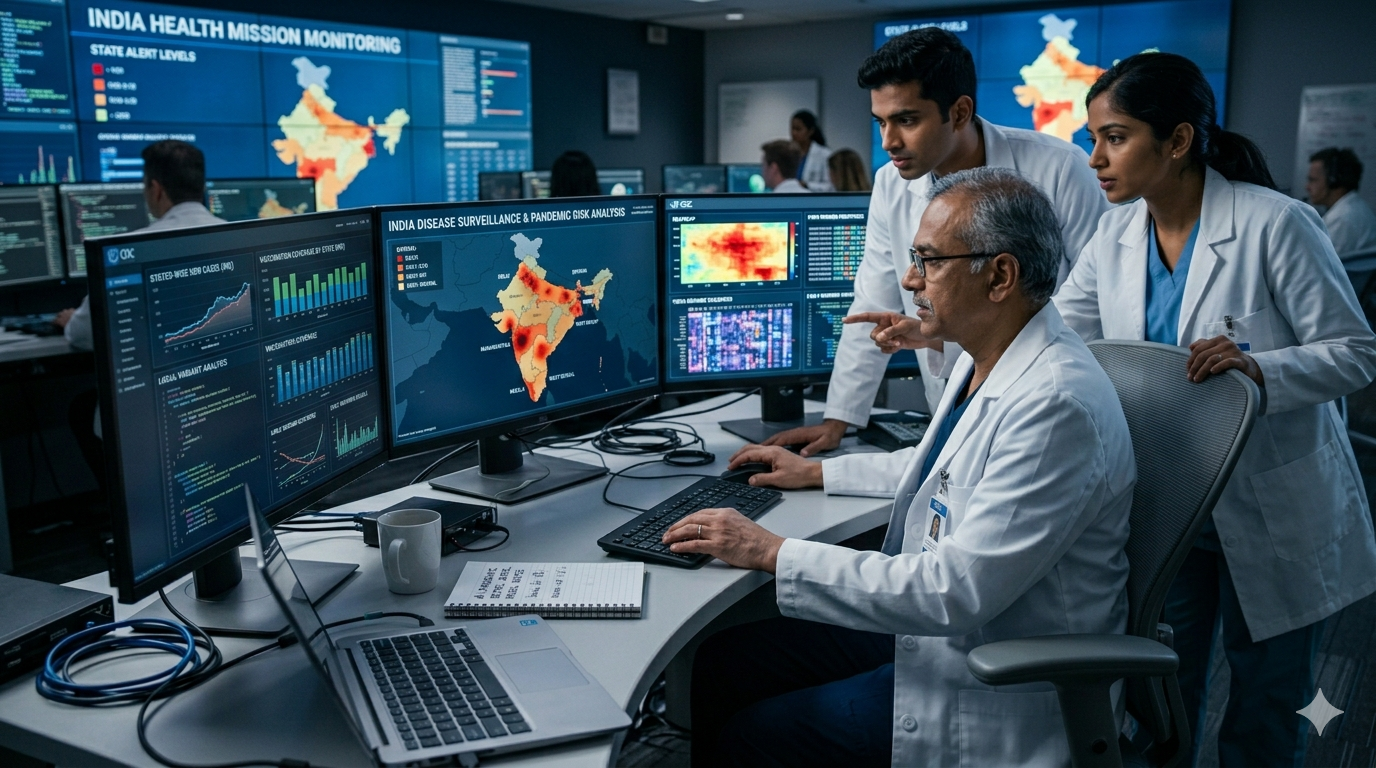
India has made important progress in healthcare over the past two decades. Infant and maternal deaths have reduced, vaccination coverage has expanded, and more hospitals and clinics are available than before. Yet, the Covid-19 pandemic revealed that many gaps remain. Rural communities, poorer families, and people with chronic illnesses often struggled to access care. Let's see what India has achieved, the challenges exposed by the pandemic, and the areas that need urgent attention to prepare for future health crises.
Achievements in Healthcare
India's healthcare system has seen several positive developments:
- National Health Mission: Since 2005, this programme has strengthened primary and secondary healthcare, improving maternal and child health outcomes and reducing infectious diseases.
- Ayushman Bharat PM-JAY: Offers health insurance up to Rs 5 lakhs per family each year, helping poor families afford hospital care.
- Digital Health: Telemedicine and online health records are making it easier for people in villages to get medical advice without travelling long distances.
- Mission Indradhanush: Expanded vaccination coverage against diseases like polio and tuberculosis.
These achievements show India's ability to deliver affordable healthcare solutions that can inspire other countries, especially those with similar challenges.
Also Read: WHO Simulates Global Outbreak Response To Boost Readiness For The Next Pandemic
Problems Revealed by Covid-19
The pandemic highlighted several weaknesses in the system:
- Delayed Non-Covid Care: Patients with cancer, heart disease, or fractures often had to wait for treatment as hospitals focused on Covid cases.
- Lockdown Difficulties: Travel restrictions hit vulnerable groups hardest, especially migrant workers and those needing regular hospital visits.
- Ethical Dilemmas: Doctors had to make tough choices about who should get limited resources.
- Stigma and Privacy Issues: Healthcare workers faced discrimination, and digital tracking raised concerns about patient privacy.
These problems showed that India's healthcare system needs to be more resilient, fair, and flexible.
Four Pillars of a Strong System
For India to be ready for future pandemics, healthcare must rest on four pillars:
- Accessibility: Clinics and hospitals should be within easy reach for everyone, including those in remote areas.
- Affordability: Families should not fall into debt to pay for treatment.
- Quality: Services must meet good standards everywhere, not just in big cities.
- Equity: Marginalised groups must get the same level of care as others.
What Needs Urgent Attention
Better Infrastructure and Workforce
- Build more hospitals and clinics in rural and tribal areas.
- Train and support doctors, nurses, and health workers to serve in these regions.
- Upgrade district hospitals and emergency transport systems.
Expanding Digital Health
- Increase telemedicine services to reach remote areas.
- Encourage innovation through public-private partnerships.
- Balance technology with human care to keep healthcare compassionate.
Reducing Inequality
- Focus on maternal and child health in underserved regions.
- Expand insurance to cover non-communicable diseases like diabetes and cancer.
- Provide subsidised medicines and tests to reduce costs.
Stronger Pandemic Response
- Create clear response systems at local, state, and national levels.
- Invest in vaccine and treatment research.
- Strengthen disease surveillance through the One Health approach, linking human, animal, and environmental health data.
- Expand laboratory capacity, including genomic testing, to detect new variants quickly.
Also Read: Hantavirus Treatment Protocols: Doctors Explain Why It's Not Like Covid Or The Flu
Everyday Impact on People
For the general public, these issues are not abstract. They affect daily life:
- A farmer in a remote village may have to travel hours to reach a hospital.
- A family living in poverty may avoid treatment because of high costs.
- A cancer patient may face delays in chemotherapy during a pandemic.
- A pregnant mother may struggle to get regular check-ups if transport is unavailable.
These examples show why strengthening healthcare is not just about preparing for pandemics but also about improving everyday health for millions of people.
- Ethical and Social Issues
Preparedness is not only about buildings and machines. It is also about values:
- Fairness: Resources must be shared fairly among patients.
- Privacy: Digital health tools must protect patient data.
- Respect: Healthcare workers and patients should not face stigma or discrimination.
India has made progress in healthcare, but Covid-19 showed that more needs to be done. By investing in hospitals, workforce training, digital health, and fair policies, India can build a system that is strong, fair, and ready for future pandemics. A resilient healthcare system will not only save lives during crises but also improve everyday health for all citizens.
With sustained effort, India can strengthen its healthcare foundations, enhance resilience against future health emergencies, and serve as a model for other nations navigating similar challenges.
(By Dr. Hari Kishan Boorugu, Consultant Physician & Infectious Disease Specialist, Yashoda Hospitals, Hyderabad)
Disclaimer: The opinions expressed within this article are the personal opinions of the author. NDTV is not responsible for the accuracy, completeness, suitability, or validity of any information on this article. All information is provided on an as-is basis. The information, facts or opinions appearing in the article do not reflect the views of NDTV and NDTV does not assume any responsibility or liability for the same.