

)
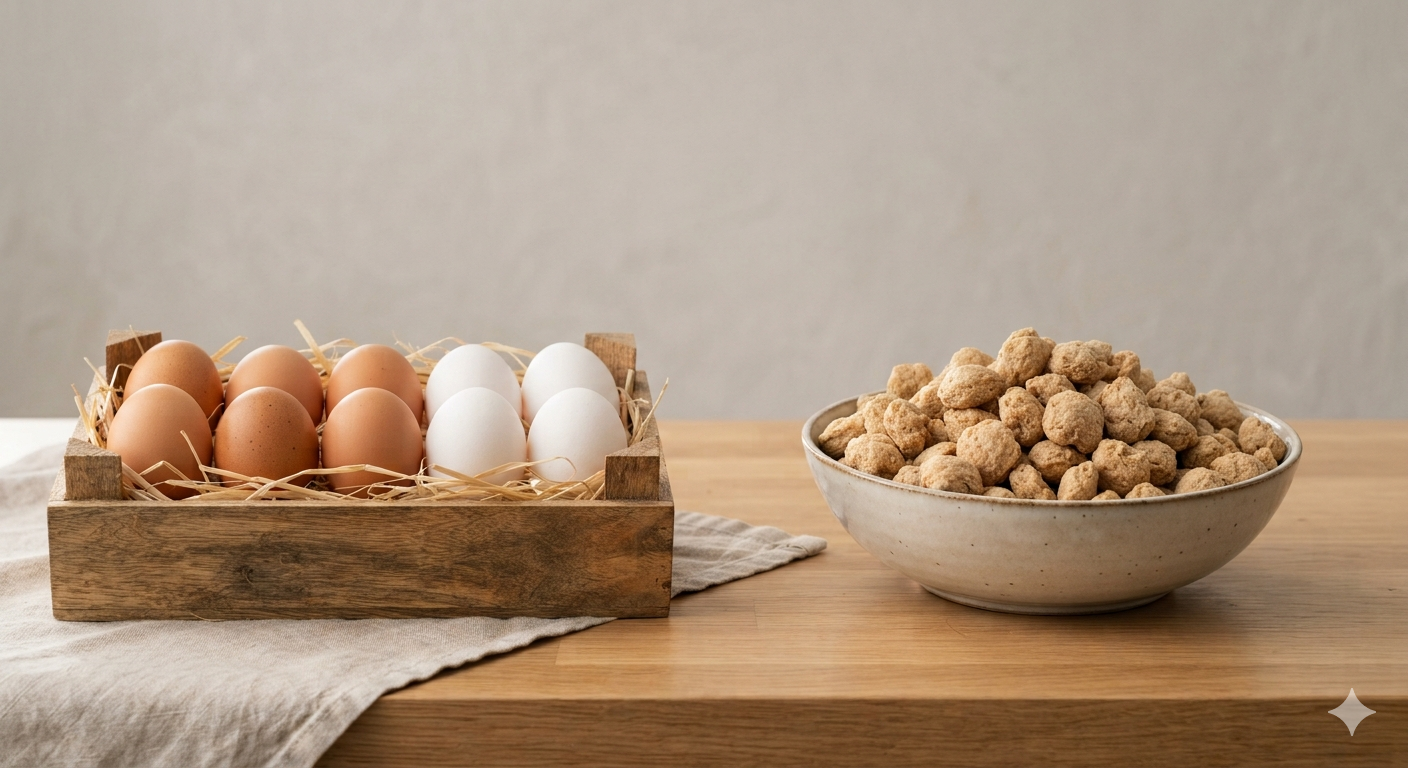
By now, you must be well aware of the importance of meeting your daily protein intake. Protein is an essential macronutrient that your body needs for building and repairing tissues, producing enzymes and hormones, and supporting overall growth and development. Two popular sources of protein are eggs and soya chunks, both of which have established themselves as dietary staples due to their accessibility, affordability, and concentrated protein content for individuals with various dietary preferences.
Eggs are known for their high-quality protein content, providing all nine essential amino acids that the body needs. They are also rich in vitamins and minerals, making them a nutritious option for many diets.
Soya chunks, on the other hand, are a processed product made from defatted soy flour. They are a great plant-based protein source and contain a higher protein content than eggs. Soya chunks have the added benefit of also being low in cholesterol and high in fibre.
Protein content
In terms of protein content, dry soya chunks contain roughly 52 grams of protein per 100 grams, whereas whole, raw, or boiled eggs provide only about 13 grams of protein per 100 grams.
The catch
It's important to note that the 52 gram figure applies strictly to the dry soya chunks. When you soak and cook them, they absorb roughly three times their weight in water. Therefore, eating 100 grams of cooked soya chunks means you are consuming only about 25 to 30 grams of the original dry product, reducing the actual protein consumed per meal portion to roughly 13 to 15 grams.
If you try to consume 100 grams of dry soya chunks after cooking, they swell to nearly 300 grams of food. Eating such a large quantity of cooked soya chunks in one sitting can lead to bloating, while consuming two or three whole eggs is generally more manageable.
Eggs vs Soya chunks: Pros and cons explained
Eggs
Pros
- Your body absorbs and utilises the amino acids in eggs more efficiently than almost any plant source
- Eggs contain other essential nutrients such as vitamin B12, omega-3 fatty acids, and choline
- Some people find that eggs are easier to digest than soya products, leading to discomfort from eating soya chunks
Cons
- Eating the yolk adds fat and cholesterol, which might not be suitable for individuals with heart disease
- Eggs are more expensive per gram of protein delivered compared to soy
Soya chunks
Pros
- It provides unmatched protein macro targeting for fat loss or lean muscle building, as it contains almost zero fat.
- It is one of the cheapest sources of near-complete protein available globally.
- It is entirely cholesterol-free, contains heart-healthy plant compounds (isoflavones), and is loaded with digestive fibre.
- For vegetarians and vegans, soya chunks are a valuable protein source.
Cons
- Raw soy contains anti-nutrients (like phytic acid) that can hinder mineral absorption, though thorough boiling and rinsing help lower these levels.
- Consuming excessive soya chunks (over 50g-100g daily) can lead to severe gas, bloating, or constipation due to the heavy fibre content.
Ultimately, a balanced approach incorporating a variety of protein sources can help ensure that all essential nutrients are consumed.
Disclaimer: This content including advice provides generic information only. It is in no way a substitute for a qualified medical opinion. Always consult a specialist or your own doctor for more information. NDTV does not claim responsibility for this information.