

)
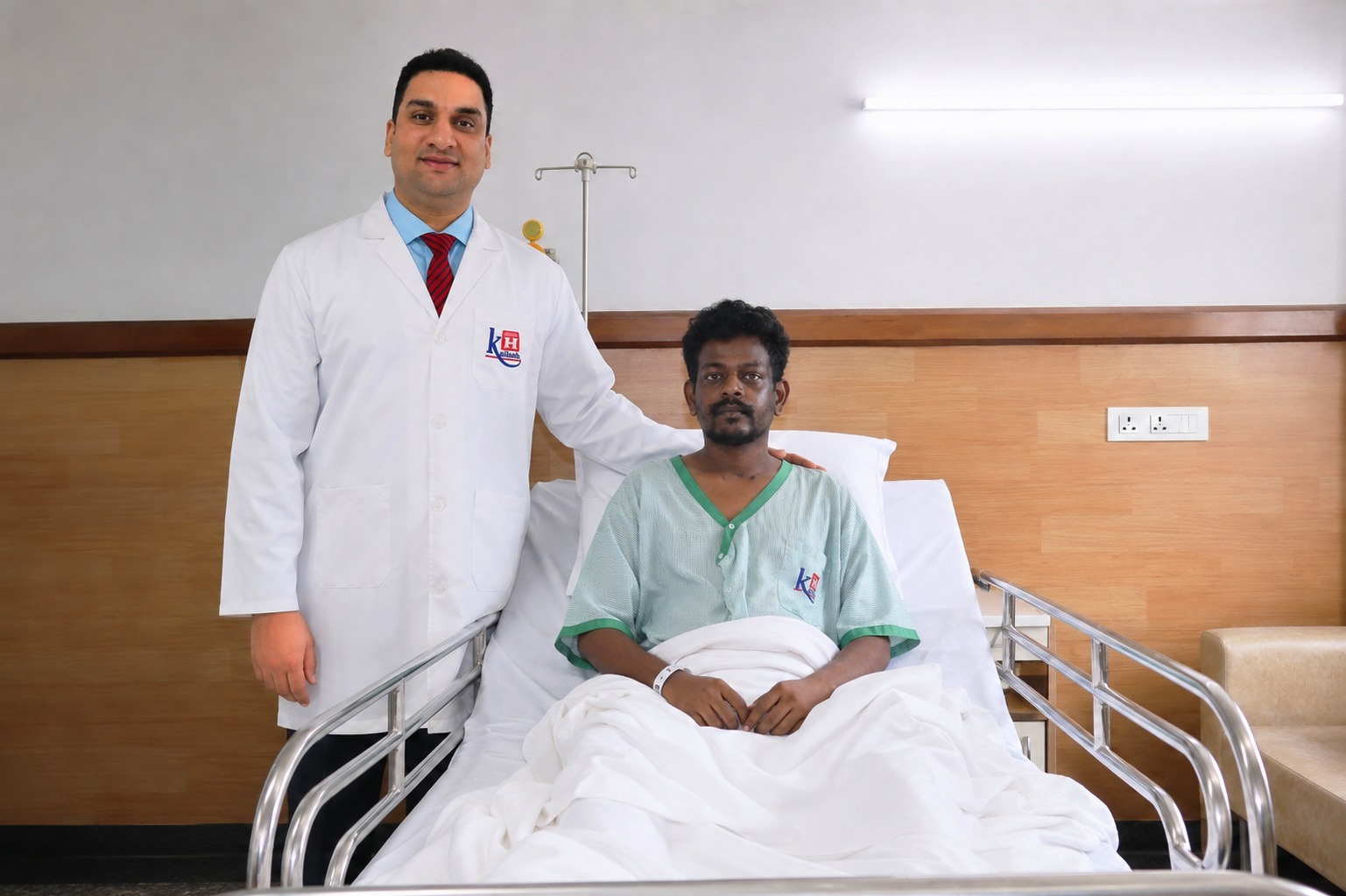
A 27-year-old man from Delhi made a remarkable recovery after a catastrophic road accident left him with a severe brain injury and major trauma to his face, chest, lungs and left hand. The man, Neeraj Kumar, was brought to the hospital unconscious and gasping. He required immediate intubation, mechanical ventilation and ICU care. After multidisciplinary treatment and multiple complex procedures, he was eventually discharged in a stable condition.
The case comes amid growing concern over the burden of severe road trauma in India. Road traffic accident fatalities increased by 3.5% in 2025 to 1,83,382, according to data presented by the Union Government in Parliament. While fatalities remain a major concern, serious crashes can also leave survivors with complex, multi-system injuries that require simultaneous intervention from specialists across different medical disciplines.
Neeraj was travelling as a pillion rider when the motorcycle reportedly fell after encountering a speed breaker in Noida. He sustained life-threatening injuries to his brain, face, chest, lungs and left hand and was brought to Kailash Hospital & Neuro Institute, Noida, in a critical condition. He was brought to the hospital unconscious and gasping, with a very low level of consciousness. He required immediate intubation, followed by mechanical ventilation and ICU care. His initial Glasgow Coma Scale (GCS), a clinical scale used to assess a person's level of consciousness after a brain injury, was E1V2M2, indicating a severely impaired level of consciousness.
The case was managed by the Neurosciences team at Kailash Hospital & Neuro Institute, in coordination with other specialist departments, with the patient requiring simultaneous management of a severe traumatic brain injury and major injuries to the face, chest, lungs and hand. Brain imaging revealed diffuse axonal injury and subarachnoid haemorrhage with intraventricular extension.
Dr. Shrikant Sharma, Director - Neurosciences, Kailash Healthcare, said, "Neeraj was brought to us with a severe brain injury and a very low level of consciousness, along with injuries to several other parts of the body. In such cases, the first priority is to stabilise the patient and closely monitor the brain. His neurological condition was followed through repeated assessments and scans, while his other injuries were managed simultaneously. The improvement seen on follow-up imaging was encouraging, and coordinated care from multiple teams played an important role in his recovery."
A follow-up CT scan showed a mild reduction in the intraventricular haemorrhage, or bleeding within the brain's ventricular spaces. There was also a significant reduction in the collection of blood and swelling over the left side of the scalp. A CT brain angiography, a specialised scan used to examine the brain's blood vessels, did not show any definite abnormality.
The accident had caused extensive injuries beyond the brain. CT scans of the face revealed multiple comminuted and displaced panfacial fractures, meaning several facial bones had broken into multiple pieces and shifted from their normal position. The injuries involved the cheekbone and its arch, jawbone and upper jaw, along with fractures around the eye and other facial structures. There was also significant swelling and soft tissue injury.
Neeraj Kumar after his recovery said, "My recovery was a long and challenging journey, during which I had to undergo several procedures and face many difficulties. The constant care and guidance of the doctors, along with the support and encouragement from his family, gave me the strength to remain positive and keep going."
Disclaimer: This content including advice provides generic information only. It is in no way a substitute for a qualified medical opinion. Always consult a specialist or your own doctor for more information. NDTV does not claim responsibility for this information.