

)
When we talk about lung cancer prevention, the conversation almost always begins and ends with cigarettes. That focus is justified because tobacco remains the single largest cause of the disease. However, now we are seeing lung cancer in patients who have never smoked a cigarette in their lives. Globally, a considerable share of lung cancer cases occur in never-smokers, and the reasons are often the very rooms we consider safe. Roughly 25% of cases worldwide and 50% of cases in East Asia occur in never-smokers.
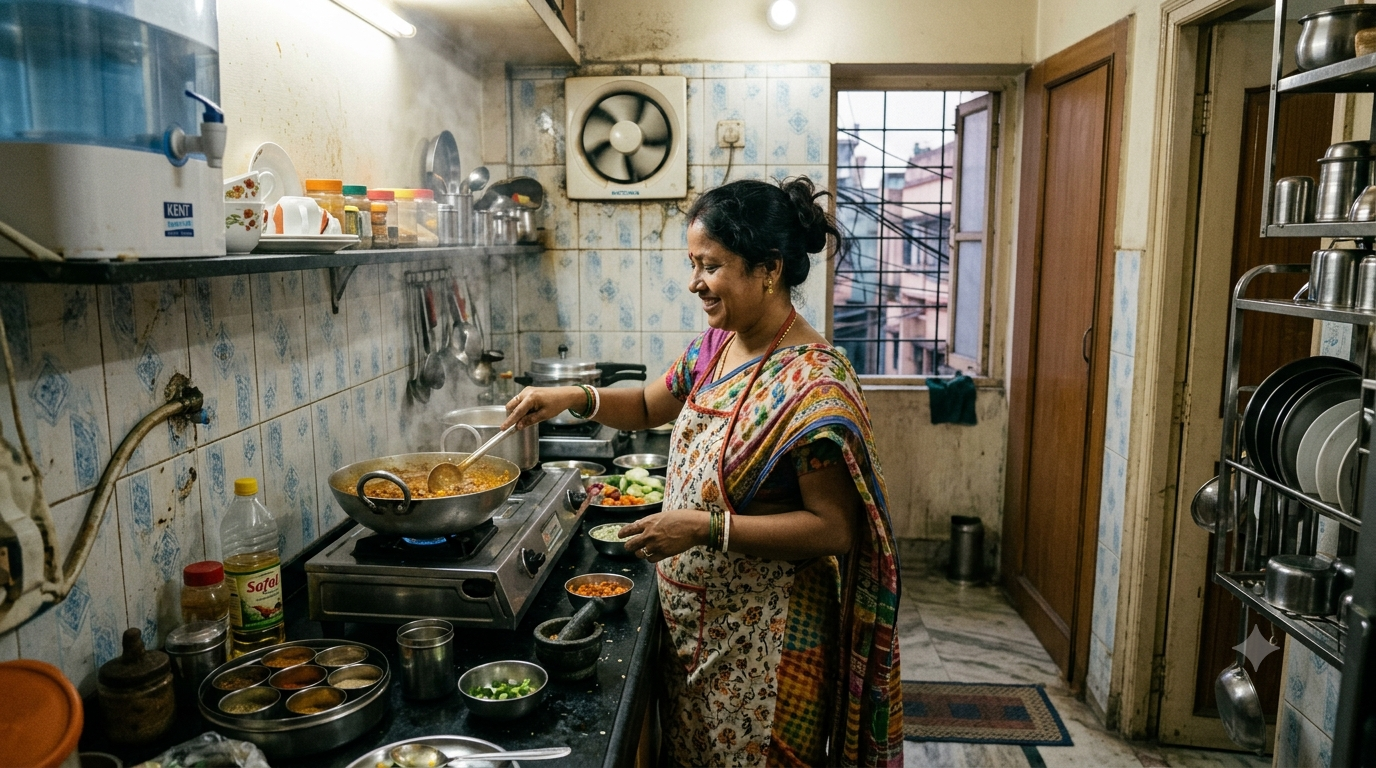
The Kitchen: A Bigger Risk Than Most People Realise
High-heat cooking, especially frying, stir-frying, and deep-frying, releases a mix of airborne compounds known as cooking oil fumes. When oil is heated past its smoke point, it breaks down into fine particulates and chemical byproducts, several of which are recognised carcinogens.
Multiple studies show a consistent pattern: women who cook frequently over many years, especially in poorly ventilated kitchens, face a meaningfully higher risk of lung cancer than those with limited exposure. Risk tends to rise with cumulative cooking years and falls with better ventilation.
Mosquito Coils: A Convenience with a Hidden Cost
In many warm-climate households, mosquito coils are burned nightly, often for hours, sometimes in bedrooms with the door closed. They are effective against insects, but the smoke they produce carries fine particulates and combustion byproducts chemically similar, in some respects, to cigarette smoke.
Studies have found that people who burn mosquito coils regularly carry a significantly higher lung cancer risk than non-users, even after accounting for smoking status. The risk climbs further in those who both smoke and use coils heavily, suggesting the two exposures compound each other. There are also reports of lung cancer in workers with long-term occupational exposure to mosquito coil manufacturing, which adds further plausibility to these findings.
Air Pollution Creating a Disproportionate Risk
This issue is especially relevant in India, where a large share of households, particularly in rural areas, still cook daily using solid biomass fuels like wood, crop residue, or dung cakes, often on traditional stoves in poorly ventilated kitchens. Many studies have linked this kind of indoor fuel exposure to a higher risk of lung and other respiratory cancers, and household surveys have found that combined exposure to cooking smoke, incense, and mosquito repellents tracks with poorer respiratory health, especially in older adults who spend the most time indoors.
But the risk isn't confined to rural kitchens. Outdoor fine particulate matter, or PM2.5, is small enough to bypass the body's natural filtering and settle deep in lung tissue, and it's classified by the International Agency for Research on Cancer (IARC) as a Group 1 carcinogen. This matters enormously for India's metro cities where air quality regularly exceeds WHO safety guidelines, and a large share of the country's population lives in areas where annual PM2.5 levels sit well above recommended limits. Unlike biomass cooking smoke, this exposure is simply the air available to anyone stepping outside. Air purifiers can reduce indoor PM2.5, but they remain unaffordable or impractical for most urban households.
Other Household Contributors Worth Knowing
Kitchen smoke and mosquito coils are well-studied, but they aren't the only indoor culprits:
Radon gas, an odorless, invisible byproduct of soil and rock that can seep into basements and ground floors, is recognised as a leading cause of lung cancer after smoking. Incense burning, common in many households for religious or cultural reasons, has also been linked to modestly elevated lung cancer risk, likely through similar particulate and combustion pathways.
Secondhand smoke from any household smoker remains a well-established risk, independent of the exposures above.
None of these exposures carry the outsized risk of active smoking, and no single evening of frying food or burning a coil will meaningfully change your risk. The concern is cumulative: years of daily, low-grade exposure in enclosed spaces. The good news is that most of these risks are modifiable: ventilate your kitchen, reconsider nightly coil use in bedrooms, radon test, and treat "safe" household habits with the same scrutiny you'd give any other environmental exposure.
If you have a persistent cough, unexplained breathlessness, or a family history of lung cancer, don't assume you are automatically low-risk just because you have never smoked. Talk to your doctor and take a second look at what's burning in your own home.
(By Dr. Abhishek Yadav, Director, Medical Oncology: Yashoda Medicity)
Disclaimer: The opinions expressed within this article are the personal opinions of the author. NDTV is not responsible for the accuracy, completeness, suitability, or validity of any information on this article. All information is provided on an as-is basis. The information, facts or opinions appearing in the article do not reflect the views of NDTV and NDTV does not assume any responsibility or liability for the same.