- Heart attacks block blood flow, causing heart muscle damage and systemic effects including brain impact
- Post-heart attack, cognitive impairment and dementia risk increase due to shared cardiovascular factors
- Reduced brain volume after heart issues signals early brain ageing and potential memory loss
A heart attack happens when blood flow to a part of the heart suddenly gets blocked, which causes the heart muscles to be unable to get the oxygen they need to function. A heart attack affects heart function to varying degrees, and surviving a heart attack is not the end of the risk of other health issues. There is clinical evidence that supports that after surviving a cardiac event, your brain and memory are affected. This has been mentioned in a review published in the Biology journal, where cognitive impairment and dementia are common in patients with heart attacks, and both share common cardiovascular risk factors. Possible ways that a heart attack can happen are due to fatty deposits that build up in the arteries, plaque ruptures, blood clot formation, or when blood flow stops. Any of these factors can cause a heart attack and result in damage to the heart muscle.
What Happens To The Body After A Heart Attack?
When the blood flow to the heart muscles is blocked, a possible cardiac event occurs. The reduced oxygen supply and blood flow to the heart have a systemic impact on the entire body. One of the major organs that a cardiac event affects is the brain, as the entire environment in the body that triggered the cardiac event shares common risk factors that affect brain functioning.
How A Heart Attack May Accelerate Brain Ageing
When the blood flow to the heart is restricted, the cells of the brain get less oxygen, which causes chronic inflammation. Chronic inflammation triggers faster ageing processes and possible vascular damage; these conditions impact cognitive functioning.
The Link Between Heart Attack And Memory Loss
Research published in the Neurology journal highlights that individuals with poor heart function tend to have a small brain volume. Reduced brain volume is a known early marker of brain ageing and dementia risk.
After a heart attack, there is a possible risk of mild cognitive impairment, whose early signs can be forgetfulness and slow thinking.
Increased Risk Of Dementia After Cardiac Events
The hippocampus, which is the memory centre of the brain, is impacted in people who have heart dysfunction. Causing memory loss and slower thinking, the low brain volume affects the overall heightened risk for dementia. In addition, dementia risk can increase as a faster cognitive decline occurs after a cardiac event. It is important to note that the effect may not be immediate but accelerates over the years after the event.
The common risk factors of heart attack, such as hypertension and cholesterol levels, also contribute to a higher dementia risk.
Also Read: Doctor Shares 8 Facts About The Gut And Liver That Could Change How You Think About Health
Expert Explains Why Heart And Brain Health Are Connected
Dr Sanjeev Gera, Senior Director and HOD of Cardiology, Fortis, Noida, explains, "The same risk factors that damage the heart-like high cholesterol, blood pressure, and poor diet-also affect blood vessels in the brain."
Heart and brain health depend on healthy blood vessels, which can be achieved through the right lifestyle and dietary choices on a long-term basis.
When heart health is not optimal, it can affect how the brain is impacted; this is why it is important to introduce the right early interventions to control possible chances of damage.
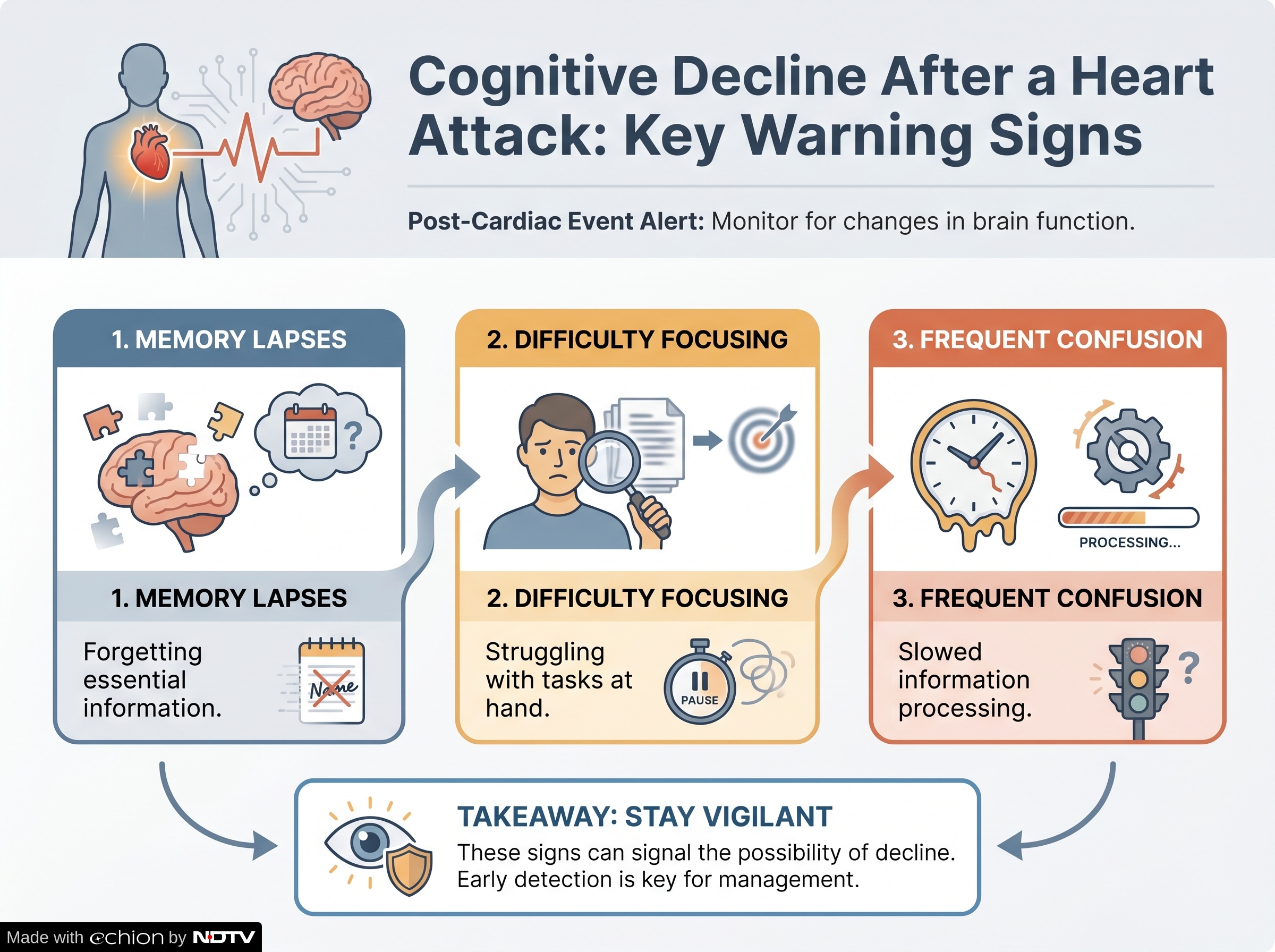
Warning Signs Of Cognitive Decline To Watch For
After a cardiac event, there are certain warning signs that can signal the possibility of cognitive decline. Here are the warning signs that you should watch out for:
- Memory lapses that make you forget essential information.
- Difficulty focusing on a task at hand that needs to be performed.
- Confusion or slowed processing of information that is frequent.
Can Brain Ageing Be Slowed After A Heart Attack?
There are ways to slow down brain ageing after a heart attack, as per the body's requirements; these involve:
Introducing the right lifestyle interventions, such as consuming a heart-healthy diet, a daily exercise routine, and cognitive stimulation practices, can improve the body's condition.
Medical management of high blood pressure, sugar levels, and overall cholesterol is needed to protect the heart and the brain.
Prevention: Protecting Both Heart And Brain
The heart and brain health need to be protected for long-term wellbeing by following precautions such as:
- Manage cardiovascular risk factors that increase the chances of another cardiac event.
- Regular check-ups that rule out and identify the risk of heart disease in a timely manner.
- Avoid smoking and manage stress levels to make sure the heart function isn't affected.
A heart attack is also a brain health warning sign that needs early lifestyle and medical intervention. If you are worried about the effect on your brain after suffering any type of cardiac event, it is important to seek medical advice on the same to make sure that silent damage doesn't occur.
\r\n
\r\n
Disclaimer: This content including advice provides generic information only. It is in no way a substitute for a qualified medical opinion. Always consult a specialist or your own doctor for more information. NDTV does not claim responsibility for this information.