

)
H1N1 influenza, commonly called swine flu, is back in focus as respiratory infections rise in parts of India. Delhi has reported a sharp increase in H1N1 cases this year, while Bengaluru has also seen a rise in seasonal influenza, including H1N1 and H3N2, according to recent reports. Delhi had recorded 1,344 H1N1 cases by early August, compared with 229 cases during the corresponding period last year, while doctors in Bengaluru have reported an increase in influenza infections during the monsoon.
Most influenza infections are self-limiting, but the illness can become serious, particularly in young children, older adults, pregnant women and people with underlying health conditions. WHO identifies these groups as being at higher risk of influenza complications.
This has also brought an important question back into the conversation: Should you get an H1N1 vaccine now?
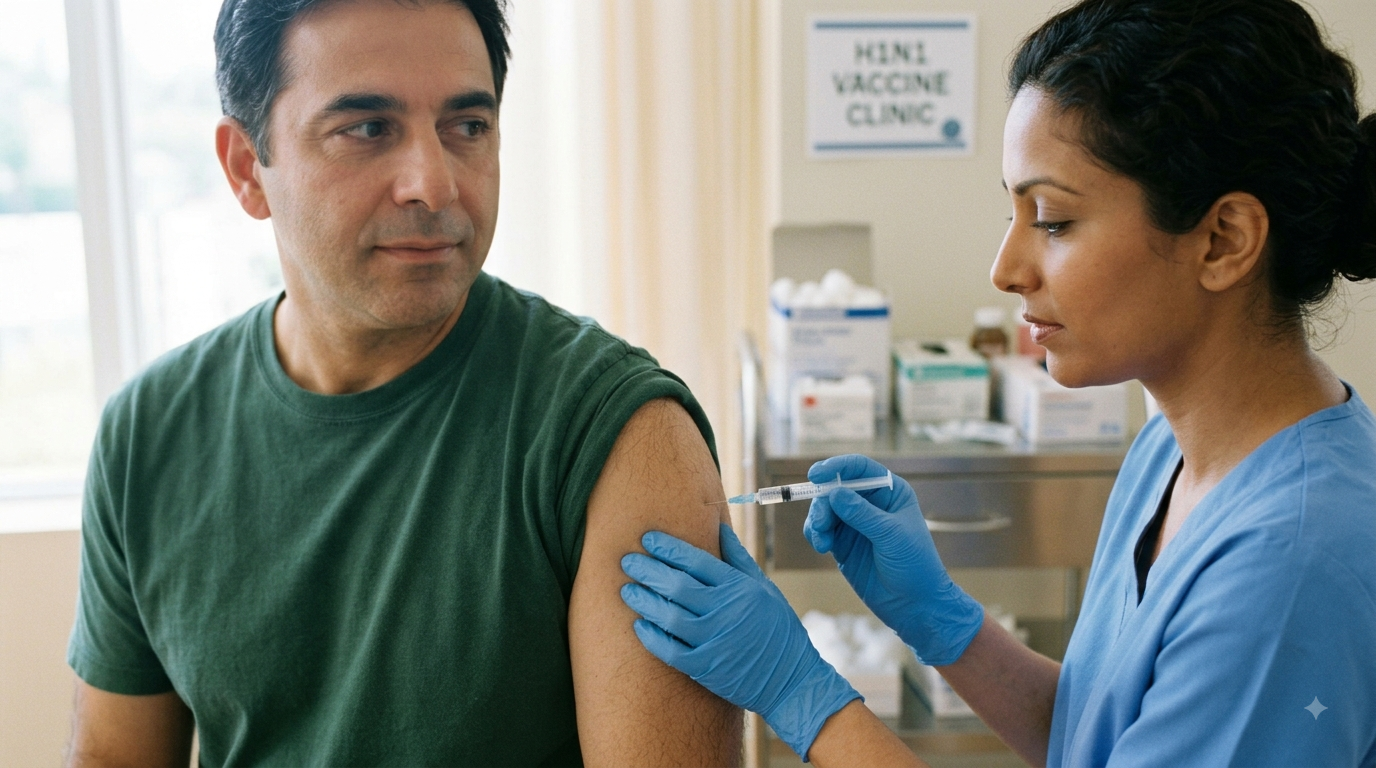
The answer is slightly more nuanced than simply getting an "H1N1 shot". As Dr R S Mishra, Principal Director & Head, Internal Medicine and Co-Chair of Academics, Max Smart Hospital, Saket, explains, "The H1N1 vaccine is no longer available as a separate vaccine. It is included in the seasonal influenza vaccine."
H1N1 vaccine: What is available now?
H1N1 is one of the influenza A viruses that can circulate as part of seasonal influenza. Therefore, protection against H1N1 comes through the seasonal influenza vaccine, whose composition is updated periodically based on surveillance of circulating viruses.
WHO recommends annual influenza vaccination, particularly for people at increased risk of severe disease. Influenza viruses continually evolve, while protection from vaccination also decreases over time, which is why vaccination is repeated annually.
Current seasonal vaccines include protection against influenza A (H1N1), alongside other influenza viruses. (CDC) India's National Centre for Disease Control (NCDC) maintains technical guidelines and public-health resources for seasonal influenza, including H1N1 surveillance, diagnosis, patient categorisation and vaccination guidance.
Also Read: H1N1 Cases On Rise: What To Eat And How To Rest For Quick Recovery
Who should prioritise the flu vaccine?
While influenza vaccination can benefit people aged 6 months and older, the priority is particularly high for groups vulnerable to complications.
Dr Mishra recommends annual vaccination particularly for:
- Pregnant women
- Children aged 6 months to 5 years
- Adults aged 65 and above
- People with diabetes, heart, lung, kidney or liver disease
- People with weakened immunity
- People who are overweight or obese
- Healthcare workers and caregivers
- People living in long-term-care facilities
WHO similarly lists pregnant women, children aged 6 months to 5 years, older adults, people with chronic illnesses and healthcare workers among groups for whom annual vaccination is particularly important. Importantly, the exact vaccine and dosing schedule can vary according to age, previous vaccination history and health status.
When should you get the H1N1 vaccine?
Ideally, vaccination should happen before influenza activity rises.
But there isn't a single India-wide date that applies to every location because influenza activity can vary geographically and seasonally. Dr Mishra says, "It is advisable to get vaccinated at least two weeks before the expected rise in cases, as the body takes about two weeks to develop protective immunity." WHO also says vaccination is best given before the influenza season begins, while vaccination during the season can still provide protection.
That distinction matters amid the current rise in Delhi-NCR and Bengaluru. If influenza is already circulating, it is not automatically too late to vaccinate. For someone who is eligible but has not yet received the seasonal flu vaccine, speaking to a doctor about getting vaccinated now may still be worthwhile.
Can the flu vaccine cause H1N1?
No. The injectable influenza vaccines used for seasonal vaccination contain inactivated virus or viral components and cannot cause influenza infection.
Some people may experience temporary effects such as soreness, redness or swelling where the injection was given. Mild fever, fatigue or body aches can also occur and generally settle within a short period.
The vaccine is also not expected to provide 100% protection against infection. Its important benefit is reducing the risk of influenza illness and, particularly, severe outcomes. WHO notes that even when influenza vaccination is less effective at preventing illness in some groups, such as older adults, it can reduce the severity of disease and complications.
Why do you need a flu shot every year?
Two major reasons: the virus changes and immunity wanes. Influenza viruses undergo continual genetic changes. WHO therefore updates its recommendations for vaccine composition twice a year based on global surveillance.
Protection generated by vaccination also decreases over time. Annual vaccination helps ensure that protection is refreshed and targeted towards the viruses expected to circulate. Dr Mishra says, "Flu viruses change over time, and immunity from the vaccine gradually decreases. That is why experts recommend getting vaccinated every year."
Also Read: H1N1 Cases Rise In India: Why Heart, Diabetes And Lung Patients Must Be Extra Careful
Vaccination isn't the only protection
A flu shot is an important preventive measure, but it works alongside everyday precautions.
During periods of increased influenza activity:
- Wash your hands frequently
- Cover your mouth and nose when coughing or sneezing
- Avoid close contact when you are ill
- Stay home when experiencing flu symptoms
- Consider a mask when unwell or in crowded settings
- Improve ventilation in enclosed spaces
WHO recommends these measures alongside vaccination to reduce influenza transmission. People at high risk who develop influenza symptoms or severe illness should seek medical advice promptly. Antiviral treatment may be recommended for people at higher risk or those with severe disease.
The rise in H1N1 and other seasonal influenza infections in Delhi-NCR and Bengaluru is a reminder that flu is not always just a week-long inconvenience. For most healthy people, influenza resolves without complications. But for pregnant women, young children, older adults, people with chronic diseases and those with weakened immunity, the consequences can be more serious.
The good news is that there is a proven preventive tool. As Dr Mishra puts it, "A yearly flu shot is a small step that can make a big difference in protecting your health."
With influenza activity already increasing in some Indian cities, eligible people who have not been vaccinated should discuss the seasonal flu vaccine with their healthcare provider rather than waiting for the next wave.