- Modern lifestyles cause desk slouch with rounded shoulders and weak core muscles
- Nearly 48% of Indians suffer from back pain linked to poor posture and prolonged sitting
- Mat Pilates strengthens core and back muscles to improve posture and reduce stiffness
The modern lifestyle of office workers, working from home and screen time for work and leisure, has pushed most people into a state of developing desk slouch. This can be identified by rounded shoulders, a weak core, and stress on the spine. Due to these posture mistakes, people are increasingly suffering from lower back stiffness, neck strain, and poor posture that can be visible on their bodies. To address the visible and internal damage to your body, you need to practise exercises such as mat pilates that offer a science-backed solution to address desk slouch and chronic lower back stiffness.
According to a review published in the Work Journal, nearly 1 in 2 Indians, which means about 48% of people, suffer from back pain, with over 5% reporting lower back pain. The significant health burden due to this needs to be addressed by introducing the right exercises that work on the muscles in your shoulders, back, and spine, affecting the entire body.
What Is Desk Slouch And Why Does It Cause Back Stiffness?
Desk slouch is characterised by the poor posture that can be identified with rounded shoulders due to a compressed spine. Furthermore, it can weaken core muscles, that make supporting the entire body much weaker. It causes reduced mobility leading to stiffness, and this is a common byproduct of prolonged sitting (8-9+ hours), which acts as a trigger to the condition.
Why Mat Pilates Works For Posture Correction
Research published in the Archives of Rehabilitation Research and Clinical Translation mentions that pilates can be used in active body recovery, as it can strengthen core, back, and stabilising muscles of the body.
The practice of mat pilates improves spinal alignment and flexibility, that make the effects of prolonged sitting, but persistent and consistent practice is required for visible results.
Mat pilates is low-impact and is suitable for beginners who are looking to improve their posture as they spend most of their time sitting in the same position due to work.
5 Mat Pilates Exercises To Fix Desk Slouch
1. Pelvic Curl
Pelvic curl is a simple core exercise that helps tighten your abdominal muscles, strengthen the back muscles, and improve overall balance. It is a part of foundational pilates that builds core stability and supports spinal health that is impacted due to prolonged sitting.
While practising pelvic curls, you need to move slowly and focus on your breathing to gain the maximum benefit from the exercise.
2. Cat-Cow Stretch
The cow stretch is a gentle stretching and strengthening exercise that can increase flexibility, reduce stiffness in the muscles, and support spine health. It is performed as a gentle movement using the hands and knees. It involves arching and rounding your back in a slow and flowing motion. It makes use of flexion (rounding) and extension (arching) to stretch the muscles that tend to stiffen up as you spend most of your time in a single sitting position.
Note: You need to sync movement with breath.
3. Chest Lift (Ab Curl)
A basic floor-based core exercise that works on the upper stomach and spine that supports the entire nervous system. This exercise can correct the slouched posture that is common after prolonged sitting. You can perform a chest lift by lifting your head, neck, and upper chest slightly off the mat using the muscles of your stomach.
Make sure to focus on controlled core engagement rather than doing a full sit-up that can strain your neck if performed too quickly.
4. Swimming (Prone Back Extension)
A mat pilates exercise that can be performed lying on your stomach with your face facing the ground. You need to gently lift your arms and legs slightly off the floor, aligned, while keeping your core muscles engaged. This action is similar to the movement during swimming, and you need to alternate your arms and legs, alternating with their lifts.
This exercise targets back muscles and improves posture and spinal support while keeping your neck in a neutral position.
Also Read: Sitting For 8 Hours? Check Your Legs For These 3 Warning Signs Of Poor Blood Circulation
5. Spine Stretch Forward
A seated pilates exercise that involves slowly bending forward to stretch the spine while keeping control of the core. This exercise focuses on flexibility, posture, and spinal alignment that is needed after prolonged sitting.
To perform this exercise, you need to do the following:
- Sit upright with legs extended in front to ensure that your calf muscles are stretched.
- As you exhale, gently reach forward and round your spine while feeling a slight pull on the back of your calf muscles.
- Stretch forward slowly while keeping movements controlled to ensure your core is engaged.
- Return to a sitting position with a straight spine and repeat the same until you feel better. You need to sit tall before stretching and perform the exercise on a cushiony mat to ensure your body is supported.
"Prolonged sitting weakens core muscles and puts excessive strain on the spine. Pilates helps restore alignment, improve flexibility, and reduce chronic back stiffness," says Dr Ashwani Maichand, Orthopaedic Surgeon, C.K. Birla Hospital, Delhi.
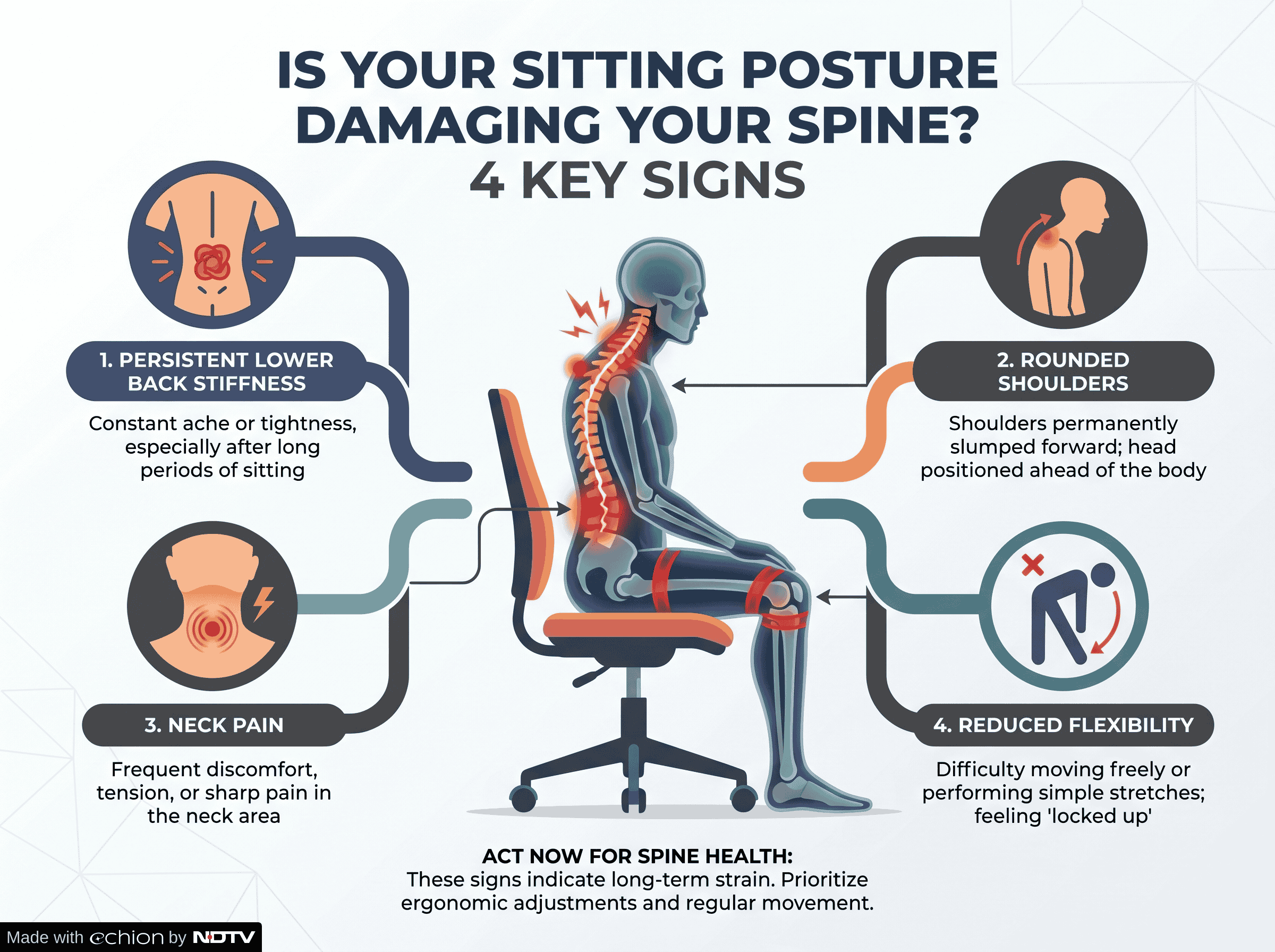
Signs Your Sitting Posture Is Damaging Your Spine
Your sitting posture is damaging your spine if you are experiencing the following signs:
- Persistent lower back stiffness
- Rounded shoulders
- Neck pain
- Reduced flexibility
Also Read: Can Walking 10,000 Steps Undo 10 Hours Of Sitting? Doctor Says No
Quick Daily Tips To Prevent Desk Slouch
Desk slouch can be avoided by following a routine that takes your spinal health into mind. You need to :
- Take breaks every 30-60 minutes to give your body and mind a break from the constant staring at a screen.
- Adjust chair and screen height to balance the stress on your shoulders and spine.
- Stretch regularly to make sure your muscles are engaged in some manner before you spend most of your time sitting.
- Engage your core while sitting in an erect manner and use supportive pillows to make sure the stress on your spine is minimal.
Who Should Avoid Or Modify These Exercises
Mat pilates should be avoided by those who are
- Severe back injury patients
- Herniated disc cases
- Post-surgery individuals
Note: It is best if you have a medical condition to consult a doctor before starting an exercise regimen.
Desk slouch is reversible with simple, consistent efforts to retain your spinal and muscle health. You can use Pilates along with posture correction habits for long-term spine health, as prevention is better than seeking treatment options for medical conditions.
Disclaimer: This content including advice provides generic information only. It is in no way a substitute for a qualified medical opinion. Always consult a specialist or your own doctor for more information. NDTV does not claim responsibility for this information.