

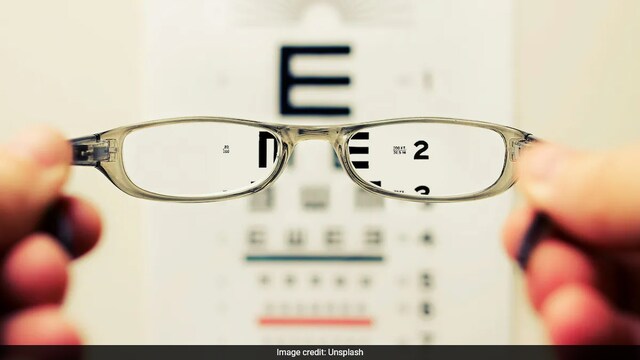
Most parents worry that screens will "spoil" their child's eyes. The real problem is quieter. Whether it is a smartboard in a classroom, online tuition or a phone at dinner, children across India now spend most of the day focusing on things that are close. A growing eye responds to that stimulus, and suddenly, myopia is the new pandemic.
Here is what screen-heavy childhoods do to vision, and what you can do about it:
1. Myopia: The Bigger Problem
A child's eyeball is still growing. Long hours of near work, combined with little time in daylight, push it to grow too long. Light then falls in front of the retina, and distant objects look blurred. This is called myopia, or shortsightedness. Myopia is now the fastest-growing eye problem in children worldwide. Projections suggest half the world could be myopic by 2050, and surveys across India show the same trend, with urban children most affected and rural children catching up.
The Sign: Squinting at the board, sitting very close to the television, rubbing the eyes, or a child who suddenly "cannot see" what the teacher writes. Many children never complain, so regular eye checkups are necessary to pick up any changes in vision.
2. Digital Eye Strain: The Part Parents Notice
Children blink far less when they look at screens. So their eyes get dry, burn, itch, water and ache. Headaches in the evening are common. Most parents notice their children rubbing their eyes.
The Sign: Red, tired eyes and headaches after homework or screen time. This is temporary and settles with rest, but it is often the only symptom parents recognise. A child can have no strain at all and still be developing myopia.
3. Why the Number Matters
Glasses correct the blur. They do not change the length of the eye. A highly myopic eye carries a higher lifetime risk of retinal detachment, early cataract, glaucoma and macular damage. The earlier myopia begins, the more years it has to progress. Another important consideration is eligibility for LASIK, laser vision correction. Beyond a certain power, LASIK is no longer a safe alternative for spectacle correction.
The Sign: A prescription that rises almost every year. Myopia that starts before the age of ten deserves closer attention.
4. Daylight: The Protection We Removed
Studies in China and Taiwan found that children who spent about two additional hours outdoors in daylight each day were less likely to become myopic. Daylight appears to slow eye growth. Tutions that run past sunset, unsafe parks, heat and pollution have taken that hour away from many children.
The Action: Treat outdoor time as part of the school day, not a reward for finishing homework. Outdoor play must be mandatory.
5. Treatment Exists, but Only If You Catch It Early
Specially designed spectacle lenses and low-dose atropine eye drops can slow myopia progression in children. They work best when started early and supervised by an ophthalmologist. Blue-light glasses, eye exercises and herbal drops have not been shown to stop myopia from getting worse.
The Action: Book an eye examination by the age of five, and once a year after that. This is especially true if either of the parents wear glasses.
What This Means Practically
Screens are not going away, and schools will keep using them. Digital literacy is almost as important as foundational literacy and numeracy, and a lot of our entertainment is also on screens. Connectivity with friends and family is also often online, again on screens.
The goal is to manage close work, not ban it. The bigger gap is detection. Most schools in India do not screen eyesight regularly. A child in a metro may be caught by an alert parent. A child in a small town or village may go years without an examination, and may be labelled inattentive when the real problem is that they cannot see the board.
Your Child's Eye Care Checklist:
- 20-20-20 Rule: After 20 minutes of close work, look at something 20 feet away for 20 seconds.
- Distance: Keep books and devices at arm's length.
- Lighting: Study in a well-lit room. Avoid reading in the dark.
- Outdoor Time: Aim for about two hours of daylight a day.
- Bedtime: No screens in the hour before sleep.
- Eye Check: A comprehensive eye examination by age five, then every year.
- Dilated Examination: Ask for one if the child has eye strain or headaches, even if the vision is 6/6.
- Treatment: Ask your ophthalmologist about myopia control if the glasses number is increasing.
Red Flag: If your child complains of sudden vision loss, flashes of light, a curtain or shadow across the vision, or an eye that turns inward or outward, do not put it down to screen time. See an ophthalmologist promptly.
Disclaimer: The opinions expressed within this article are the personal opinions of the author. NDTV is not responsible for the accuracy, completeness, suitability, or validity of any information on this article. All information is provided on an as-is basis. The information, facts or opinions appearing in the article do not reflect the views of NDTV and NDTV does not assume any responsibility or liability for the same.