

)
A recent quality-related recall involving an ophthalmic product manufactured by Sun Pharmaceutical Industries has once again brought the safety of eye drops into public discussion. While the recall was specific to a particular batch and does not mean that all eye drops are unsafe, it has raised an important question for consumers: How safe are the over-the-counter (OTC) eye drops many people use for dry eyes, redness or irritation without consulting a doctor?
The concern is not entirely new. In recent years, regulators around the world have tightened scrutiny of ophthalmic medicines after several contamination-related recalls, including a 2023 outbreak in the United States linked to contaminated artificial tears that resulted in severe eye infections, vision loss and even deaths. These incidents have highlighted the importance of sterile manufacturing practices and careful product handling.
However, ophthalmologists stress that consumers should not panic or stop using eye drops altogether. Instead, they should understand which OTC eye drops are appropriate, how to use them safely and when self-medication can become dangerous. Speaking to NDTV, eye specialists explain why most OTC eye drops remain safe when used correctly, the mistakes people commonly make, and the warning signs that should never be ignored.
Are OTC eye drops safe to use?
The short answer is yes, but only when they are used for the right reason and in the right way. According to Dr. Mahabaleshwar M, Ophthalmologist, Apollo Medical Center, Koramangala, Bengaluru, OTC eye drops are useful for temporary and minor eye complaints, but they should never be treated as a universal solution.
"OTC (over-the-counter) eye drops can be effective if used correctly and for minor conditions such as temporary irritation or dryness. However, not all eye problems should be treated with OTC eye drops. Eye drops are medications, and they should not be misused without knowing the cause of the problem." He says consumers should always read the product label, check the ingredients and expiry date, and purchase eye drops from reliable pharmacies instead of relying on products that make exaggerated claims.
Similarly, Dr. Sriram Simakurthy, Chief Medical Officer, Sankara Eye Hospital, Hyderabad, says that while OTC eye drops are generally safe, choosing the wrong product can delay the diagnosis of a more serious eye condition. "OTC eye drops are generally safe when used correctly and for the right purpose, such as relieving dryness, mild eye irritation or temporary redness. However, not all eye drops are suitable for every eye problem, and using the wrong product can sometimes make the condition worse or delay proper treatment."
Also Read: Can Contaminated Eye Drops Cause Lasting Damage? Doctor Explains Risks
Why contamination remains a serious concern
According to ophthalmologists, recent recalls have highlighted that the safety of an eye drop depends not only on its ingredients but also on how it is manufactured and handled.
Dr. Bhavya Reddy, Consultant - Ophthalmology, Aster Whitefield Hospitals, says recent global recalls have shifted attention to the importance of sterility. "Generally speaking, OTC eye drops are considered safe when they are used for the appropriate purpose as per the instructions on their labels and come from trusted brands. Nonetheless, the ongoing spate of recalls shows that safety is determined by not just the active component but the manufacturing process and sterility of the product as well."
She points to the widely reported 2023 outbreak in the United States involving contaminated artificial tears. "The incident involving artificial tears contaminated with multidrug-resistant Pseudomonas aeruginosabrought the issue of eye drop safety into the spotlight. Cases reported by the CDC included serious corneal infections, loss of eyesight, enucleation surgeries and fatalities resulting from bloodstream infections."
According to the US Centers for Disease Control and Prevention (CDC), the outbreak affected more than 80 patients across multiple states and led to several cases of permanent vision loss and deaths associated with drug-resistant infections. Experts say these events are uncommon but underline why consumers should never ignore product recalls or continue using eye drops that may be contaminated.
Which OTC eye drops are considered the safest?
For people experiencing occasional dry eyes, ophthalmologists largely agree that lubricating eye drops or artificial tears are the safest choice.
Dr. Simakurthy says: "Artificial tears are usually the safest option for dry eyes."
Dr. Apoorva Jadhav, Consultant, NIO Eyes+, Kharadi, Pune, also recommends preservative-free formulations wherever possible. "Artificial tears, especially those without preservatives, are safe when used to treat dry eyes."
However, doctors caution against routinely using redness-relieving eye drops.
Dr. Bhavya Reddy explains: "Redness-relieving drops that have a vasoconstrictor in them should not be the first resort because their regular use might result in rebound redness and dependency."
Dr. Jadhav adds that while these drops may temporarily improve the appearance of the eyes, they often fail to address the underlying cause and may even worsen symptoms if overused.
Why doctors warn against self-medicating with steroid eye drops
Another common mistake, doctors say, is using antibiotic or steroid eye drops without medical advice. Dr. Bhavya Reddy says: "The use of drops containing either antibiotics or steroids should be done under medical supervision only because these kinds of drops could either hide or aggravate serious infections."
Dr. Jadhav echoes this concern. "Steroid eye drops can aggravate infections, develop cataracts and raise eye pressure. They should never be taken without a doctor's prescription." She also warns that repeatedly using the same eye drops because they worked previously can delay the diagnosis of a completely different eye condition.
How can consumers use OTC eye drops safely?
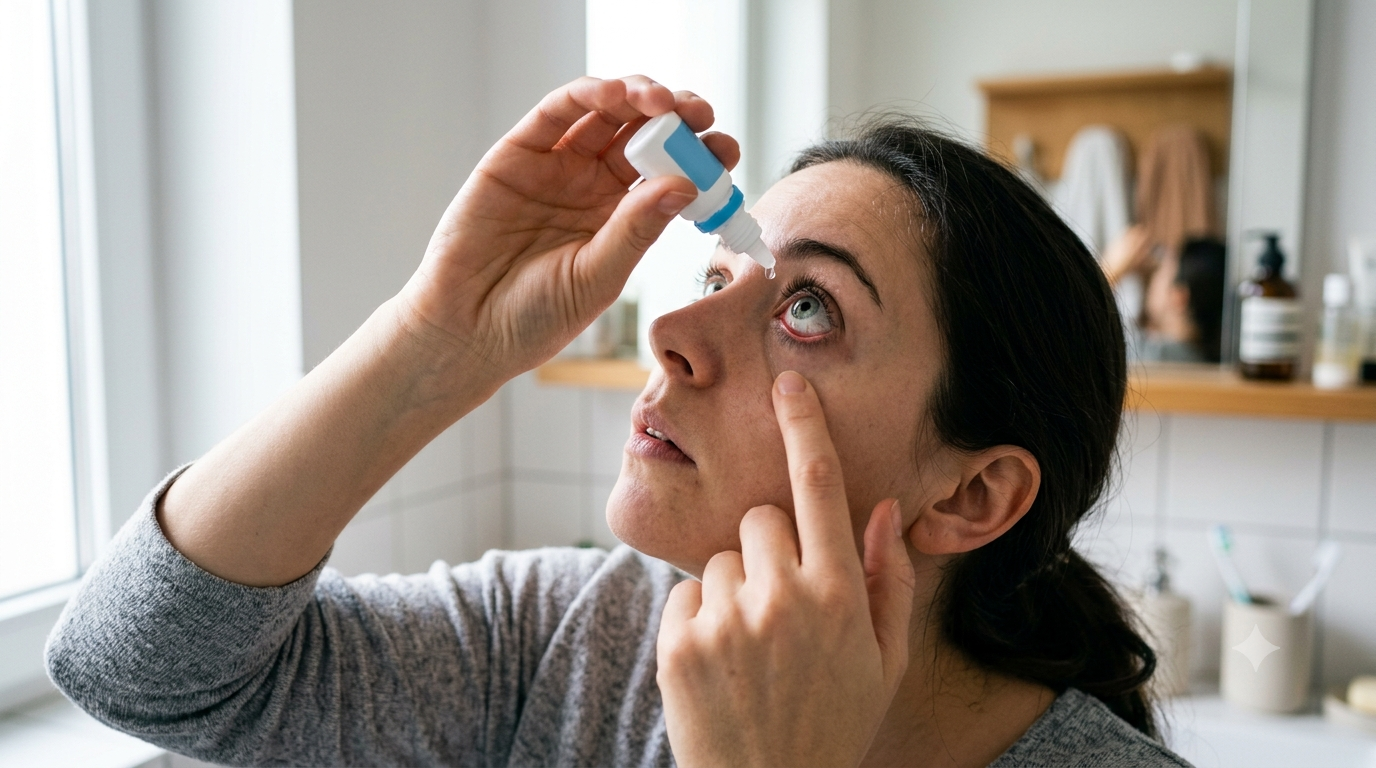
Doctors recommend several precautions to minimise contamination and ensure safe use. According to Dr. Mahabaleshwar:
- Read the label and composition carefully
- Buy eye drops only from trusted pharmacies
- Wash hands before application
- Avoid touching the applicator tip to the eye or any surface
- Never use someone else's eye drops
Dr. Bhavya Reddy further advises checking whether:
- The safety seal is intact
- The solution is clear and free of cloudiness or particles
- The bottle has expired
She also says: "Once any eye drop bottle is opened, it should be discarded after a month of opening the seal, even if the expiry date reads several months later." For preservative-free single-use vials, she recommends discarding them immediately after use, even if some solution remains.
When should you stop using eye drops immediately?
All three specialists agree that certain symptoms should never be ignored. Dr. Bhavya Reddy advises stopping eye drops and consulting an ophthalmologist immediately if a person develops:
- Persistent redness
- Severe eye pain
- Blurred vision
- Sensitivity to light
- Eye discharge
- Worsening irritation
"Prompt treatment is important since microbial keratitis can advance quickly, and irreversible damage to the vision can occur in a matter of days." Dr. Mahabaleshwar similarly recommends seeking medical care if there is swelling, worsening redness or any change in vision.
Dr. Jadhav adds: "Any sudden drop in vision should be treated as an emergency." Meanwhile, Dr. Simakurthy says symptoms lasting longer than two to three days despite OTC treatment also warrant an ophthalmology consultation, especially in people with glaucoma, chronic eye disease or contact lens users.
Recent product recalls have understandably prompted consumers to question the safety of OTC eye drops. However, ophthalmologists emphasise that these medicines remain safe for most people when they are used correctly, purchased from trusted sources and stored hygienically. Rather than avoiding OTC eye drops altogether, experts recommend choosing the right product for the right condition, following proper hygiene practices and paying close attention to expiry dates, recalls and changes in the appearance of the solution. Most importantly, eye pain, blurred vision, persistent redness or discharge should never be treated with repeated self-medication. When symptoms do not improve or become severe, a timely consultation with an ophthalmologist is the safest way to protect long-term vision.
Disclaimer: This content including advice provides generic information only. It is in no way a substitute for a qualified medical opinion. Always consult a specialist or your own doctor for more information. NDTV does not claim responsibility for this information.