

)
Plant-based milks are gaining popularity in India and across the globe due to their healthiness and sustainability. While you may be familiar with cow or buffalo milk that is widely consumed across India, there are various options of milk that are sourced from nuts, vegetables, and even cereals. The switch from animal to plant-based milks is gaining steam as about 27% of the Indian population deals with heart issues, as per the Indian Council of Medical Research. And a possible way to lower your chance of getting heart disease is to make an active change in your daily dietary choices.
While heart risk factors may be many, diet plays a crucial role in ensuring how healthy your heart muscles are, how much blood they pump, and in reducing the age-related slowdown in heart function. One such dietary change is choosing which milk can be beneficial for long-term heart health. Out of the various plant milks on the market, almond milk and oat milk are becoming easily available and are commonly used instead of the go-to cow milk. But to effectively understand which is better, their individual health benefits for the heart and the mechanisms that make it so need to be kept in mind.
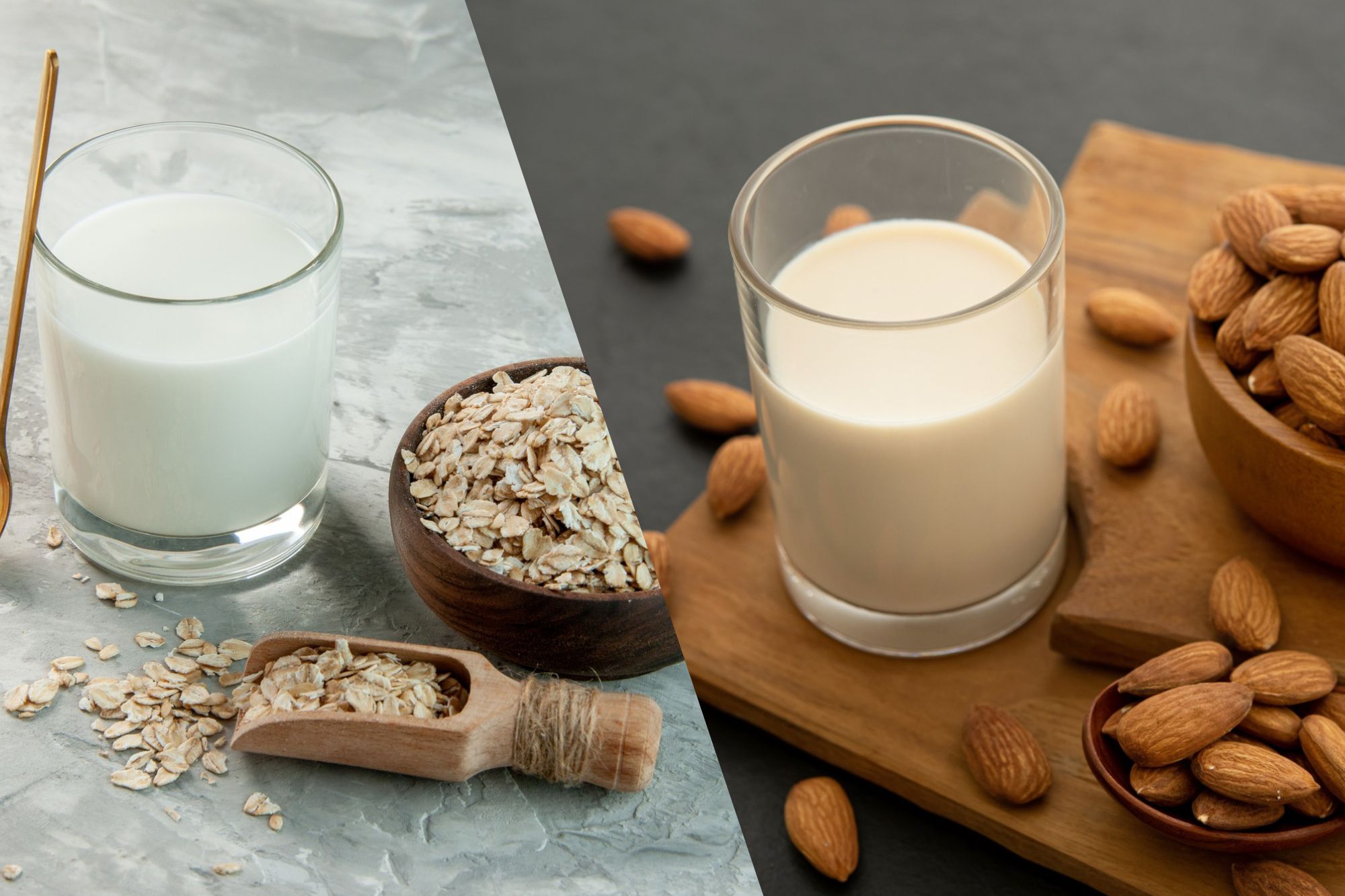
Almond Milk Vs. Oat Milk: Which Is Better For The Heart?
Almond and oat milk are prepared differently, so to effectively draw a comparison between which milk is better for your heart, their nutrient profiles need to be analysed. Firstly, let's look at how each of these plant-based milks is prepared. Almond milk is made by overnight soaking of almonds in water, removing their peel, grinding them into a liquid along with water, and then straining. While oat milk is made from soaked oats, the other steps are the same except for the removal of the almond peel. So, if you are planning to make your own plant-based milk at home, oat milk is better. But when it comes to choosing which one is better for your heart, here is what studies say:
- According to the Nutrients journal, almond milk consumption is tied to reducing the presence of fats in your blood and reducing bad cholesterol.
- As per the Nutrition Reviews, there is global evidence that suggests the soluble fibre in oat milk (beta-glucan) can lower bad cholesterol and reduce coronary heart disease risk.
So, clinically speaking, both almond and oat milk are beneficial for heart health, especially for people who are genetically predisposed to heart disease. To go further, their individual nutrient profiles can also serve as a way you can choose the plant-based milk for its intended purpose.
Also Read: Can Consuming Cinnamon Water On An Empty Stomach Help In Managing Heart Disease?
Nutritional Comparison Of Almond And Oat Milk
The Indian Council of Medical Research and the National Institute of Nutrition, along with nutritional reviews, have combined data on the exact nutrient profiles of almond and oat milk. These figures are as follows:
Oat Milk (per 100 ml)
- Calories: 40 to 50 kcal (lower than cow's milk, which is better for people seeking caloric control)
- Protein: 1 to 2 g
- Fat: 1.5 to 2 g (mostly unsaturated)
- Carbohydrates: 6 to 8 g (higher due to the presence of natural starch)
- Fibre (B-glucan): 1 to 2 g (supports cholesterol reduction)
- Calcium (fortified): 120 mg
- Vitamin E: Low
- Added Sugars: It varies depending on the brand and its unique formulation; scan the label for the exact figure (0 to 6 g)
Almond Milk (per 100 ml)
- Calories: 30 to 40 kcal (lower than oat milk; this is why this milk is better for people who are advised medically to lose weight for their improved health)
- Protein: 1 g
- Fat: 2 to 3 g (unsaturated and heart-healthy)
- Carbohydrates: 1 to 2 g (much lower than oat milk)
- Fibre: Trace amounts
- Calcium (fortified): 120 mg
- Vitamin E: High (6 mg, strong antioxidants present in it)
- Added Sugars: Same as oat milk, but check the ingredient list on the label, as hidden added sugars may cause blood sugar spikes.
These nutritional values are for the unsweetened and fortified versions, as additives, sweeteners, flavours, and preservatives can reduce the nutritional value of plant-based milks.
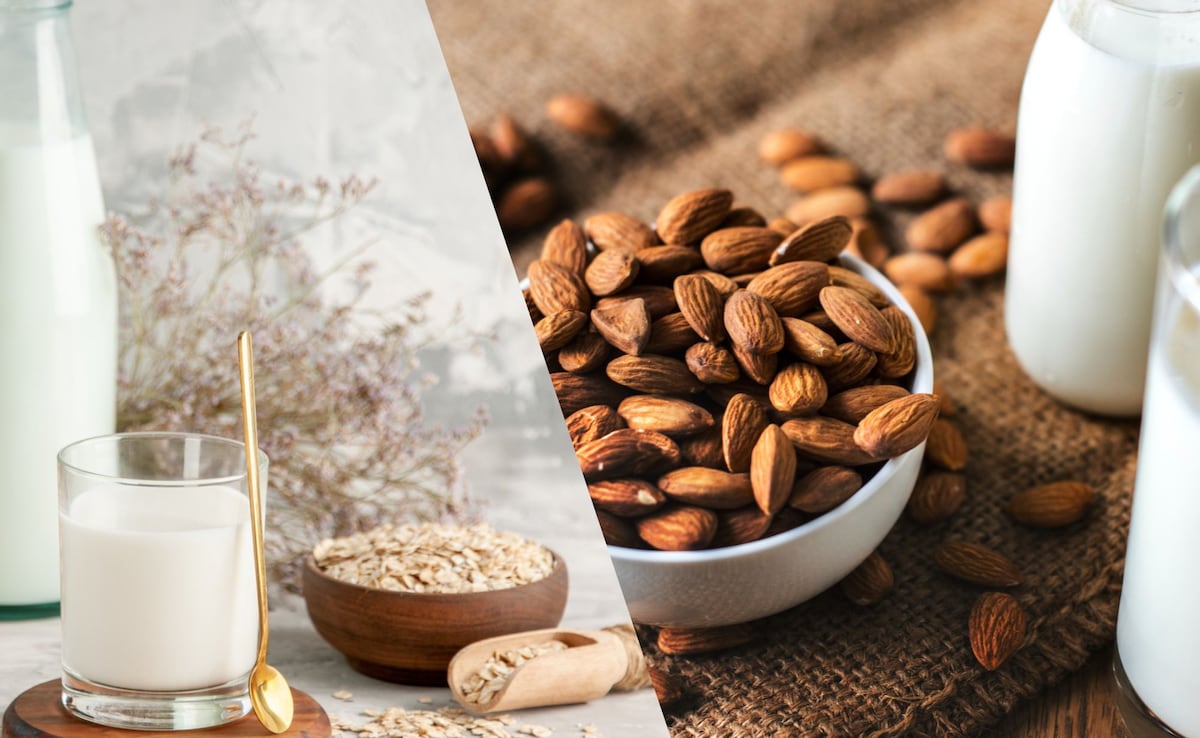
Almond Milk Vs. Oat Milk
Photo Credit: Freepik
Can Drinking Oat And Almond Milk Benefit The Heart?
There is extensive nutritional research that suggests that both almond and oat milk are heart-healthy. But to figure out which one is better, you need to consider their individual benefits, availability, and accessibility. Milk is normally consumed daily by individuals; hence, a number of factors could influence your decision. Here is what studies say when it comes to the individual health benefits of almond and oat milk:
- As per the Journal of Food Science and Technology, there is a high dose of antioxidant properties that nourish heart health.
- Alongside this, almond milk also improves how your heart may metabolise fats in your blood, effectively improving overall physical well-being.
- There are even documented benefits of almond milk for cholesterol management, heart muscle protection, and metabolic health.
- According to the Journal of Food Science and Technology, the fibre in oat milk helps lower LDL (bad) cholesterol and improve heart risk factors that may increase heart disease risk.
- As per the British Journal of Nutrition, oat milk has B-glucan, which can significantly reduce LDL (bad) cholesterol.
- According to Frontiers in Nutrition, oat B-glucan lowers cholesterol by binding bile acids and the gut microbiome.
Also Read: Addicted To Supari? Study Says Betel Nut Raises Heart, Cancer And Metabolic Risks
Who Should Choose What?
In order to effectively say which plant-based milk is better, here is a look at almond and oat milk and the specific health benefits they offer:
- Almond Milk: It is better for calorie-conscious people and for people who are at risk of diabetes.
- Oat Milk: It is better for cholesterol management and important for digestive health.
- Allergies: Intolerances exist, as almond milk is made from a nut, and some people may have gluten sensitivity.
So, keeping these factors in mind is important for choosing the type of milk that is poured in your breakfast bowl.
Sustainability And Lifestyle Fit
One of the major factors that is leading people to switch to plant-based milks is sustainability, as animal-sourced milks require greater amounts of land, release more greenhouse gases, and use more freshwater. So, keeping all these factors in mind, here is what you should do if you want to choose a greener milk source:
- Almond milk: There are water-intensive crop concerns that can influence your choice.
- Oat milk: It is an eco-friendly and sustainable choice.
Your lifestyle also matters, as people with an active lifestyle can effectively metabolise different types of milk throughout the day.
So, choose based on how active your lifestyle is and what benefits you want to effectively gain.
Tip: Choose unsweetened and fortified versions for maximum heart health benefits.
Despite all these aspects having been analysed, there is no one-size-fits-all answer; it depends on your health priorities.
Disclaimer: This content, including advice, provides generic information only. It is in no way a substitute for a qualified medical opinion. Always consult a specialist or your own doctor for more information. NDTV does not claim responsibility for this information.