

)
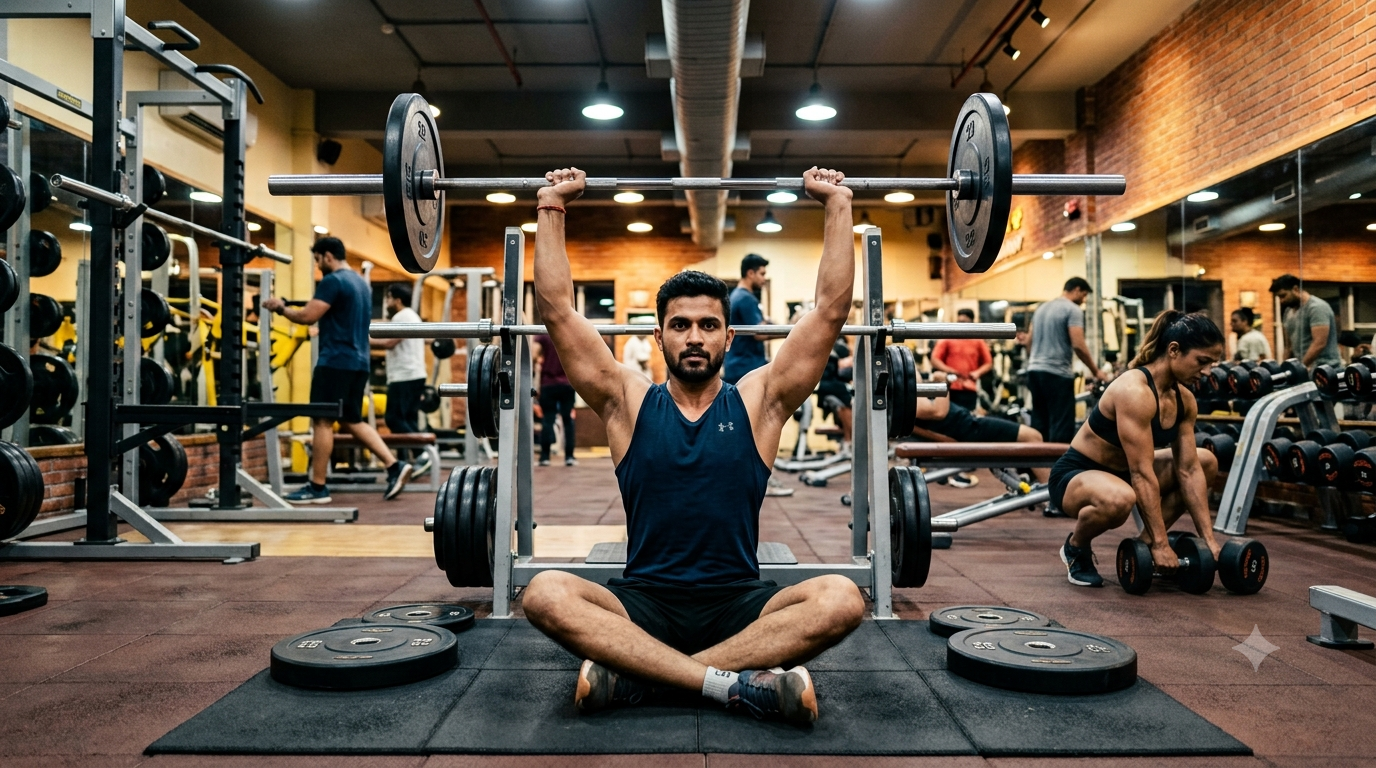
The shoulder press is a popular strength-training exercise for building the deltoids and developing stronger shoulders. Whether you use dumbbells, a barbell or a machine, pressing weight overhead requires coordination between the shoulder joint, shoulder blades, core and upper back. But when technique breaks down, the exercise can place unnecessary stress on the shoulders, wrists or lower back. From using weights that are too heavy to flaring the elbows and arching the back, several common mistakes can make the shoulder press less effective and potentially increase injury risk. Here are seven mistakes to watch out for the next time you train your shoulders.
1. Using weights that are too heavy
One of the biggest mistakes is choosing a weight that you cannot control. When the dumbbells or barbell are too heavy, you may compensate by leaning backwards, using your legs or shortening the range of motion. This can turn a controlled shoulder exercise into a full-body effort.
Choose a weight that allows you to complete your repetitions with good control. Progressive overload should be gradual rather than based on simply lifting the heaviest possible weight.
2. Flaring your elbows too far out
During an overhead press, allowing the elbows to point directly sideways can put the shoulder in a less favourable position. ACE guidance recommends performing overhead movements in the scapular plane, with the elbows somewhat forward rather than directly out to the sides. This allows the shoulder blade and upper arm to work together during the movement. With dumbbells, think about keeping your elbows slightly in front of your body rather than forcing them into a wide "goalpost" position.
3. Arching your lower back
If you find yourself leaning backwards while pressing, the weight may simply be too heavy or your core may not be adequately braced. Excessive back arching can shift the movement away from the shoulders and place unnecessary stress on the lower back. Keep your abdomen braced and your torso controlled throughout the repetition. ACE's shoulder press guidance specifically recommends avoiding excessive lower-back arching while pressing overhead.
4. Using momentum to push the weight up
The shoulder press should be a controlled strength movement, not a test of how much momentum you can generate. Bending and straightening the knees to drive the weights upwards, swinging the torso or rapidly jerking the dumbbells can reduce control over the movement. If you need momentum to complete most of your repetitions, consider reducing the weight.
5. Dropping the weights too quickly
The lowering phase is part of the exercise and should not be treated as an afterthought. After pressing the weight overhead, lower it under control rather than allowing gravity to pull your arms down rapidly. Controlled lowering helps you maintain stability and keeps the muscles working throughout the repetition. ACE recommends a slow, controlled return to the starting position during the shoulder press.
6. Ignoring your wrist position
Your wrists should remain stable rather than collapsing backwards under the weight. A bent or unstable wrist can make it harder to control the dumbbells and may increase strain around the wrist and forearm. Keep the wrists aligned with the forearms and maintain a secure grip. If you cannot maintain this position, reduce the load.
7. Continuing despite shoulder pain
Feeling your shoulder muscles work during a press is different from experiencing sharp, persistent or worsening pain. If overhead pressing consistently causes pain, particularly around the shoulder joint, do not simply increase the weight or push through it. A painful overhead movement can have several possible causes, and the appropriate response depends on the individual. People with an existing shoulder problem may need to modify or temporarily avoid overhead pressing and seek guidance from a qualified healthcare professional.
How to perform a shoulder press correctly
For a basic seated dumbbell shoulder press, sit with your back supported and your feet firmly planted. Hold the dumbbells around shoulder height with a secure grip. Brace your abdomen and keep your torso stable. Position your elbows slightly forward rather than directly out to the sides. Press the dumbbells overhead in a controlled motion without excessively arching your lower back. At the top, avoid forcing the joints into an uncomfortable position. Lower the weights slowly back towards shoulder level and repeat. Your exact range of motion and hand position can vary depending on your mobility, body structure, equipment and training experience.
Should you press behind your head?
Behind-the-neck pressing requires considerable shoulder mobility and places the arms in a position that may not be comfortable or appropriate for everyone. If you experience discomfort or have a history of shoulder problems, choose a pressing variation that allows you to maintain a comfortable and controlled position. A standard dumbbell or machine shoulder press can be easier to modify for many people.
How heavy should your shoulder press be?
There is no universal weight that is right for everyone. A useful starting point is a load that allows you to complete your planned repetitions while maintaining stable posture, controlled movement and consistent technique. If your final repetitions involve significant back arching, swinging, shrugging or loss of control, the weight may be too heavy.
The shoulder press can be an effective way to build stronger shoulders, but heavier is not always better. Using excessive weight, flaring the elbows, arching the lower back, relying on momentum, dropping the weights and ignoring pain can all compromise your technique. Focus on controlled repetitions, a stable torso, an appropriate load and a shoulder position that feels comfortable. If you have persistent shoulder pain or a previous injury, get professional guidance before continuing with overhead pressing.
Disclaimer: This content including advice provides generic information only. It is in no way a substitute for a qualified medical opinion. Always consult a specialist or your own doctor for more information. NDTV does not claim responsibility for this information.