





- Paneer made with industrial acids and Palmolein oil was seized in Surat raid on March 3, 2026
- About 1,401 kg of toxic paneer and related materials worth Rs 28,44,170 were confiscated
- The illegal unit operated unhygienically for nearly two years, producing 400 kg daily
A shocking revelation has emerged from the city of Surat, Gujarat, raising serious questions about the safety of every household kitchen and every meal served. During a raid on an illegal paneer (cottage cheese) manufacturing unit operating in the Pandesara area, it was discovered that the very paneer people were consuming daily, believing it to be healthy, had turned into poison. Prepared using hazardous substances such as industrial acids and Palmolein oil, this paneer was not only of substandard quality but was also found to be a grave health risk, having completely "failed" safety inspections.
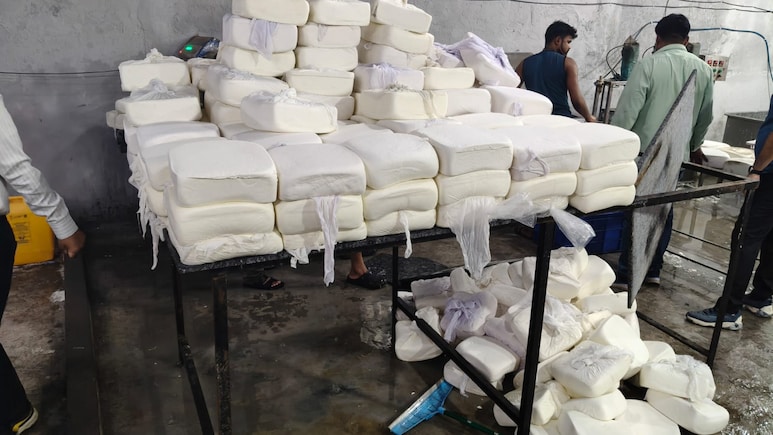
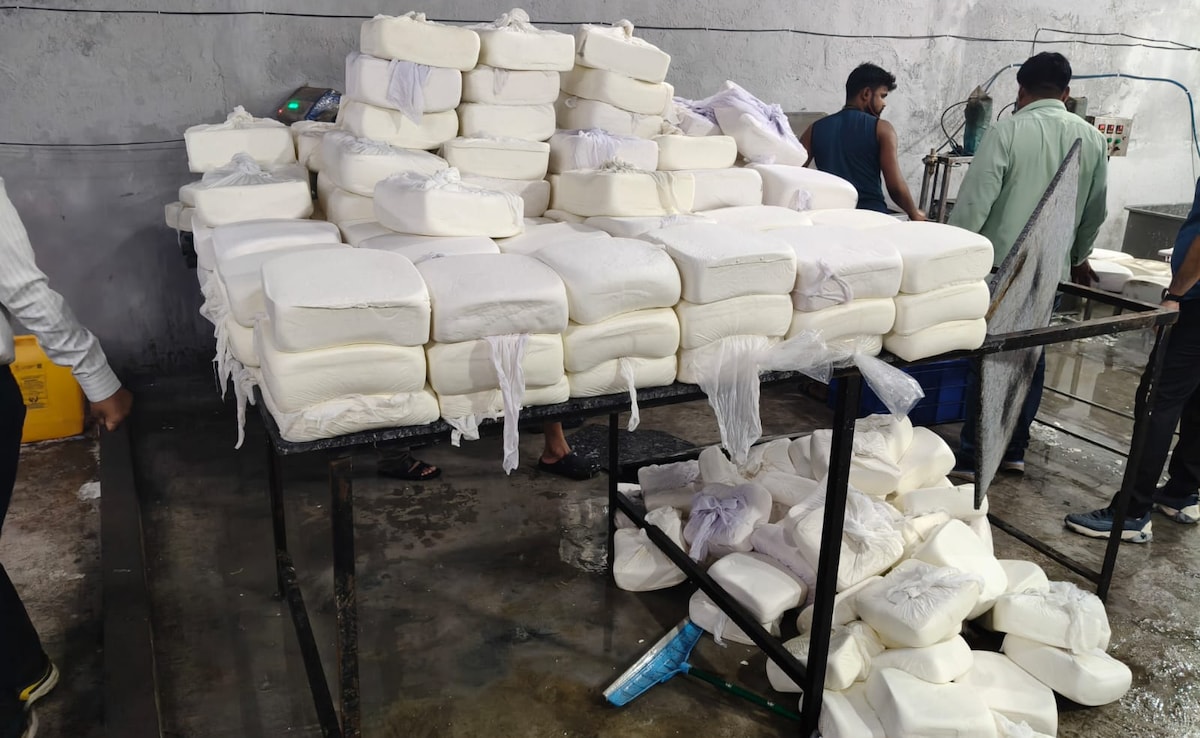
This operation was conducted jointly on March 3, 2026, by the Surat City S.O.G. (Special Operations Group) team and the Food Department. When officials raided the unit, located within the Bhidbhanjan Society in Pandesara, the scene inside was utterly shocking. The entire paneer manufacturing process was being carried out in a completely unhygienic manner and in blatant violation of regulations. While lemons or food-grade ingredients are typically used to curdle milk, this facility was utilising industrial acids and chemicals intended for industrial applications, not for food products.
Also Read: Chef Sanjeev Kapoor Had Denied To Accept The Padma Shri Award Until They Accepted His One Request
During the raid, approximately 1,401 kilograms of loose paneer were recovered; this stock was found stored in the open and under extremely filthy conditions. Additionally, containers of Palmolein oil, acidic chemicals, and the machinery used for manufacturing the paneer were seized. The entire operation resulted in the confiscation of goods and materials worth a total of Rs 28,44,170, indicating that this was not a small-scale operation, but rather a large-scale, organised racket. Laboratory tests declared this paneer to be "sub-standard," meaning it failed to meet all quality benchmarks. According to officials, consuming this paneer amounts to a direct compromise with public health.
The most shocking revelation to emerge from the investigation was that this illicit trade was not a recent phenomenon; rather, it had been operating continuously for nearly two years. According to sources, approximately 400 kilograms of counterfeit paneer were produced daily at this facility and subsequently supplied to various parts of Surat.
This paneer found its way to local markets, hotels (both large and small), roadside eateries (dhabas), and street food vendors across the city, resulting in thousands of people unknowingly consuming this toxic product on a daily basis. In other words, this case was not confined to a single factory but was part of a vast supply network spanning the entire city.
Also Read: Viral: Jaipur Hotel Distributes Leftover Food Every Morning To Reduce Waste, Guest Shares Video
Furthermore, the investigation revealed that while the facility held a license issued by the state of Maharashtra, its entire production and distribution operations were being conducted within Surat. This indicates that regulations were being circumvented, and a license from another state was being used to run an illegal business operation locally.
Surat Fake Paneer Racket Busted: Industrial Chemicals Used In Dairy Product, Goods Worth Rs 28 Lakh Seized pic.twitter.com/ibyXwGiBVB
— NDTV (@ndtv) April 6, 2026
An FIR has been registered at the Pandesara Police Station against Mahesh Kumar Sharma, the prime accused in this entire case. The police state that the accused had been operating this illicit network for a considerable period, generating substantial profits in the process.
According to medical experts, paneer manufactured using industrial acids and non-edible chemicals poses an extreme danger to the human body. Its consumption can lead to food poisoning, gastrointestinal infections, and severe adverse effects on the liver and kidneys. Doctors warn that prolonged consumption of such paneer could even trigger life-threatening conditions, such as kidney failure.
In accordance with an order issued by the administration on April 4, 2026, strict measures have been implemented under the Food Safety and Standards Act, 2006, to ensure the quality, purity, and accurate labelling of food products across the entire state. In recent times, the increasing use of products such as "Paneer Analogue" or "Vegetable-Fat Paneer Alternatives" has created confusion among consumers. Taking cognisance of this, clear directives have been issued stating that selling products made from vegetable fats or starch, rather than milk, under the name "Paneer" is illegal. Furthermore, it is now mandatory to clearly label such products with the term "Analogue." The government has warned all Food Business Operators, including hotels and restaurants, to maintain transparency, emphasising that providing false information or misleading customers will be treated as a punishable offence.
Additionally, strict vigilance regarding compliance with these regulations will be maintained through regular inspections, sampling, and testing. The administration has also appealed to consumers to carefully read product labels when purchasing food items and to report any suspicious instances, thereby fostering greater market transparency and curbing fraudulent practices.
Also Read: Taco Bell To Introduce India's Butter Chicken Taco In The US After Winning Majority Vote
This incident in Surat highlights not merely the misconduct of a single factory but rather the systemic negligence and lack of oversight plaguing the entire regulatory framework. The pertinent question remains: how was this dangerous racket allowed to persist for two years, and why did the responsible agencies fail to detect it? The police and the Food Department are currently investigating to determine how many other individuals or entities are similarly endangering public health through such unscrupulous practices. While the administration has now swung into action, this incident has compelled every consumer to ponder the actual safety of the food being served on their plates.
Track Latest News Live on NDTV.com and get news updates from India and around the world

