How Urban India's Weekend Obsession Became A $50 Million Market
Industry estimates peg India's pickleball market at nearly Rs 750 crore by 2030. Just two years ago, the sport barely existed outside niche circles.
"I still get a good level of physical activity and movement, but without constantly worrying about strains, tackles, or recovery time after every session."
For Shayaan, a working professional from Faridabad who grew up playing football, that is exactly what made pickleball stick.
It started casually. A few games after work. A cheaper alternative to expensive fitness memberships. A sport that did not demand peak athleticism or years of training.
But somewhere between the short rallies, laughter between points, and post-game coffees, pickleball quietly became India's newest urban obsession.
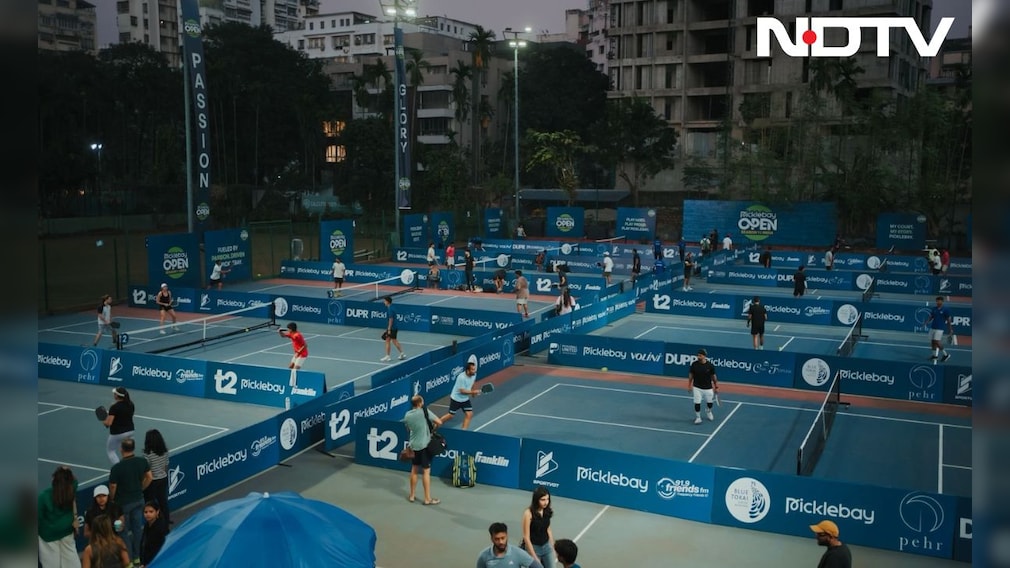
Today, the sport is spreading everywhere -- from gated societies and schools to luxury clubs, rooftop arenas, hotels, and office communities. And as participation rises, so does the money flowing into it.
Industry estimates now peg India's pickleball market at nearly Rs 750 crore by 2030. Just two years ago, the sport barely existed outside niche circles.
Now, it is impossible to ignore.
From Niche Sport To Urban Lifestyle
According to Siddhant Jatia, Founder and CEO of Picklebay, India had roughly 200 dedicated pickleball courts in 2024. Today, that number has crossed 2,500.
Active participation, he says, has jumped from around 60,000 players in 2024 to over 2,50,000 in 2026. And this may still be just the beginning.
"India today has roughly 2,500 courts, and we are still at a very early stage," Jatia says. "The sport's low entry barrier, compact infrastructure requirement, and strong social-fitness appeal are making it highly viable across urban India."
This "social-fitness appeal" is perhaps the biggest reason behind the craze.
Unlike gyms, where workouts are often solitary, pickleball thrives on interaction. You rotate partners. Talk between points. Meet strangers. Stay active without feeling punished by fitness.
For Gurleen Kaur, a Mumbai-based working professional, this community aspect changed everything. "I have spent most of my life in gyms, and fitness is usually a very individual pursuit," she says. "Pickleball is the complete opposite."
"You need people to play, you talk between points, you rotate partners, and over time you end up building genuine connections across age groups."
Business Behind The Paddles
The funny thing about pickleball is that it looks deceptively simple -- a smaller court, a plastic ball, a lightweight paddle.
But behind the easygoing rallies sits a fast-growing business ecosystem.
Investments are now pouring into infrastructure, leagues, equipment, coaching academies, and tournament formats. "The investment story is moving across three layers: infrastructure, tournament IPs, and equipment," says Jatia.
He points out that pickleball courts can be built at a fraction of the cost of several traditional sports facilities while fitting into compact urban spaces. That makes them highly attractive for real estate developers, clubs, schools, and entrepreneurs.
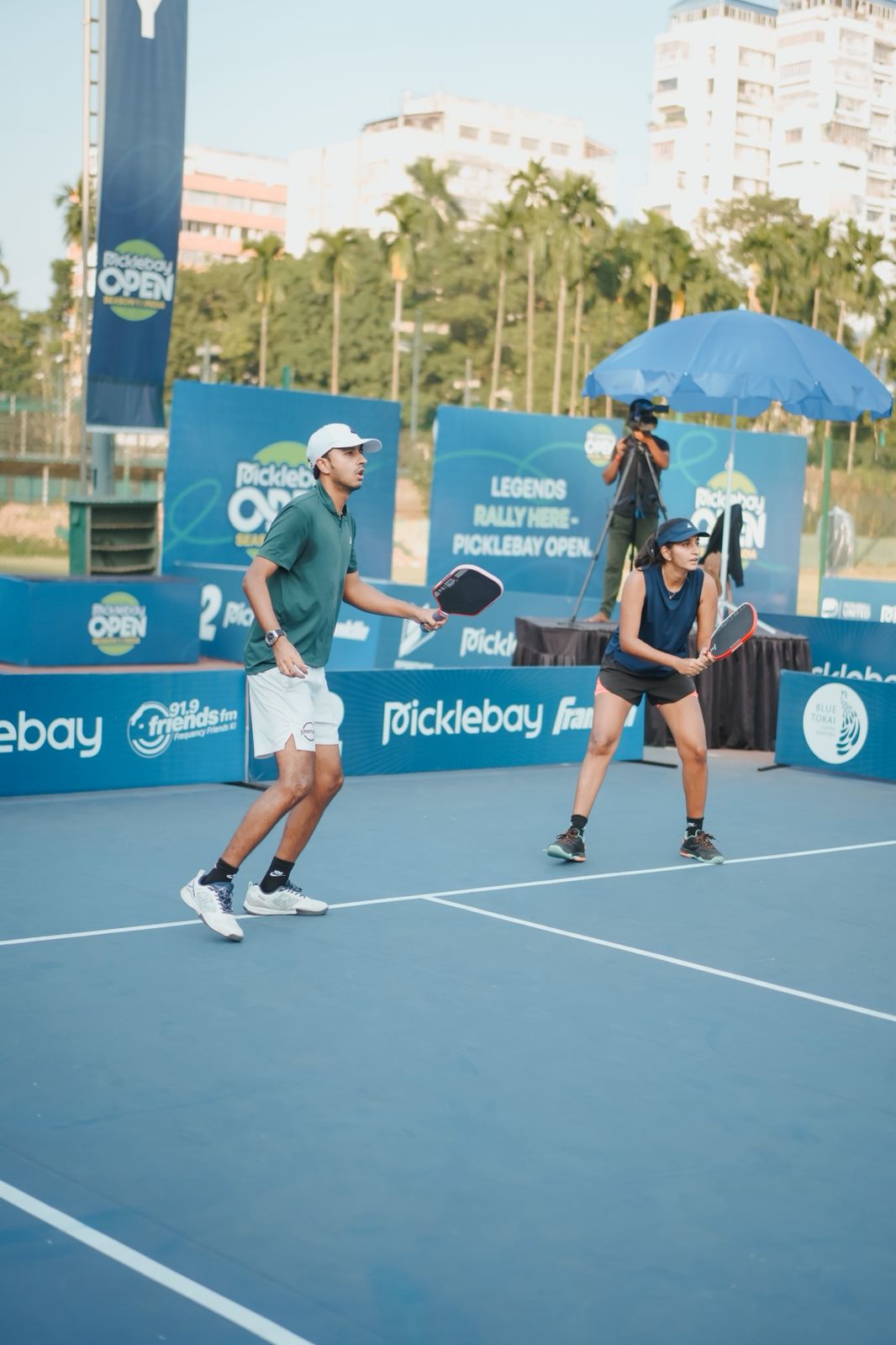
Unlike gyms, where workouts are often solitary, pickleball thrives on interaction
Globally too, the momentum is massive.
The worldwide pickleball market is estimated at $1.97 billion in 2026 and projected to hit $3.50 billion by 2030, according to Jatia. Pickleball Inc. reportedly secured a $225 million investment globally, while equipment brand Selkirk received $30 million in growth capital.
India is now catching up quickly.
"In respect of large-scale pickleball leagues, teams are being sold at price points ranging from Rs 1 crore to Rs 5 crore per year in India," he says.
Deepak Verma, Head of Business at Pacecourt, says businesses are increasingly viewing pickleball as both a recreational sport and a commercially sustainable opportunity.
"Startups such as GoRally and Picklebay are expanding aggressively through new centres, community-building initiatives, and court aggregation platforms," Verma says.
Professional leagues like the Indian Pickleball League and World Pickleball League are also drawing interest from business groups, sports entrepreneurs, and media companies.
Hotels, residential developers, schools, and wellness-focused projects are joining in too. Since multiple pickleball courts can fit into the space of one tennis court, developers see it as both practical and profitable.
Indian Metros Racing To Build Pickleball Courts
The boom is especially visible across metros. Mumbai remains one of the strongest markets, driven by sports clubs and active tournament culture. Bengaluru's startup crowd and fitness-focused professionals have also embraced the game. Delhi-NCR is emerging as another major hub.
Verma says schools, residential communities, and corporate groups across the region are increasingly adding courts and organising events. Cities like Pune, Hyderabad, Chennai, Ahmedabad, and Surat are also witnessing rapid growth.
At the centre of this expansion is a simple reality: urban India is running out of space, but demand for recreation is exploding.
Pickleball solves that problem neatly. The courts are smaller. The infrastructure costs are lower. And unlike many sports, beginners can start playing almost immediately.
What began as a casual weekend activity is also creating a new category of consumer spending. Players are no longer just paying for court bookings. They are spending on paddles, shoes, coaching sessions, memberships, tournaments, and even pickleball-themed social events.
Court bookings in urban India now range anywhere between Rs 600 and Rs 1,500 per hour, depending on the city and venue. Premium paddles can cost over Rs 25,000.
India's pickleball equipment market alone was valued at $41 million in 2025. The market touched $50 million (approximately) by mid-May, and is projected to reach $78 million by 2034, according to Jatia.
Verma says consumers are increasingly spending on "wellness experiences and community-driven events" tied to the sport.
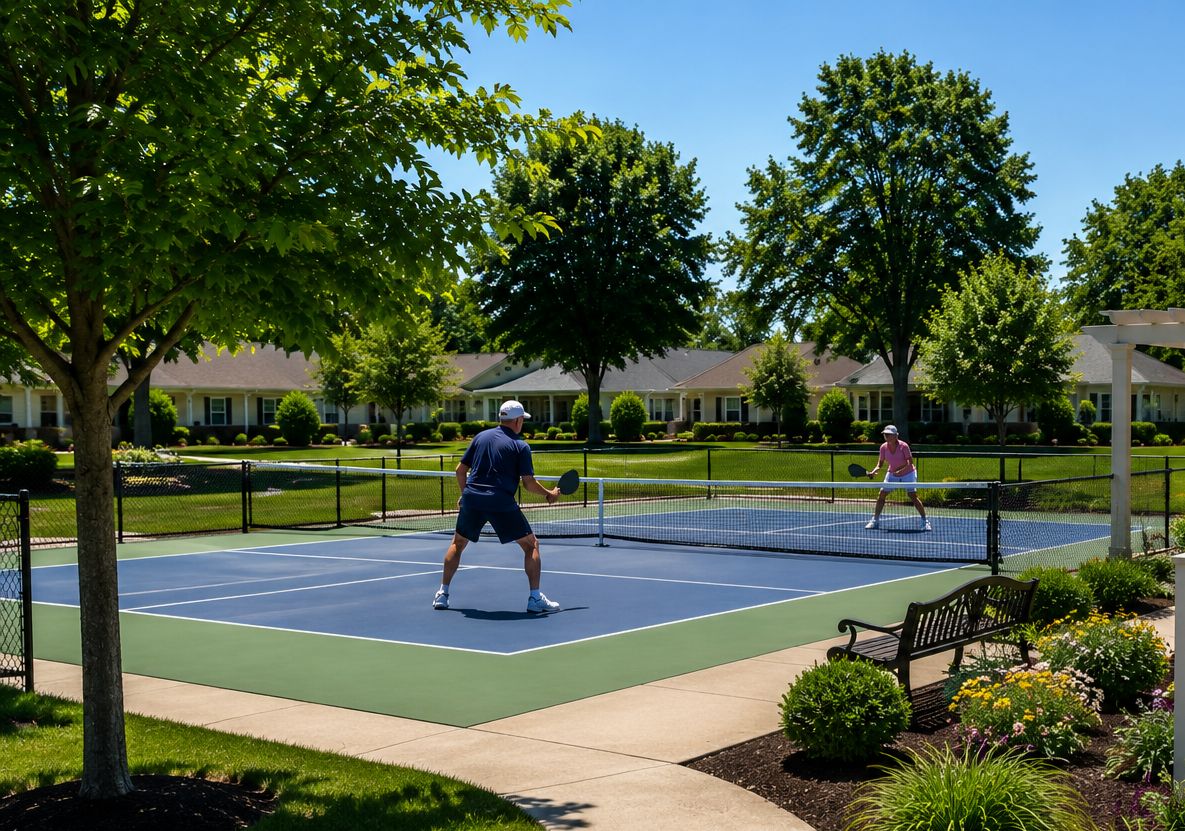
Professional leagues like the Indian Pickleball League and World Pickleball League are also drawing interest from business groups
Glow-in-the-dark sessions. Weekend mixers. Social leagues. Destination pickleball retreats. The sport is evolving into a lifestyle business.
Pickleball Popular Across All Ages
The sport appeals to such different groups simultaneously. Young professionals see it as flexible fitness. Parents see it as personal downtime. Older players see it as accessible exercise.
And brands see an audience willing to spend.
For many women, pickleball is becoming more than just a sport. It is becoming a social escape. Delhi-based model Tamanna Katoch says unpredictable work schedules pushed her toward the game.
"Finding dedicated time for the gym can often be challenging," she says. "That's why pickleball has become my preferred way to stay active and maintain fitness... What I love most about pickleball is that it combines fitness with meaningful social connection."
For Angbeen Abidi, a mother of two, the appeal lies in how unintimidating the sport feels. "The learning curve is gentle, the courts are smaller, and people of different age groups and fitness levels can comfortably play together," she says.
"As mothers, our schedules often revolve around work, family responsibilities, and very little personal time. Pickleball creates a rare balance where fitness and social interaction happen together."
This balance explains why pickleball is exploding so rapidly. It does not feel like hard work. It feels like leisure, like a weekend plan.
-
Opinion | The Last Bet? What Trump's 'Mother Of All Bombs' Could Actually Do To Iran

Can an MOAB deliver a decisive blow to Iran that may force it to surrender immediately, as Japan did after Hiroshima and Nagasaki in World War 2?
-
Hit Songs, Empty Pockets: The Hidden Math Behind India's Viral Music Boom
Over 80,000 brands and five lakh creators in India make branded content. The opportunity is worth around Rs 1,500 crore.
-
Opinion | Great 'Exceptions': How The Oil India Was Attacked For Is The Oil Trump Now Seeks
A law written to punish the buyers of Russian oil was suspended by the US to protect a purchase of Russian oil. India spent fourteen months being lectured for less.
-
Opinion | Louis Vuitton Loot, Torched Cars: France Protests Have An Unlikely Beneficiary
It's an unbelievable moment. Crowds looting the most exclusive stores in Paris, including the famed Luis Vuitton. But what's behind this meltdown?
-
Blog: Kolkata Didn't Learn From 2015. Eleven Years Later, It Proved To Be Fatal
The City of Joy isn't a stranger to crowd control. Be it during Pujo or Christmas at Park Street, Eden Gardens cricket matches, or Derbies between Mohun Bagan and East Bengal. But during Pujo, the entire city is on alert.
-
Opinion | Slurs, Threats, Now A Temple Attack Plot: When Did America Become So Hostile To Indians?
The rising tide of anti-India, anti-Hindu, and racist attacks serves as a stark reminder that economic prosperity does not automatically guarantee social immunity from bigotry.
-
A Step Behind Neha Bora: What Rahul Gandhi's Gesture Says About Congress' Gen-Z Pitch
At INDIA bloc's march to Supreme Court, Rahul Gandhi placed himself a step behind two women, hands resting on their shoulders. One was his sister Priyanka. The one on his right was Neha Bora. Here's what the image means for the protest wave now, and for Rahul's politics in general.
-
Opinion | Imran Khan, And The Perils Of Having An 'Opinion' In Bollywood
The reality of the industry is quite grimy. More often than not, its inhabitants have been fairweather friends, happy to sing the praises of whoever is in a position of authority.
-
Exclusive: India's Food Safety Problem Goes Beyond Just Dirty Kitchens - By Tukaram Mundhe
On World Food Day, Maharashtra's Commissioner of Food Safety explains why instead of taking stopgap measures, the entire supply chain in India needs to be held accountable and made transparent.
-
Opinion | India Has Enough Coal. So Why Are Power Plants Running Short? A 76 Million 'Crunch'
As of October 5, as many as 82 of the 191 thermal plants monitored by the Central Electricity Authority were in the 'critical' category