





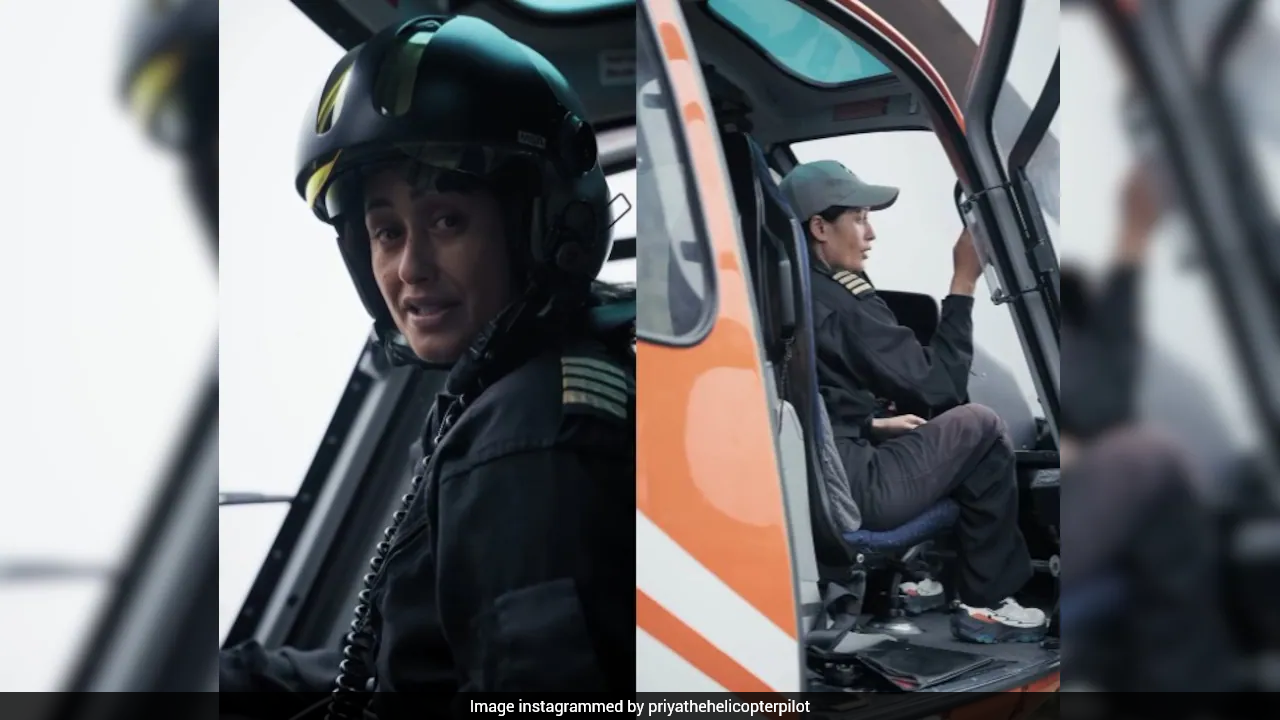
As devastating flash floods and landslides continue to wreak havoc across Nepal, one helicopter pilot has spent days flying almost continuously over some of the worst-hit areas, helping evacuate survivors and recover the dead. Priya Adhikari, Nepal's first female helicopter captain, has flown around 100 rescue missions in less than a week. The 41-year-old high-altitude rescue pilot has been operating in the Himalayan region, including the flood-ravaged Timure area in Rasuwa district.
Speaking to CNN's Anderson Cooper, Adhikari described the rescue operation as one of the most challenging she has experienced, saying the disaster was even more difficult to navigate than the 2015 Nepal earthquake because so much of the destruction was concentrated in a narrow valley.
Who is Priya Adhikari?
Adhikari is an experienced high-altitude helicopter pilot who has spent years conducting search-and-rescue operations in the Himalayas. Her missions have included rescuing injured climbers at extreme altitudes, with some flights taking her to around 6,200 metres.
Her aviation journey was not straightforward. She studied environmental science and initially worked as cabin crew. A helicopter joyride sparked her interest in flying, eventually prompting her to travel to the Philippines for helicopter training. After completing the required flying hours, she became a full-time helicopter pilot in 2017 and went on to specialise in high-altitude rescue operations.
Flying into Nepal's flood-hit areas
The scale of the current rescue operation has been immense. Around 20 helicopters have been involved in missions around Timure, with several aircraft often operating in the same small area at once. Adhikari said five or six helicopters may have to land almost simultaneously to evacuate survivors. Pilots constantly communicate over the radio to coordinate their movements, avoid conflicts and ensure that they are not all heading to the same location.
The terrain presents another major danger. Flash floods and mudslides have left thick layers of unstable mud across parts of the affected areas. From the air, the surface can appear solid, but pilots cannot always tell whether it can support a helicopter.
Adhikari explained that in some locations, the ground is so unstable that pilots cannot safely shut down their engines after landing. Instead, they have to keep the helicopter powered while survivors are loaded and evacuated.
The devastation she has witnessed from the air has been overwhelming. During flights over Timure, Adhikari said she saw bodies scattered across areas destroyed by the floods. At the same time, she witnessed survivors waiting for helicopters to arrive.
More than 200 people were evacuated from Timure during the first two days of the operation, with several helicopters, including Nepal Army Augusta aircraft, involved in the rescue.
For Adhikari, the survivors have become a source of strength amid the destruction. She recalled seeing people waiting on the ground and waving as helicopters landed. Her response, she said, was simply to tell them that they had survived.
"Every time I go and land, I see people around and waving at them," she said. "I say, you survived."
Searching for people who never made it out
Despite the scale of the operation, Adhikari said some individuals have stayed on her mind long after the helicopters left the affected areas. She recalled trying to locate the parents of Radhika, an American-Indian woman whose family was caught up in the disaster. She also searched for two Nepalese men - one associated with the Isha Foundation and another who worked at a bank in Timure.
She said that although these people were not her relatives, seeing the destruction and the bodies from the air created an emotional connection that was difficult to shake. The rescue operation has also involved recovering large numbers of bodies. Adhikari said body bags have become one of the most urgently needed supplies in the affected areas. For those who survived, however, her focus remains on getting them to safety.
After days of flying through one of Nepal's worst disasters, Adhikari acknowledged the exhaustion but said rescue missions were what she and her fellow pilots had been trained to do.
"Most of us are so exhausted because of all the flights we've been doing. We've been trained for this," she told CNN.
Track Latest News Live on NDTV.com and get news updates from India and around the world

