





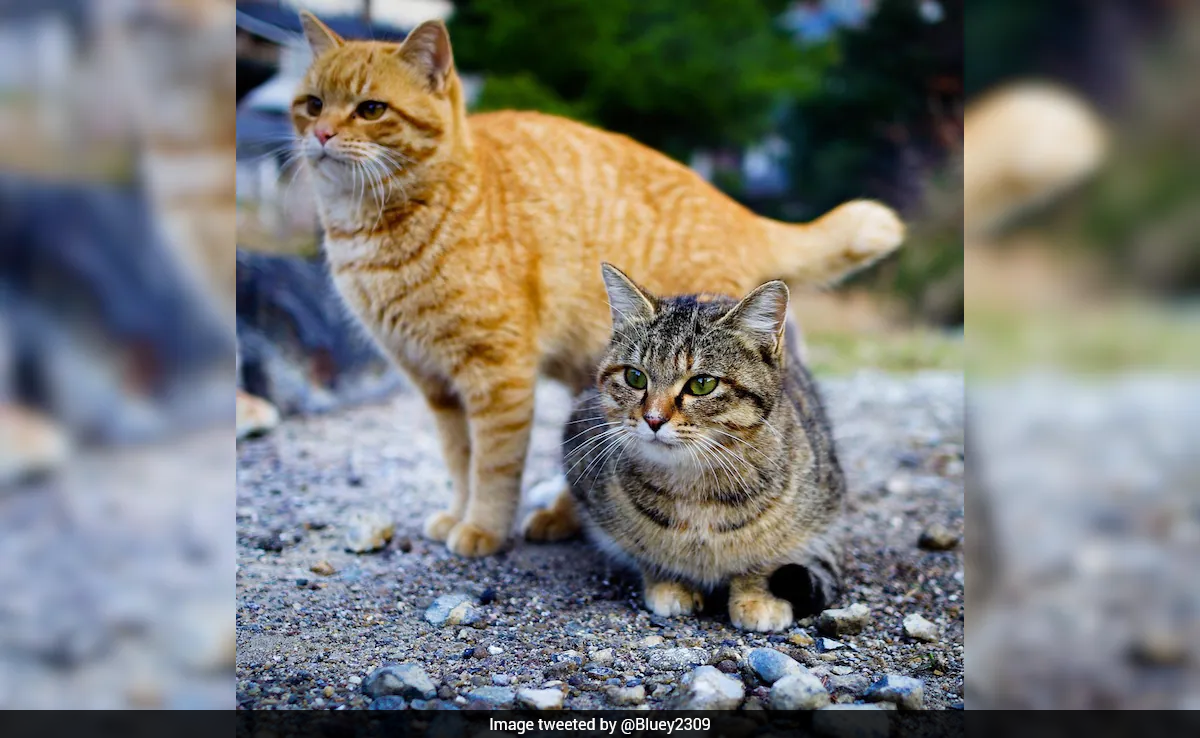
Japan's long-running love affair with cats has evolved into a major economic force, with the country's booming "catnomics" industry projected to contribute nearly 3 trillion Japanese yen (approximately Rs 18,034 crore) to the economy in 2026. Originally coined in Japan as "nekonomics," the term refers to the growing economic impact created by cat ownership, cat-themed tourism, merchandise, publishing, and related businesses across the country.
Notably, cats have become deeply embedded in Japanese culture and commerce, influencing everything from travel and retail to literature and entertainment. According to the Japan Pet Food Association, in 2025, Japanese households were home to around 8.8 million cats and around 6.8 million dogs. Now there are more pets than children under 15 in the country, the Guardian reported.
The impact of cats is especially visible in parts of Tokyo that have built entire local identities around feline culture. In one historic neighbourhood often referred to as "cat town," tourists from around the world visit shops selling cat-shaped sweets, custom hanko seals, porcelain figurines, chopsticks, postcards, and themed souvenirs.
Local shop owners say the area's many Buddhist temples historically attracted stray cats, helping shape its identity over time. While cats once roamed freely outdoors, many pets today stay indoors due to extreme summer heat.
Cats have also become a powerful marketing tool in Japanese literature. The trend dates back more than a century to 'I Am a Cat', the famous novel written from the perspective of a household cat. Felines continue to feature prominently in works by Haruki Murakami, as well as books like 'The Travelling Cat Chronicles' and 'The Guest Cat'. Publishers frequently use cat imagery on book covers because of its strong commercial appeal.
The latest "catnomics" estimate was calculated by Katsuhiro Miyamoto, who analysed spending across cat cafes, photo books, pet food companies, merchandise sales, and related industries. According to his report, the economic impact of cats in Japan now comes close to matching the scale of the 2025 World Exposition in Osaka.
Cat culture has also reached Japan's political and royal circles. The emperor and empress are known cat owners, while Prime Minister Sanae Takaichi has publicly expressed a preference for cats over dogs.
The Catalysts Behind Catnomics
The multi-billion-dollar scale of Catnomics is built upon several major economic pillars:
- Pet Care Spending: Households in Japan care for an estimated 8.8 million pet cats, vastly outnumbering pet dogs. The average owner spends nearly 1.8 million yen ($11,300) over a cat's lifetime on premium food, litter, and essential veterinary healthcare.
- Feline Tourism: Tourists frequently travel to Japan's 24 famous "cat islands" (like Tashirojima) or visit cat cafes to interact with free-roaming felines.
- The "Station Master" Effect: Rural transport lines have been saved from bankruptcy by appointing official cat station masters, like the legendary Tama at Kishi Station, which generated over 1.1 billion yen in local tourism revenue alone.
- Retail and Corporate Marketing: Major convenience store chains continuously launch limited-edition feline merchandise and paw-shaped desserts.
From A Dog-loving Nation to A Cat-centric Economy
The transition from a traditionally dog-loving nation to a cat-centric economy reflects deep societal shifts in Japan.
- Urbanisation and Small Housing: Strict apartment regulations and tight urban spaces make low-maintenance, quiet cats much more practical to keep than dogs.
- Aging Population: With a rapidly aging demography and a declining birthrate, millions of Japanese citizens live alone. Cats serve as crucial companions, offering psychological comfort and emotional healing to isolated individuals.
- Pop Culture: Felines have a permanent stronghold in Japanese media, anchored by globally recognised pop-culture figures like Hello Kitty, Doraemon, and the classic Maneki-Neko.
Track Latest News Live on NDTV.com and get news updates from India and around the world

