





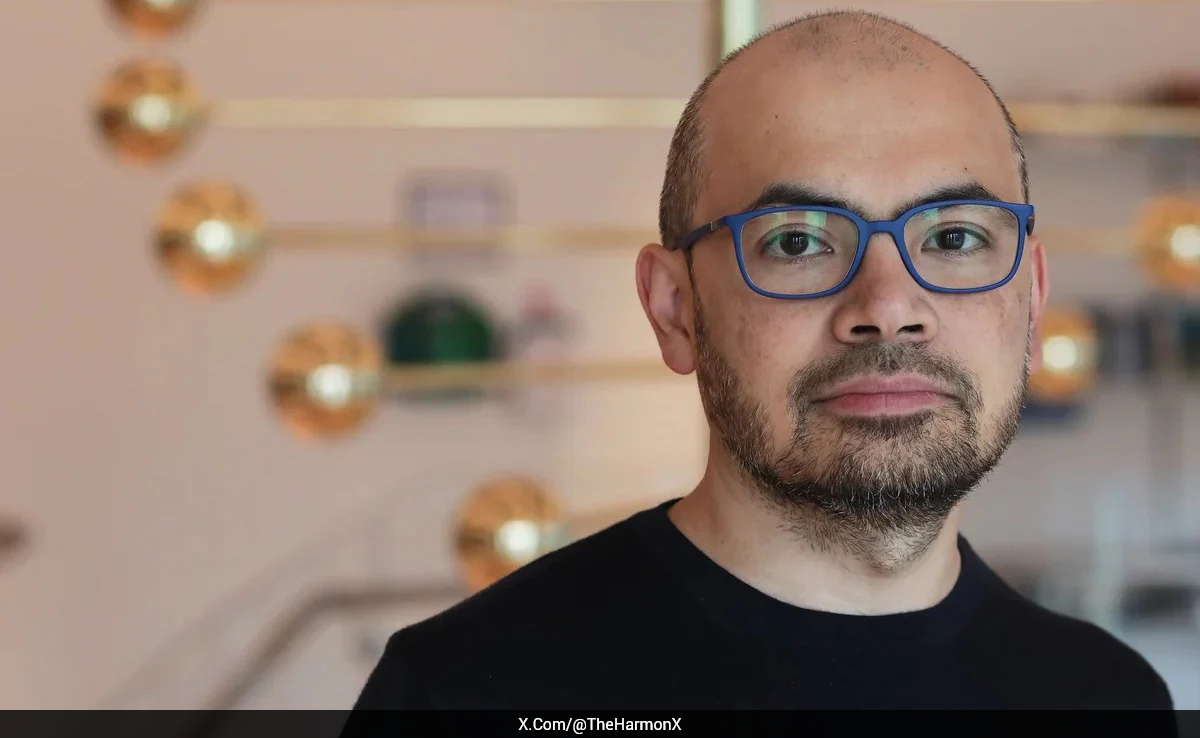
At the AI Impact Summit in New Delhi, Demis Hassabis, chief executive of Google DeepMind, said true artificial general intelligence (AGI) has not yet arrived, despite rapid advances in systems such as Gemini and ChatGPT.
AGI refers to a hypothetical form of AI that can reason like a human and solve problems beyond the data it was trained on. Asked whether current systems match human intelligence, Hassabis gave a clear answer. “I don't think we are there yet.”
Three key gaps
Hassabis outlined three major weaknesses in today's AI systems.
1: First, they lack continual learning. Most models are effectively frozen after training and cannot adapt in real time from new experiences or personalise themselves fully to changing contexts.
2: Second, they struggle with long-term planning. While capable of handling short-term tasks, they cannot yet form coherent strategies that span years in the way humans can.
3: Third, they lack consistency. Hassabis noted that while AI systems can solve extremely complex problems and even reach gold medal standard in international mathematics competitions, they can still make simple errors if questions are phrased differently. A truly general intelligence, he argued, would not show such uneven performance.
Health and the future of AI
Beyond AGI, Hassabis highlighted healthcare as one of AI's most important long-term applications. He pointed to work at Isomorphic Labs, which aims to use AI to speed up drug discovery and potentially develop dozens of medicines each year.
The New Delhi summit has drawn global technology leaders, including Sam Altman of OpenAI, Dario Amodei of Anthropic, Sundar Pichai of Google, and Alexandr Wang.
As debate over AGI intensifies in Silicon Valley, Hassabis' message in New Delhi was cautious. Impressive achievements do not yet amount to human-level intelligence.
Track Latest News Live on NDTV.com and get news updates from India and around the world

