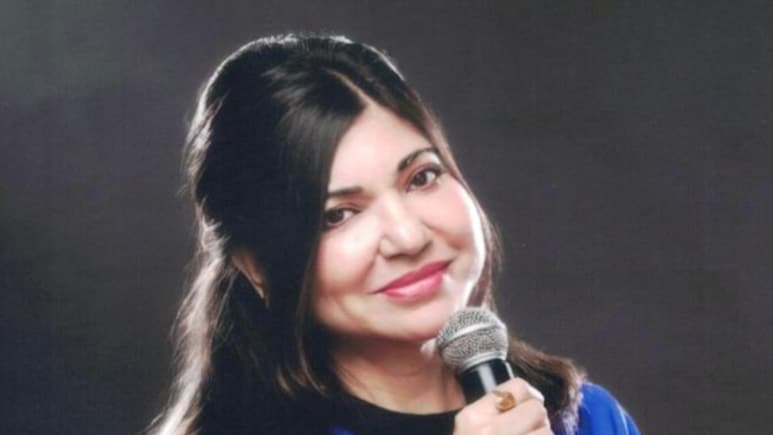
Alka Yagnik was the voice of countless homes, particularly at the peak of her career, which exploded in the 1990s and early 2000s. She was magical then, and remains so.
After a career spanning more than four decades across 25+ languages, amounting to over 22,000 songs, the veteran singer was honoured with the Padma Bhushan, India's third-highest civilian award by President Droupadi Murmu at Rashtrapati Bhavan in New Delhi. While the moment was deeply moving for fans who grew up dancing to numbers such as Ek Do Teen from Tezaab (1988) or following her effortless switch to the romantic Sooraj Hua Maddham in Kabhi Khushi Kabhie Gham (2001), what was heartbreaking was how she did not look in the pink of health.
The singer has been quietly battling a rare condition called sensorineural hearing loss, which was triggered by a viral attack. As clips of her at the ceremony resurfaced, they served as a reminder of how long she has been away from the spotlight. She last lent her voice to Imtiaz Ali's film Amar Singh Chamkila (2024), for the song Naram Kaalja and honestly, time seems to stand still for how much we miss her mellifluous voice that adapted to every passing generation's music and excelled at it.
Her recent recognition brought back an avalanche of memories of her songs that always struck a chord. It shows why we still need an Alka Yagnik song to dance to and be moved by.
A Woman In A Man's 'Musical' World
Alka Yagnik made listeners sit up and take notice with Mere Angne Mein from the 1981 film Laawaris, where she was the playback singer for Rakhee Gulzar. The song launched her career in tinsel town, but the true breakthrough was Ek Do Teen from the 1988 film Tezaab, picturised on Madhuri Dixit. With that song, Alka Yagnik had truly arrived.
In an even more male-dominated playback scene in the 1990s and onto 2000s, as much as it is today, Alka Yagnik carved a distinctive place for herself among singers like Udit Narayan, Kumar Sanu, Shaan and Sonu Nigam. She delivered iconic numbers with all of them, and never once was the song remembered solely for just the male vocalist.
Be it her '90s love ballads with Kumar Sanu - Mera Dil Bhi Kitna Pagal Hai (Saajan), Chand Chupa Badal Mein (Hum Dil De Chuke Sanam) - or the flirtatious beats of Chura Ke Dil Mera (Main Khiladi Tu Anari), she adapted effortlessly. She matched the youthful energy of Udit Narayan in songs like Jaane Kyon Log Pyar (Dil Chahta Hai), and with the same singer melted into the romanticism of numbers like Yeh Laal Ishq (Jo Jeeta Wohi Sikandar) and Aye Mere Humsafar (Qayamat Se Qayamat Tak).
She never hid behind their shadows; rather, she was a creative catalyst who elevated each song. Her duets were always incomplete without her lines - like a story waiting to be concluded. As time changed, so did she, moving seamlessly through different eras of Indian film music and solidifying her generational appeal.
The 2000s brought contemporary duets with Sonu Nigam and Shaan, with a modern sensibility. That's how chartbusters such as Sooraj Hua Maddham (Kabhi Khushi Kabhie Gham), Dil Ne Yeh Kaha Hai Dil Se (Dhadkan) and Aisa Lagta Hai (Refugee) achieved timeless status. In 2015, when Imtiaz Ali's Tamasha released Agar Tum Saath Ho, it may be remembered primarily as an Arijit Singh moment, but the brief portion graced by Alka Yagnik's voice is etched in our memories as if we heard it a minute ago.
One moment she had us falling in love with Hum Tum's title track alongside Babul Supriyo; the next she was excelling in conversational duets like Ladki Kyon (Hum Tum) and Woh Ladki Hai Kahan (Dil Chahta Hai) with Shaan. You never quite knew what to expect from her, and her filmography demonstrates that variety.
The Queen Of Solos And Duets
There have been widespread conversations lately among today's leading female singers - Shreya Ghoshal, Shilpa Rao, Sona Mohapatra and Jonita Gandhi, to name a few - about the decline of solo female songs and the gender bias in the industry.
Calling the notion "a little patriarchal", Shreya Ghoshal voiced her concern about female singers being underrepresented in Top 50 rankings and their shrinking role in the industry. Sona Mohapatra echoed this, noting how romantic songs in films are increasingly reserved for male singers. Shilpa Rao and Jonita Gandhi pointed out that the lack of female-centric film roles also reduces opportunities for solo female songs.
But Alka Yagnik seems like a testament to someone who fought - through her work - long before podcasts and social media became platforms for airing industry grievances.
From early on, Alka Yagnik's solo songs carried immense weight and emotional depth, becoming anchors for a film's narrative. Be it M.M. Kreem's haunting Gali Mein Chand (Zakhm, 1998), the foot-tapping Dilbar Dilbar (Sirf Tum, 1999), the quirky Ek Do Teen (Tezaab, 1988) or the heartwrenching Agar Tum Saath Ho (Tamasha, 2015), Alka Yagnik has consistently shown range and insight. She brought excitement by offering something different each time: the power of a female voice that lingers long after the song ends. Her solos were never mere fill-ins; they were tools that elevated and continued the story.
Having sung the most female solos alongside legends such as Asha Bhosle and Lata Mangeshkar, Alka Yagnik has repeatedly proved there is room for female chartbusters in a market crowded with male voices. That distinction set her apart and allowed her to transcend competition.
The Voice Of 90s Heroines
From the 1980s to the 2010s many singers came and went, but Alka Yagnik had something timeless. Whenever you hear her voice, visuals of '90s heroines - from Madhuri Dixit and Juhi Chawla to Rani Mukerji - come flooding back.
Choli Ke Peeche Kya Hai from Khal Nayak (1993) was a sensation for more reasons than one, but can we ever separate Alka Yagnik's peppy voice from Madhuri Dixit's lip-syncing and killer expressions? Not really.
Alka Yagnik delivered several '90s chartbusters for Juhi Chawla. Juhi Chawla's breakthrough musical moments remain synonymous with Alka Yagnik, who sang songs such as Aye Mere Humsafar, Gazab Ka Hai Din, and Akele Hain To Kya Gum Hai from Qayamat Se Qayamat Tak. She was unstoppable, switching from the quirky "Mere Khwabon Mein Jo Aaye" (Dilwale Dulhania Le Jayenge) for Kajol to the street-style comedy number "Aati Kya Khandala" for Rani Mukerji.
In many ways, Alka Yagnik became the auditory identity of the '90s divas, and we still hear those songs atop every 'Hit '90s' playlist at parties and on streaming platforms today.
Point is, Alka Yagnik has been, and remains, evergreen. The renewed focus on her follows both her recent milestone and her health struggles. The love for her is immense, as was seen on social media today - from industry colleagues to fans - and all they want is for her to make a comeback. On that note, we'll put on one of her songs while we wait.
