15 years ago, the Kingdom of Westeros graced our screens for the first time. Based on George R.R. Martin's A Song of Ice and Fire novels, Game of Thrones changed the face of television with its unabashed depiction of brutality and erotic exploits.
It altered the television landscape forever, wielding sex and savage violence as weapons to advance the storyline. Too often, these elements overshadowed the high-stakes twists and power struggles that should have taken centre stage.
The eight-season series premiered on HBO on April 17, 2011, and within a few episodes, the rampant use of explicit intimacy and gruesome gore as starring features became evident. Whether for character growth, shocking demises, suggestive distractions from grim fates, or extreme cruelty to heighten suspense, George R.R. Martin's books-aimed at a brutal yet realistic portrayal of medieval history-were flipped for a much more vast television audience. The battle for the Iron Throne devolved into a parade of superfluous nudity and sexual abuse.
Game of Thrones poster
When You Play The Game Of Thrones, You Win Or You "Die"
Showrunners David Benioff and D.B. Weiss made one thing abundantly clear in their TV adaptation of Game of Thrones: "No one is safe."
Right in Season 1, Ned Stark's (Sean Bean) startling execution laid the groundwork: irrespective of main character status, anyone could perish. Classic TV tropes were shattered forever. From decapitations and burnings to torture-everything was amplified onscreen, portraying real barbarity in a light never seen before. No holds barred.
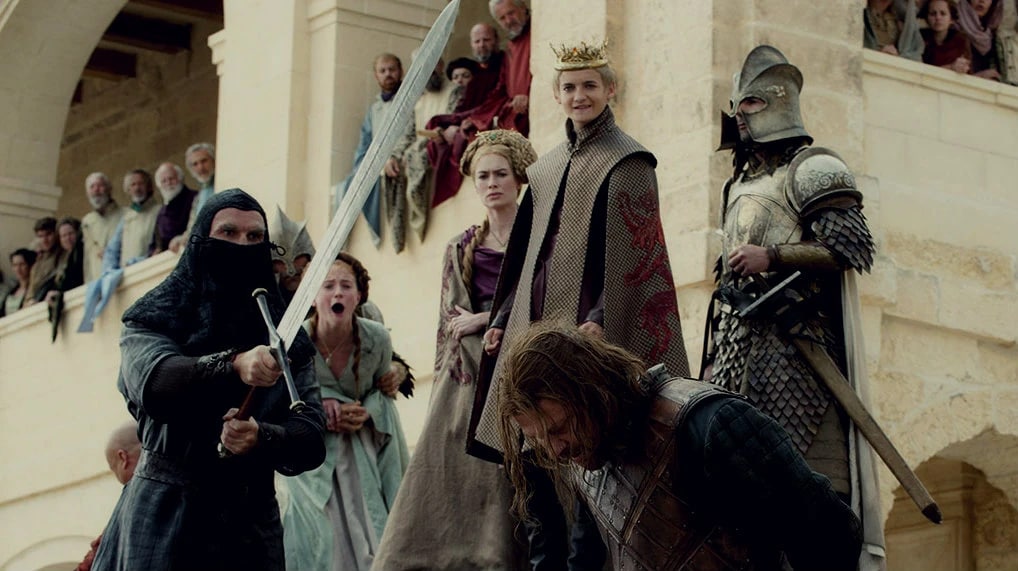
Ned Stark's execution in Game of Thrones
The intention was to evoke a merciless world of irrevocable consequences, and the creators held nothing back.
One of the most infamous moments was the Red Wedding (Season 3, Episode 9). The nerve-shredding slaughter of Robb Stark (Richard Madden), his pregnant wife Talisa (Oona Chaplin), and Catelyn Stark (Michelle Fairley) marked a pivotal shift, dismantling the Stark rebellion and upending the political hierarchy.
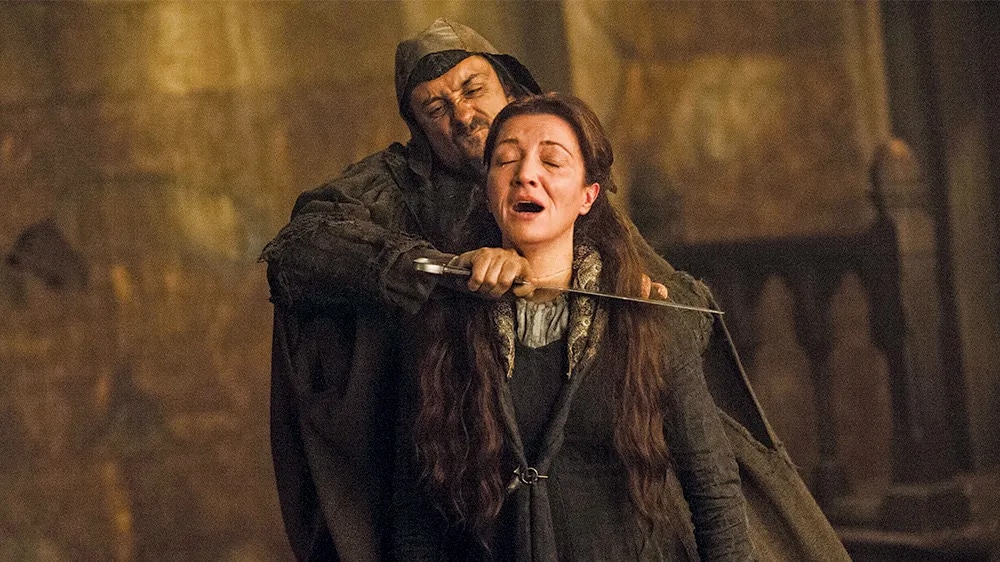
Catelyn Stark killed at The Red Wedding
In Season 4, Episode 7, as viewers would recall - Oberyn Martell's (Pedro Pascal) visceral demise-his skull crushed by The Mountain-delivered an astonishing spectacle. Yet Season 6, Episode 10 saw Arya Stark (Maisie Williams) ruthlessly slay Walder Frey after baking his sons into a pie. Truly, gore had never been this graphic.
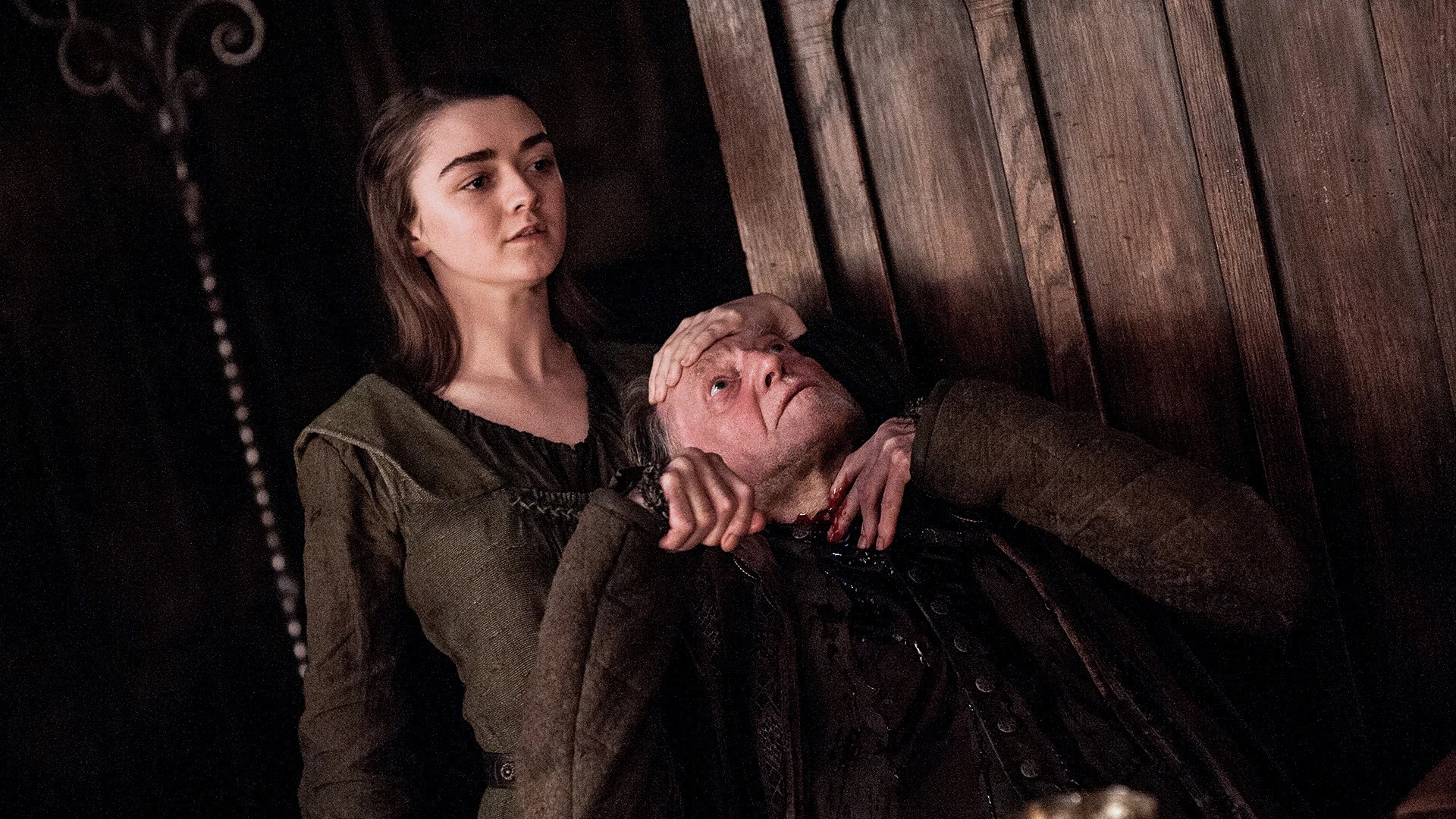
Arya Stark killing Walder Frey
The Game of Thrones team relentlessly amplified the torment outlined in the books, injecting extra torture and lewd assaults absent from the source material.
Sexposition - Main Character Energy
As the series ballooned into a cultural phenomenon, explicit intimacy became a core thread weaving through diverse plotlines. This peaked before Seasons 7 and 8, when time constraints and budgets restricted amplified usage. Earlier instalments, however, banked on the eyeballs it grabbed.
Intimacy sells.
The most conroversial sexual encounters blurred lines between power, ego, manipulation, and most importantly, consent.
In the first season's final moments of Episode 1, Jaime (Nikolaj Coster-Waldau) and Cersei Lannister's (Lena Headey) incestuous liaison leaves viewers agape. This however fell short in front of Season 4, Episode 13, when Jamie raped Cersei beside their son Joffrey's corpse. Notably, while the book framed it as consensual, the adaptation twisted it to suit its fancy.
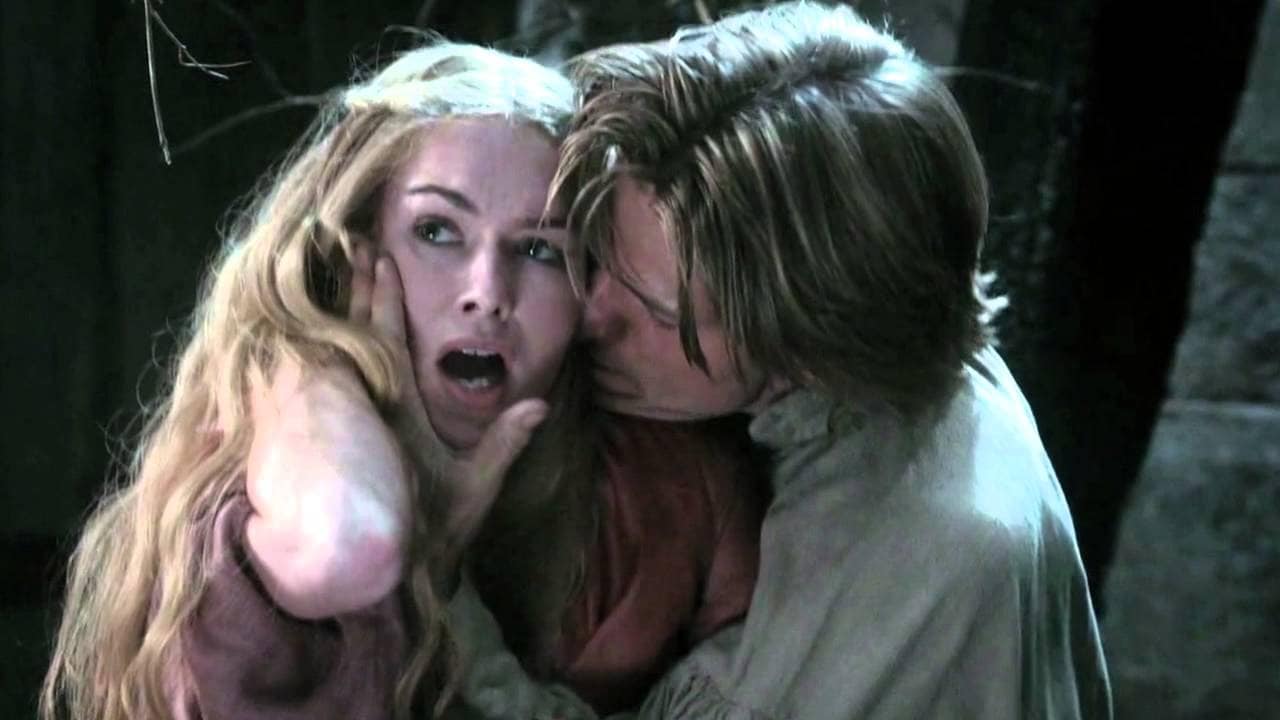
Jamie and Cersei (Season 4, Episode 3) - Breaker of Chains
That erotic violence served as a plot device goes without saying. It tantalised audiences, keeping them hooked.
Mostly, though, it was outright assaults that led to the audience turning furious. Widespread outrage sparked polarising reactions that gripped Game of Thrones. Debates over these scenes continued blowing out of proportions, especially because of its stark deviations from the novels.
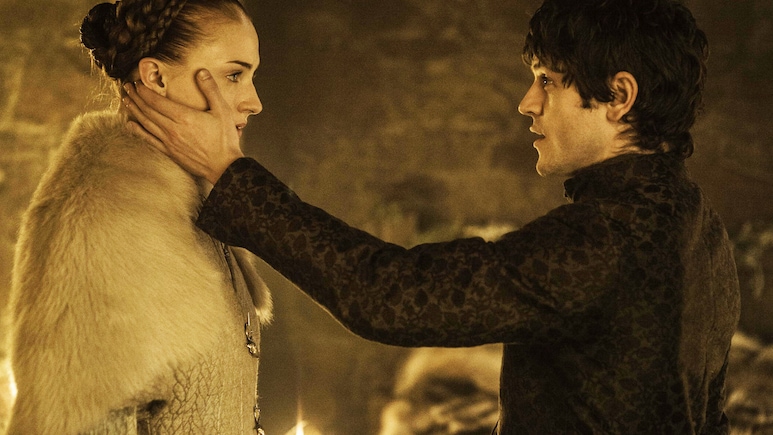
Ramsay (Iwan Rheon) and Sansa's (Sophie Turner) wedding night in Season 5, where she endured rape, drew utmost disdain. It was yet another bid to traumatise Sansa and solidify Ramsay's villainous nature.
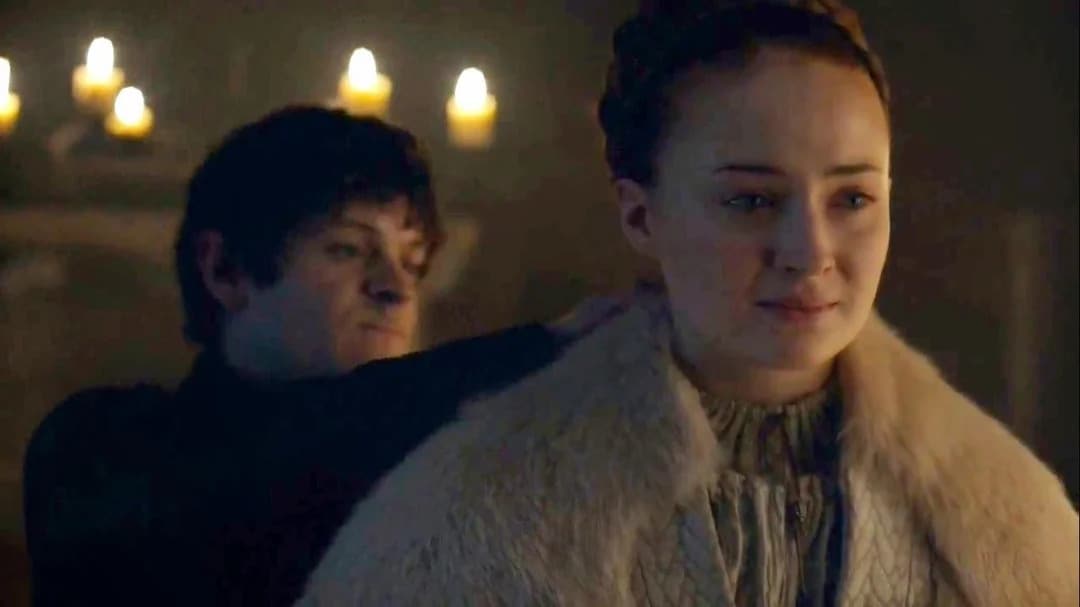
Sansa and Ramsay's Wedding Night
Daenerys Targaryen (Emilia Clarke) often endured erotic brutality, like her Season 1 premiere wedding night with Khal Drogo (Jason Momoa), weeping as he undressed and forced himself upon her. It sparked massive controversy then, evolving into a consensual bond.
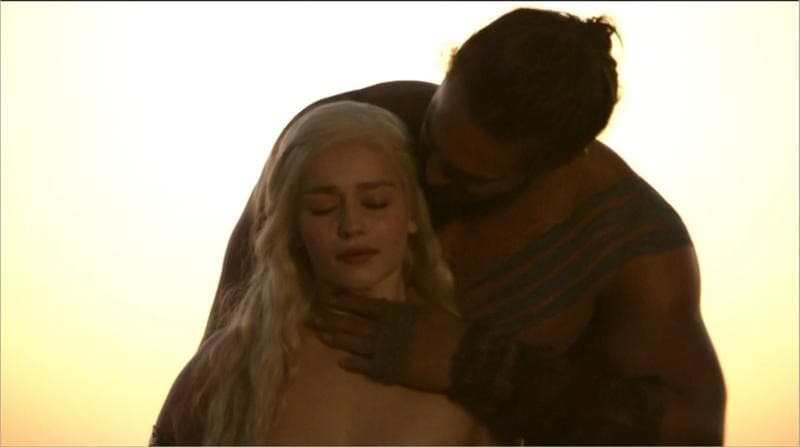
Khal Drogo and Daenerys in Game of Thrones
In Season 7, the unethical tension between Jon Snow (Kit Harington) and Daenerys Targaryen was frowned upon after their aunt-nephew bloodline was revealed, veering into emotional abuse.
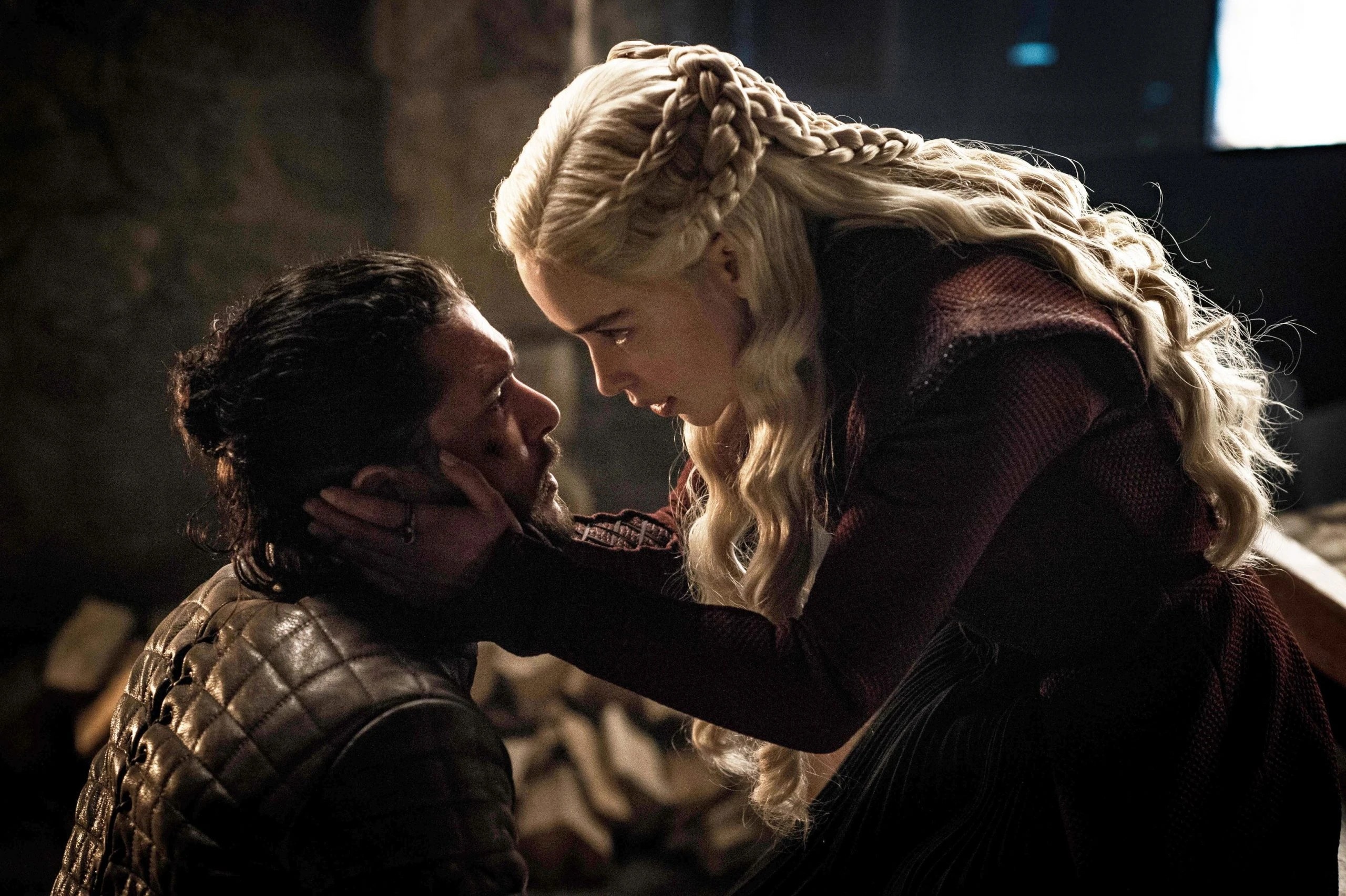
Jon Snow and Daenerys in Game of Thrones
The bottom line: the series normalised it all under the banner of authentic storytelling. Later studies and reports revealed high-impact scenes profoundly disturbed viewers, prompting many to stop watching the show permanently or temporarily.
By Seasons 7 and 8, the rise of #MeToo and #TimesUp movements led to a sharp cutback in erotic elements within the plots.
The patriarchal fantasy realm of Game of Thrones reshaped the landscape, forged a new TV model-accessible and enticing in the mainstream arena. Erotica and savagery marched hand in hand, justified on multiple fronts and normalised as creative tools. For the longest time, it worked-until critiques stepped in.
Over time, successors like The Witcher, The Wheel of Time, and prequel House of the Dragon have matched this benchmark. Today, rampant gore and explicit depictions fuel endless debates between polarised camps, yet remain a reliable strategy to keep viewers hooked.
15 years on, the first image striking a Game of Thrones fan remains those blood-soaked, perilous battles and elevated "sexposition" for an adrenaline-rush. It still leaves doors wide open for debates on how Game of Thrones etched itself into television history.
