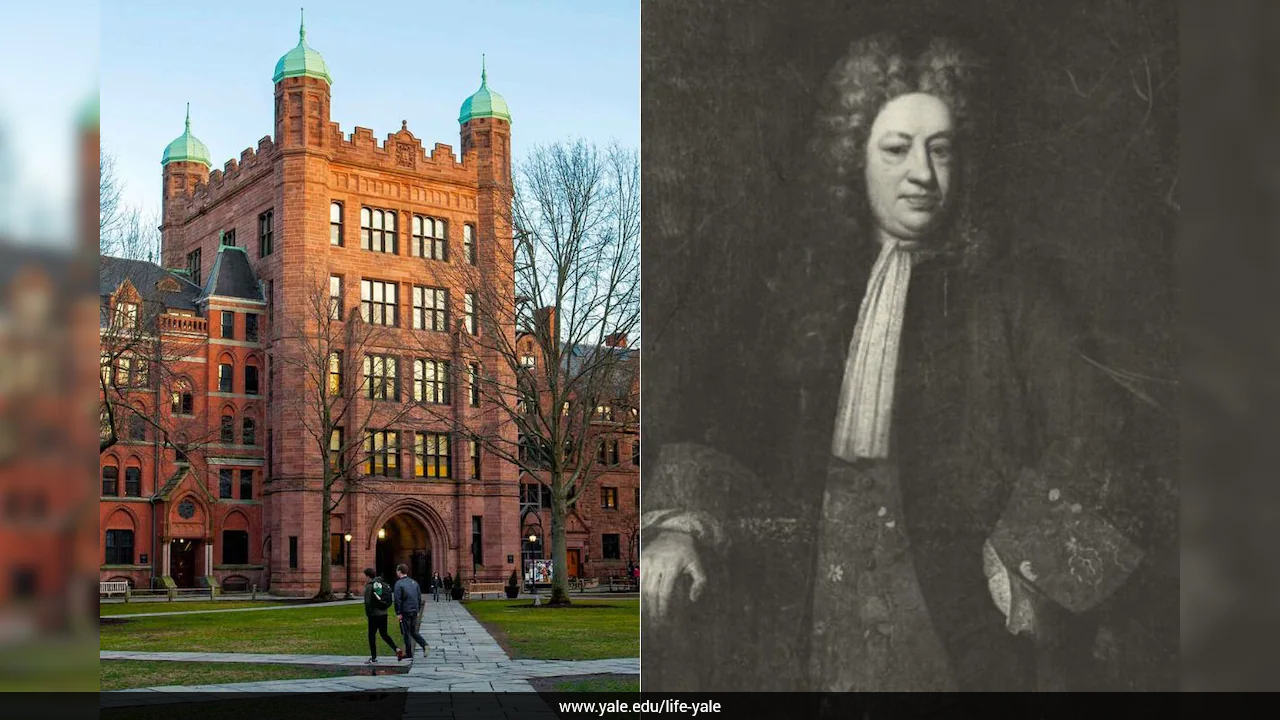

One of the world's most prestigious universities has a remarkable connection to India that dates back more than 300 years. The story begins with Elihu Yale, a wealthy British colonial administrator who spent much of his career in India.
According to Yale Center for British Art, Yale arrived in Madras, now Chennai, in 1672 to work for the British East India Company. He eventually became Governor of Fort St George, the Company's main settlement in Madras, serving from 1687 to 1692.
According to Yale & Slavery Research Project, Yale accumulated a considerable fortune during his time in India. His wealth, however, was not without controversy. Historical research by Yale University says that part of his fortune was connected to his involvement in the East India Company's trade in enslaved people, as well as other commercial activities.
After returning to England, Yale became an important benefactor of the Collegiate School of Connecticut, an institution founded in 1701. The school moved permanently to New Haven in 1716. In 1718, Yale sent the school a major gift that included 417 books, a portrait of King George I, royal arms and nine bales of goods. Yale University's official history confirms that the school was renamed Yale College that same year in recognition of his contribution, as per the Yale University Website.
The goods were sold, with the proceeds going towards the construction of the college's building. Yale's historical research records that the goods sold in Boston for 562 Pounds and 12 shillings, considerably more than the 300 Pounds value Yale had estimated for them.
The Indian connection is particularly striking. Yale's historical records identify the shipment as including textiles from India. A Yale Globalist account specifically describes three bales of Indian textiles among the goods sent by Yale.
There is an important detail that is often missed in retellings of the story. Elihu Yale did not found Yale University. The institution already existed as the Collegiate School of Connecticut when it was established in 1701. It was renamed Yale College in 1718, more than a decade after its founding.
Yale's donation was nevertheless significant. The school's trustees honoured him by naming the college after him, while also hoping the recognition would encourage further donations. Yale's research project says the proceeds from the goods were used to help fund the college building, while the books and portrait were retained.
What began as a colonial-era connection between a wealthy East India Company administrator and a young American college eventually became part of the history of one of the world's best-known universities.
