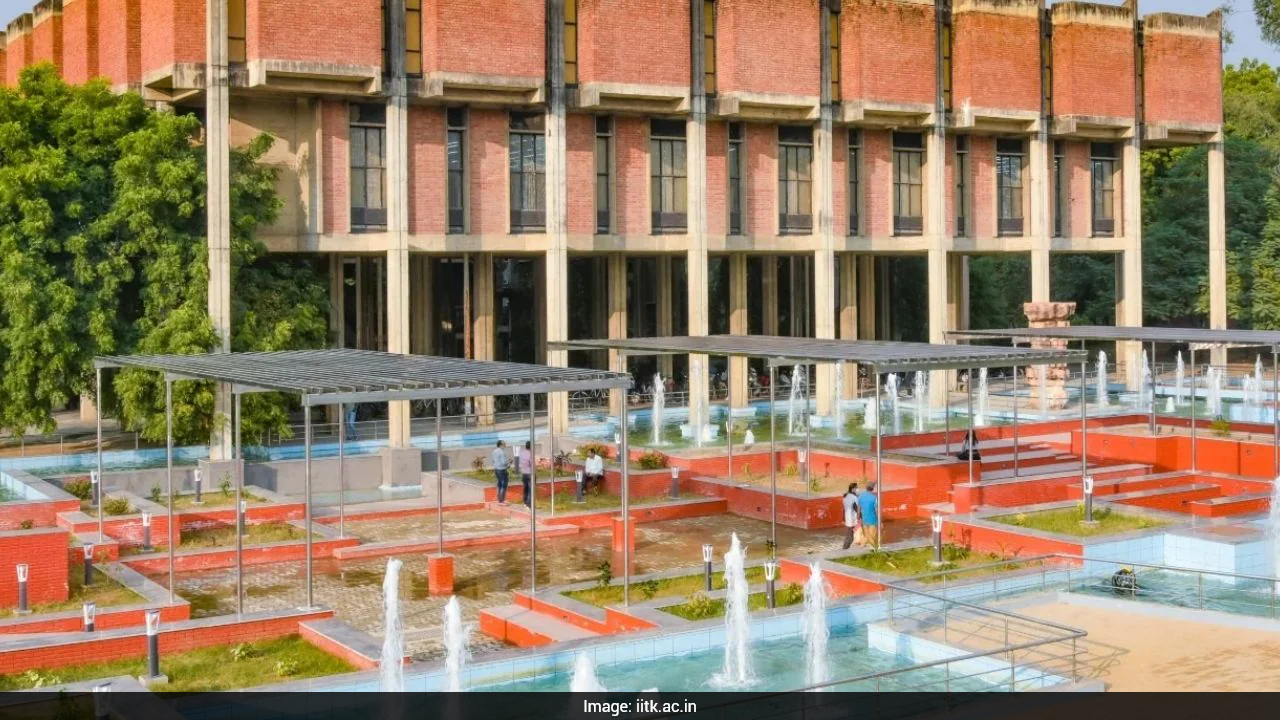

The Indian Institute of Technology (IIT) Kanpur's Noida campus will house India's first deep-tech hub, with the facility being constructed at a cost of Rs 281.03 crore. The second building of the U-Hub will come up at the Indian Institute of Information Technology (IIIT) Lucknow campus, giving Uttar Pradesh dedicated infrastructure for its flagship deep-tech initiative and placing IIT Kanpur at the centre of the state's efforts to build companies working on technologies critical to India's strategic autonomy.
The construction of both deep-tech hubs is expected to be completed within 24 months.
According to IIT Kanpur, the U-Hub at its Noida campus will focus on physical artificial intelligence (AI) and robotics, autonomous systems and technologies, semiconductor design and outsourced semiconductor assembly and testing (OSAT), advanced medical technology (medtech) and biotechnology (biotech), as well as quantum and advanced computing.
The hub aims to transform highly specialised laboratory research into products and companies capable of driving economic growth and wealth creation. It is being developed to contribute to the national vision of Viksit Bharat 2047 and Uttar Pradesh's goal of becoming a one trillion US dollar economy.
"The deep-tech hub will give researchers, startups, and industry access to shared laboratories, design, testing, prototyping, and certification facilities, skilling centres, as well as incubation and acceleration programmes. It will support the commercialisation of research through intellectual property protection, access to patient capital, connections with investors and mentors, facilitation of pilot deployments and international collaborations," the institute said in a statement.
At full capacity, the U-Hub will be able to incubate 40 to 50 startups across its focus areas. Startup selection will be based on the strength of their intellectual property, including patents, their track record in laboratory research and prototyping, and external scientific or regulatory validation. These parameters will be assessed by an independent Expert Committee comprising national and international technology specialists.
The Deep Tech U-Hub will operate through the Uttar Pradesh Startup Mission under the Department of IT and Electronics, Government of Uttar Pradesh. Its 11-member board, chaired by IIT Kanpur Director Professor Manindra Agrawal, will comprise representatives from the government, academia, industry, venture capital and the global technology sector.
What IIT Kanpur Director Said About India's Technological Sovereignty
Professor Manindra Agrawal, Director of IIT Kanpur and Chair of the Deep Tech U-Hub, said the institute was repositioning itself to play a key role in building India's technological sovereignty.
"IIT Kanpur is deliberately repositioning itself. We will not only educate, but we will be the place where India's technological sovereignty is built. The evidence is clear that depending on other nations for critical technology does not work. Through our recent Greater Than Us campaign, we identified the areas that matter most, and the knowledge capital we already hold will fuel this U-Hub. Our task is to take startups from technology readiness to solutions that serve the nation, and to give India's best talent a compelling reason to build their futures here, in this country and in this state," Professor Agrawal said.
The U-Hub will span a total area of seven lakh square feet, comprising five lakh square feet in Noida and two lakh square feet in Lucknow. Unlike conventional startup incubators, the initiative will focus on patent-backed scientific breakthroughs, long-term research and development (R&D), and patient capital rather than high-volume, short-cycle ventures.
Under the Government of India's norms, conventional startups have a 10-year recognition period before transitioning into micro, small, and medium enterprises (MSMEs), whereas deep-tech startups are recognised for a 20-year lifecycle. This longer period takes into account their extended R&D and regulatory timelines, significantly higher capital requirements and investment horizons that can stretch beyond seven to eight years.
How Will The Deep Tech U-Hub Help Startups?
Professor Deepu Philip, Project Director of the U-Hub, said the initiative was conceptualised to bridge the gap between laboratory research and commercially viable businesses through an integrated ecosystem of facilities, industry partners, and investors.
"Great research often stalls in the valley of death between a working prototype and a viable company that drives wealth creation. The Deep Tech U-Hub is conceptualised to close that gap through a closely knit ecosystem of world-class facilities, industry partners, and investors working alongside researchers from the start," he said.
"For founders associated with the U-Hub, it means a shorter distance from a deep-tech innovation developed painstakingly through in-depth research knowledge and skilling to a commercially viable product. For the region, a pipeline of companies capable of competing globally on the strength of their own technology, driving a wealth-creating ecosystem. We thank the Government of Uttar Pradesh for its continued efforts to build a strong deep-tech ecosystem and support homegrown innovation," he added.
