





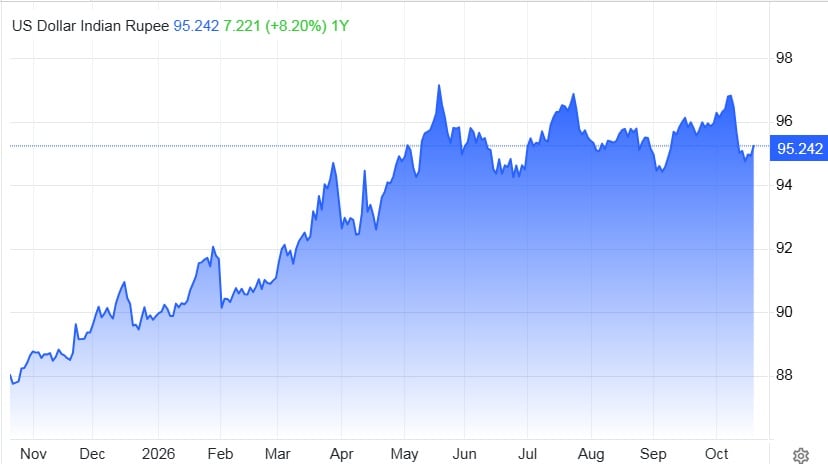
The rupee has bounced back after the Reserve Bank of India (RBI) stepped up its efforts to support the currency. But the recovery raises a bigger question: can the central bank sustain the gains, or is the relief likely to be short-lived?
The rupee's rebound suggests that the RBI's latest measures have eased immediate pressure on the currency. The steps include meeting oil companies' dollar requirements directly and curbing speculative positions in the foreign exchange market.
However, a stronger rupee over a few sessions does not necessarily signal a lasting turnaround. The currency remains exposed to global oil prices, foreign investor flows and inflation, factors that monetary authorities cannot fully control.
Also Read | Layoffs Are Rising In Tech, But These Skills Are Helping People Unlock Better Pay
Niharika Tripathi, Head of Products & Research at Wealthy.in, a wealth management platform for mutual fund distributors, believes the RBI's measures should be viewed as temporary relief rather than a permanent solution. "The RBI's measures are best seen as short-term relief that buys time, not a long-term fix," she told NDTV.
Why The Rupee Could Remain Under Pressure
Crude oil prices are a key factor for the Indian currency. India imports a large share of its oil requirements, and higher prices increase the country's demand for dollars. This can put pressure on the rupee.
Foreign investment flows also matter. When overseas investors pull money out of Indian equities and debt, they typically sell rupees to move funds into other currencies. That can add to the currency's weakness.
Inflation and the broader global environment can further influence the rupee's direction. Unless oil prices ease and foreign investor outflows reverse, the currency could remain under pressure even as the RBI intervenes.
Tripathi said the rupee's longer-term direction would depend on these factors, which the central bank cannot fully control. The RBI can limit sharp movements and discourage speculative bets. But it cannot permanently shield the currency from changes in global oil prices or sustained foreign capital outflows.
RBI's Rupee Defence Comes With A Cost
The measures have also brought a potential trade-off for the bond market. Government bond yields have risen since the announcement, with the 10-year yield touching 7.37 per cent, its highest level since October 2023. Bond yields and prices move in opposite directions. When yields rise, existing bond prices fall.
This matters for investors holding long-duration debt funds, which are more sensitive to changes in interest rates and bond yields. A sharp rise in yields can lead to greater volatility in these funds.
Therefore, the currency's recovery may not translate into immediate gains across other financial markets. Investors need to watch how the RBI's measures affect liquidity, bond yields and broader market sentiment.
What Should Investors Do?
For investors, the rupee's recent recovery is not a reason to make sudden changes to their portfolios. Currency movements can be sharp, and short-term gains may not last if the underlying pressures remain.
Tripathi said a weaker rupee strengthens the case for some diversification through gold and global assets. Such diversification can help spread risk across different markets, although neither gold nor overseas investments offer guaranteed protection against losses.
Debt investors, meanwhile, may consider staying towards the shorter end of the maturity curve until interest rates and currency conditions become more stable. Shorter-duration funds generally have lower sensitivity to interest-rate movements than long-duration funds, though they still carry risks.
The key is to avoid building an investment strategy around the rupee's daily movements. Investors should consider their time horizon, risk appetite and overall asset allocation before making changes.
Track Latest News Live on NDTV.com and get news updates from India and around the world

