





- India-UK CETA offers zero-duty access to nearly 99% of Indian exports to the UK
- Labour-intensive sectors like textiles and pharmaceuticals will benefit most
- The deal covers 137 service sub-sectors, boosting Indian IT and professional services
India-UK Free Trade Agreement: The India-UK Comprehensive Economic and Trade Agreement (CETA) came into force on Wednesday. The deal opens up one of the world's largest consumer markets to Indian exporters while making several premium British products cheaper for Indian buyers. The agreement is also expected to deepen investment ties, create jobs and give a fresh push to India's manufacturing and services sectors, according to trade experts.
For Indian consumers, the first visible impact could eventually be lower prices of imported Scotch whisky, premium British cars, cosmetics, chocolates and select food products. For Indian businesses, however, the bigger story lies elsewhere --unprecedented access to the UK market.
The Biggest Gain Is For India's Exporters
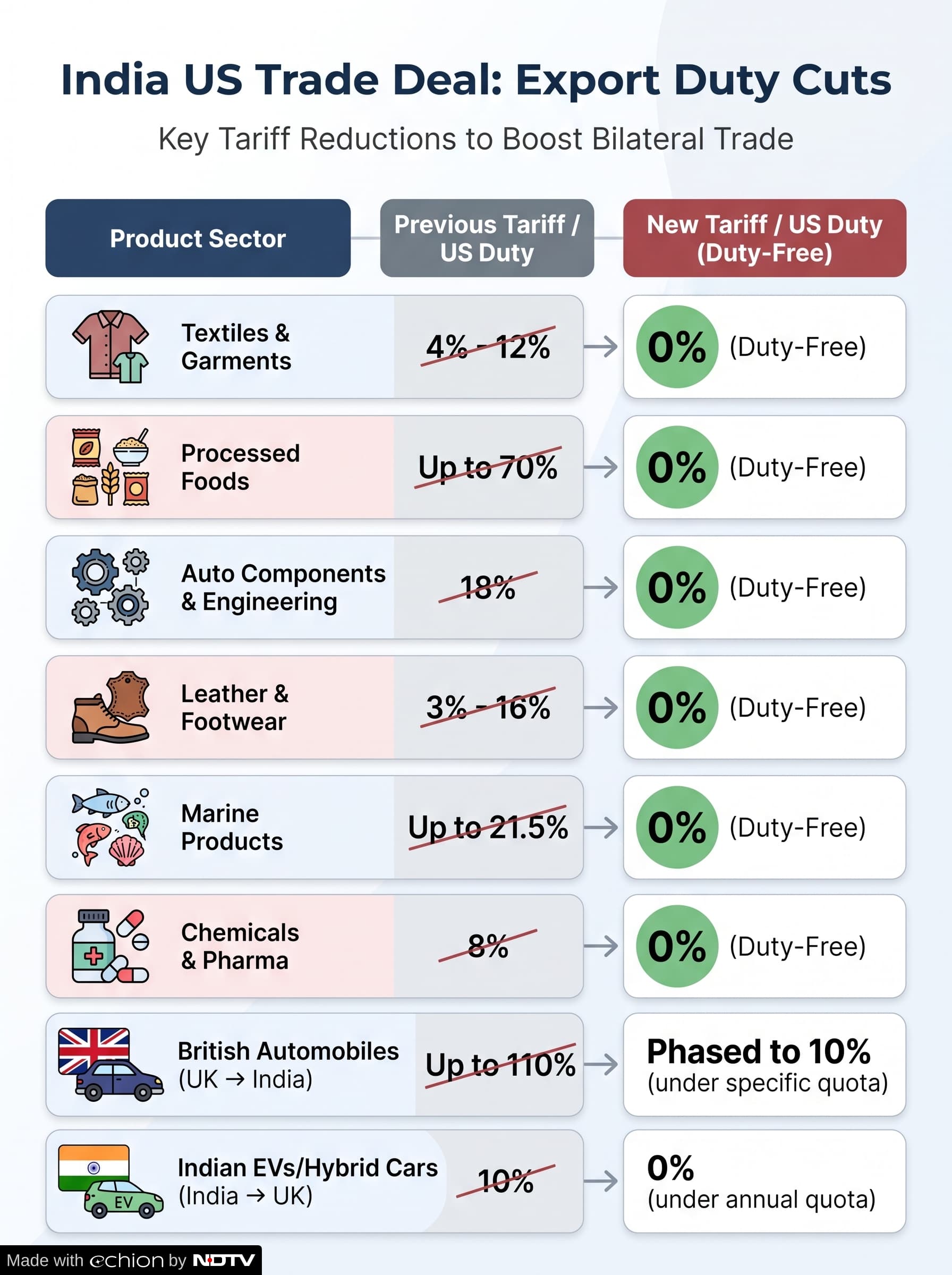
The agreement gives zero-duty access to nearly 99 per cent of Indian exports to the UK, covering almost the entire value of goods India sells there. This means thousands of Indian products that earlier attracted import duties in Britain can now enter the market duty-free, making them more competitive against products from Europe, China and other countries.
The biggest beneficiaries are expected to be labour-intensive sectors that employ millions of Indians, including:
- Textiles and garments
- Leather and footwear
- Gems and jewellery
- Marine products
- Engineering goods
- Auto components
- Processed food
- Chemicals
- Pharmaceuticals
- Agricultural products
Industry expects the tariff elimination to improve profit margins, encourage higher production and generate new employment across manufacturing clusters. "The India-UK Comprehensive Economic and Trade Agreement marks a pivotal milestone in India's global trade journey. While the UK is already India's fifth-largest merchandise export destination, it accounts for only around 1 per cent of India's merchandise imports, indicating significant headroom for a more balanced and diversified trade relationship. By lowering tariff barriers, improving market access, and simplifying cross-border trade, the agreement is expected to unlock new opportunities for Indian exporters, particularly MSMEs," Kaushal Sampat, President at Vayana, told NDTV.
Services Sector Gets A Boost
The deal isn't just about goods.
Indian IT companies, consulting firms, engineers, architects, accountants, healthcare professionals and education service providers are expected to benefit from easier market access and greater regulatory certainty in the UK. The agreement covers 137 service sub-sectors, making it one of India's most comprehensive services-focused trade pacts.
"As trade volumes increase, ensuring timely access to working capital will be equally important to help businesses scale confidently and compete effectively in the UK market," Sampat added.
An equally significant feature is the Double Contribution Convention (DCC). Indian professionals temporarily working in the UK will no longer have to make social security contributions in both countries for assignments of up to five years. This reduces costs for both employees and employers and improves the competitiveness of Indian companies operating overseas.
So, What Gets Cheaper In India?
Consumers may not notice overnight price cuts, but several imported British products are expected to become more affordable as tariffs are reduced in phases.
Among the biggest beneficiaries are:
- Scotch whisky
- Gin
- Premium British cars
- Luxury motorcycles
- Cosmetics
- Chocolates
- Biscuits
- Medical devices
- Select food products
The reduction, however, won't happen instantly across all products. For example, import duties on eligible British-made vehicles will fall gradually under a quota system over several years. Similarly, tariffs on Scotch whisky will also decline in phases rather than overnight.
Premium Cars Become More Competitive
Luxury automobiles are among the headline beneficiaries of the agreement. Until now, imported British cars attracted duties of up to 110 per cent, making them significantly more expensive in India. Under the trade pact, eligible vehicles imported within specified quotas will see tariffs reduced progressively, with rates eventually falling sharply over the coming years.
The government has also put in place safeguards, including annual import quotas and eligibility conditions, to ensure domestic manufacturers and India's growing EV ecosystem are protected.
Why This Deal Matters Beyond Cheaper Imports
While cheaper luxury goods have grabbed headlines, economists believe the real significance lies in exports.
The UK is the world's sixth-largest economy and an important high-income market. Easier access gives Indian manufacturers an opportunity to diversify exports at a time when global trade faces geopolitical uncertainty and slowing demand in several regions.
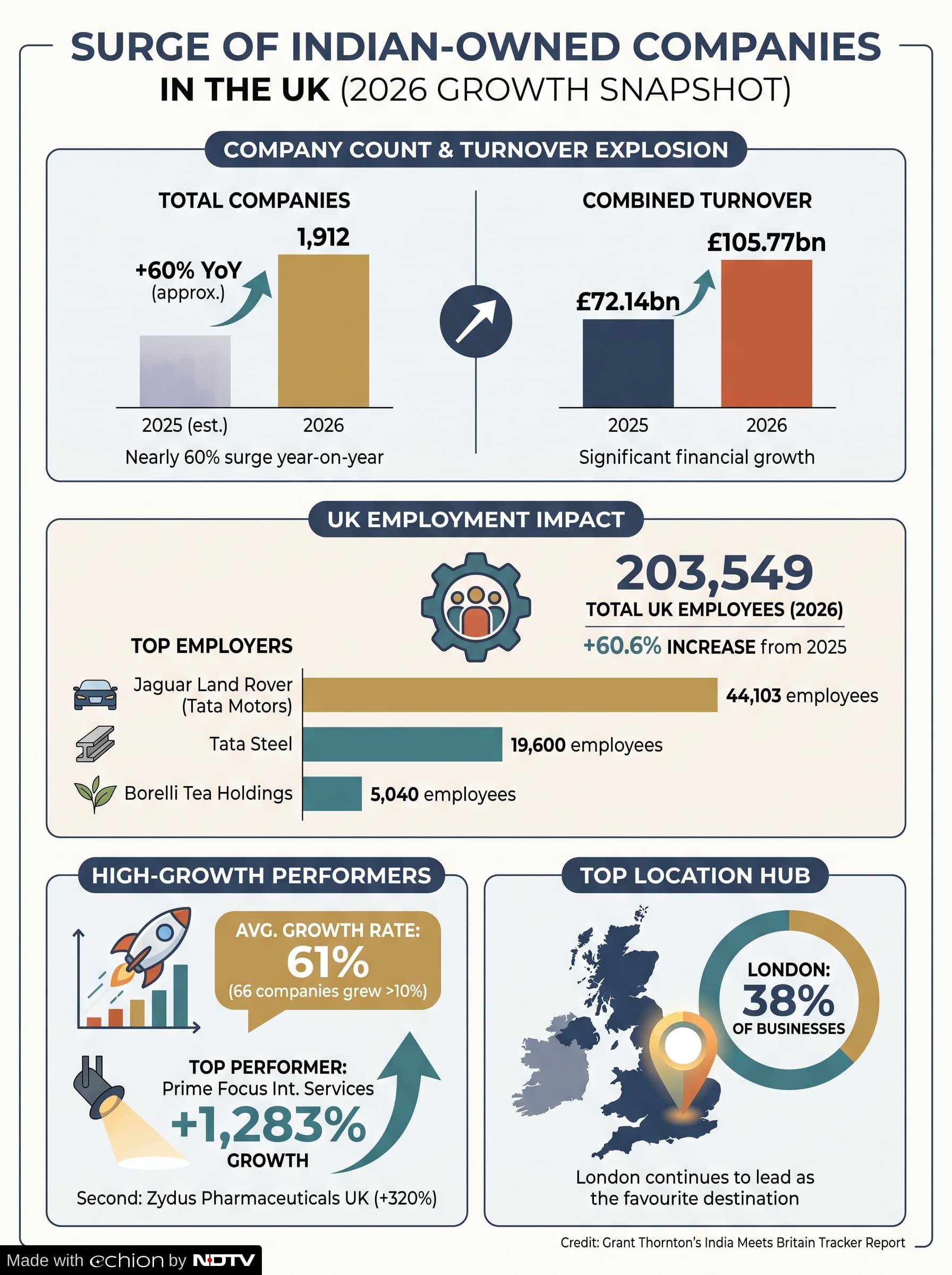
The agreement is also expected to encourage British investment into India across manufacturing, financial services, renewable energy, education and technology. "We are continuing to see that the India-UK corridor is not just a trade relationship; it is a strategic partnership leveraging innovation, resilience, and shared ambitions. With nearly all Indian mid-market firms planning UK expansion and UK businesses eyeing India for growth, this collaboration is set to thrive in the coming years across technology, clean energy, and advanced manufacturing," said Anuj Chande OBE, Grant Thornton Partner and Head of South Asia Business Group.
India-UK FTA: Bilateral Trade Could Nearly Double
Industry body ASSOCHAM believes the agreement could transform economic ties between the two countries. According to the chamber, bilateral trade has the potential to nearly double to around $120 billion by 2030, driven by stronger merchandise exports, services trade and higher investment flows.
"The agreement is expected to significantly benefit Indian sectors such as textiles, leather, marine products, gems and jewellery, engineering goods, and chemicals. Likewise, the UK is set to gain across key sectors, including automotive, beverages and spirits, life sciences, and healthcare," said Nirmal K Minda, President, ASSOCHAM.
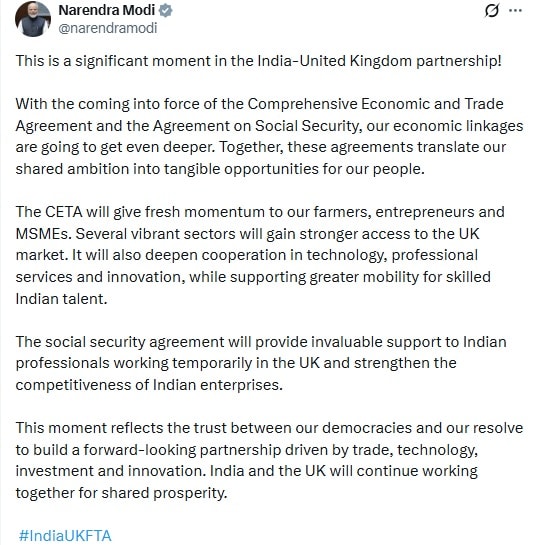
Prime Minister Narendra Modi has described the agreement as a "historic milestone", saying it will create opportunities for farmers, workers, MSMEs, startups and innovators while contributing to the goal of Viksit Bharat 2047.
India-UK Trade: Grant Thornton Analysis
India-UK FTA: What Indian Consumers Should Expect
The impact of the agreement will be gradual rather than immediate.
Luxury British products are expected to become more competitively priced over time as tariff reductions take effect. The bigger and faster gains, however, are likely to come from stronger exports, rising manufacturing activity, new jobs and increased foreign investment.
For India, the agreement marks more than just another trade pact. It represents a strategic shift towards deeper integration with advanced global markets, while giving Indian businesses a stronger foothold in one of the world's most valuable consumer economies.
Track Latest News Live on NDTV.com and get news updates from India and around the world

