





- China produces more power than India, the EU, and the US combined, says Elon Musk
- India's data centre IT load may reach 16 GW by 2030, requiring around 10 GW electricity
- India hosts less than 5% of global data centres despite 20% of data consumption
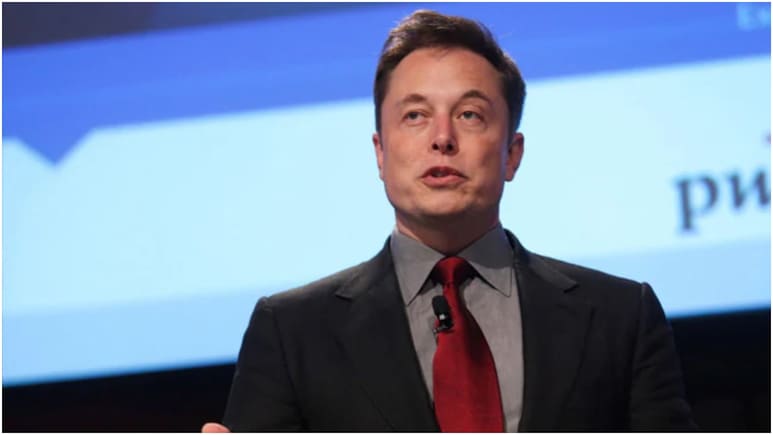
China produces more power than India, the European Union, and the US combined, said Elon Musk in a recent podcast with The Economist. The world's richest man highlighted how AI ambitions of nations are dependent on an old-fashioned constraint: electricity.
India also wants to build a much bigger AI and data centre ecosystem. But every new server rack, GPU cluster and cloud facility needs one thing that cannot be produced with software -- reliable power.
A NITI Aayog assessment estimates that India's data centre IT load could reach 16 GW by 2030. At a 40 per cent utilisation rate and a power usage effectiveness (PUE) of 1.6, it translates into around 10 GW of electricity demand.
Other estimates are also pointing to a sharp increase. Deloitte, in its India data centre outlook, expects capacity to rise from about 1.5 GW in 2025 to 8-10 GW by 2030. It estimates AI-led growth could require an additional 40-45 TWh of electricity in 2030.
This raises a bigger question. Is the economic value created by AI enough to justify the pressure on India's power, water and infrastructure systems?
The Opportunity Is Much Bigger Than Servers
India currently accounts for roughly 20 per cent of global data consumption but hosts less than 5 per cent of the world's data centres, according to Deloitte. The gap explains why investors see a major opportunity in building local computing capacity.
The government is also pushing in that direction. In February, Commerce and Industry Minister Piyush Goyal called for India to target at least 10 GW of data centre capacity by 2030 and position itself as a hub for AI-driven technology services.
But the expansion cannot happen on the assumption that power will simply be available when needed. "India's AI and data centre boom is a genuine growth opportunity for the economy, and also a chance to get power planning right from the start," Srivatsan Iyer, Global CEO, Hero Future Energies, told NDTV.
Iyer said the real challenge is sequencing. Generation, storage and transmission capacity need to be planned before demand arrives, rather than being added after data centres are already operational.
"If we get that sequencing right, pairing data centre growth with renewables plus storage from day one, AI-driven demand can actually accelerate India's clean energy buildout rather than compete with it," he said.
AI Changing The Power Equation
The concern is not simply about the amount of electricity consumed. It is also about where and when that electricity is needed. Data centres operate around the clock. AI facilities can also have far higher power requirements than conventional computing infrastructure.
The International Energy Agency estimates global data centre electricity consumption will roughly double from 2025 to about 950 TWh by 2030. AI-focused data centres are expected to grow even faster. For India, this comes on top of already strong electricity demand growth. The IEA expects India's electricity demand to rise by an average 6.4 per cent annually through 2030, adding more than 570 TWh to annual consumption over five years.
There's Another Bill: Copper
The AI boom will also require huge amounts of physical infrastructure. According to the Indian Primary Copper Producers Association (IPCPA), India's data centre capacity could rise from around 1.6 GW today to nearly 9 GW by 2030.
The association estimates that data centres require approximately 20 metric tonnes of copper per MW. On that basis, the capacity expansion could create demand for nearly 2 lakh tonnes of copper. "India's AI ambition is not just a technology or power story; it is increasingly a materials and infrastructure story, with copper at its core," IPPCA said.
The association added that ensuring adequate supplies of high-quality copper, along with better resource efficiency, will be essential to building the electrical backbone needed for India's digital expansion. That is an important point. AI infrastructure does not end at the data centre gate. It means transformers, transmission lines, cables, cooling systems, substations, batteries and renewable power projects.
The Environmental Cost
This is where the debate gets harder.
AI can create economic value through productivity gains, new businesses and better public services. But its infrastructure can also consume large amounts of electricity and water.
Alona Geckler, Chief People Officer & Chief of Staff at Acronis, told NDTV that India needs to look at the two sides together. "AI can create substantial economic and social value, but that value should not be assessed separately from the infrastructure required to deliver it," Geckler said.
She argued that computing capacity needs to expand alongside energy efficiency, greater use of renewable power, responsible water management and transparent measurement of resource consumption.
For India, Geckler said sustainability cannot be an afterthought. "Ultimately, the question is not whether AI creates enough value to justify its environmental footprint, but how we reduce that footprint as AI scales," she said.
Legal Landscape
From a legal and regulatory perspective, India does not presently have a single, stand-alone environmental regime specifically for AI data centres.
Vipul Agrawal, Partner, Clavius Legal, told NDTV, "Depending on the scale, location and configuration of a project, different requirements may come into play, including environmental clearance where applicable, pollution-control consents, groundwater permissions and local development approvals. Water consumption also cannot be assessed in isolation. The source of water, the water stress of the particular location, the cooling technology deployed, the extent of recycling or reuse, and the treatment and discharge of wastewater are all relevant to understanding the actual environmental impact of a facility."
Agrawal believes the regulatory conversation is therefore likely to move increasingly towards responsible siting, measurable resource consumption and greater efficiency, rather than a one-size-fits-all approach. "A water-intensive cooling system in a water-stressed location raises a very different concern from a facility using closed-loop cooling or treated and recycled water in an area with adequate resources. Regulation should encourage efficient cooling, reuse and transparency while remaining proportionate, technology-neutral and sensitive to local conditions," he added.
India has a substantial opportunity to develop its AI and data-centre ecosystem, and environmental considerations should be built into that infrastructure planning from the outset. The objective should neither be to give the sector a regulatory free pass nor to use environmental regulation as a blunt instrument against it. "The right approach is to ensure that data-centre growth takes place in locations and through technologies that can be sustainably supported by the available power, water and other infrastructure over the long term," said Agrawal.
Track Latest News Live on NDTV.com and get news updates from India and around the world

