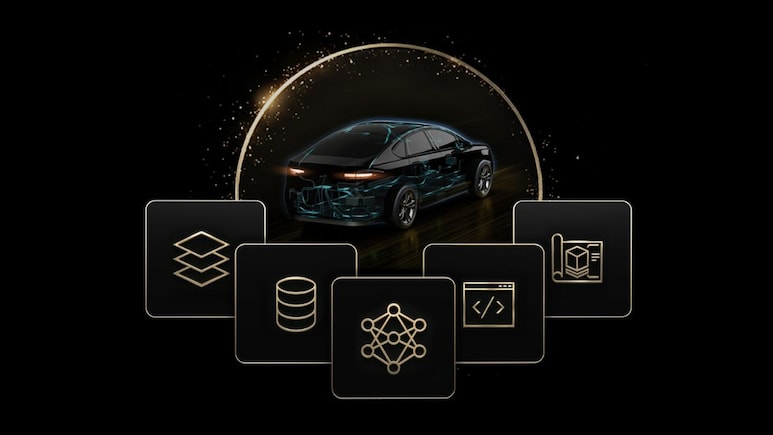
At CES 2026, Nvidia introduced Alpamayo, a new suite of open-source AI models, simulation tools, and datasets aimed at training robots and vehicles. Designed to enhance autonomous systems, Alpamayo focuses on helping self-driving vehicles navigate and reason through complex driving scenarios.
The brand states that Alpamayo 1 is the first chain-of-thought reasoning VLA model built for autonomous vehicle research, now available on Hugging Face. With 10 billion parameters, it processes video inputs to create driving paths while showing the reasoning behind each decision. Developers can scale it down for real-world vehicle use or build tools, such as evaluators and auto-labeling systems, on top of it. The model comes with open weights and scripts, and future versions will add more power, flexibility, and commercial options.
As part of the Alpamayo launch, Nvidia is releasing an open dataset with over 1,700 hours of driving footage from different regions and conditions, including rare scenarios. Alongside this, the company is introducing AlpaSim, an open-source simulation tool on GitHub that recreates real-world driving environments, from sensors to traffic, so developers can safely test autonomous systems at scale.
Also Read: Mahindra XUV 7XO Launched At Rs 13.66 Lakh: Specs, Features And More
Nvidia's Alpamayo introduces chain-of-thought, reasoning-based vision-language-action (VLA) models that process scenarios step by step, improving explainability, something the company sees as vital for scaling trust and safety. Backed by the NVIDIA Halos safety system, CEO Jensen Huang describes Alpamayo as "the ChatGPT moment for physical AI," highlighting its ability to help autonomous vehicles handle rare situations and clearly explain their driving decisions, positioning it as a foundation for safe and scalable autonomy.
Also Read: MG Windsor Tops EV Sales Chart With 46,735 Units Sold In CY25
While Nvidia positions Alpamayo as a breakthrough for autonomous driving, its sheer scale-open datasets, simulation frameworks, and reasoning-based models-also underscores the growing chaos in AI. By unleashing 10-billion-parameter systems and vast driving data into the open, Nvidia is fueling both innovation and unpredictability, where developers worldwide can experiment, adapt, and potentially disrupt safety norms. This "ChatGPT moment for physical AI" captures the excitement but also the turbulence of a field racing ahead faster than regulations or trust frameworks can keep pace.
Track Latest News Live on NDTV.com and get news updates from India and around the world
