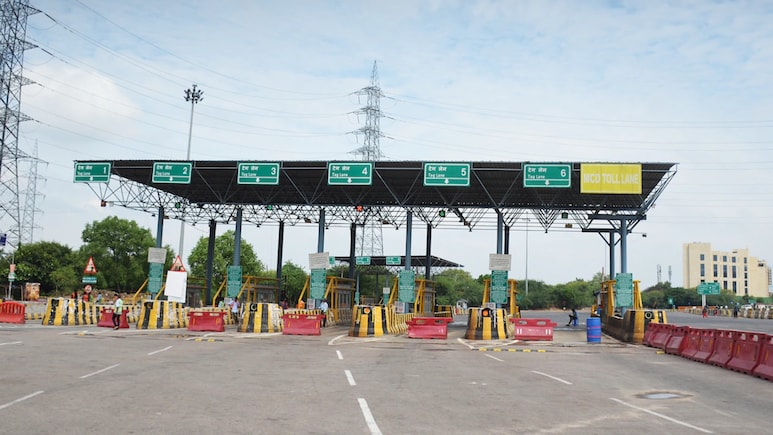
India is set to move towards a new era of seamless highway travel, with Union Road Transport and Highways Minister Nitin Gadkari announcing the rollout of barrier-free tolling on select national highways by December 2026. The initiative aims to eliminate long queues at toll plazas and improve traffic flow using advanced digital technologies.
What Is Barrier-Free Tolling?
Barrier-free tolling, based on Multi-Lane Free Flow (MLFF) technology, allows vehicles to pass through toll points without stopping. Unlike conventional toll plazas with physical barriers, this system uses overhead frames equipped with sensors and cameras to automatically identify vehicles and deduct toll charges in real time.
The rollout was announced at the Logistics Shakti Summit and Awards 2026, where Gadkari highlighted its role in modernising India's highway infrastructure and reducing logistics costs.
Also Read: Headlamps That Play Movies? Chinese Cars Just Did That
Role Of FASTag And AI Cameras
The system integrates FASTag with Automatic Number Plate Recognition (ANPR) technology. High-performance AI cameras read vehicle number plates while RFID readers scan FASTag stickers. The toll amount is then deducted directly from the linked account.
Also Read: Maruti Suzuki Hustler Could Succeed Ignis: Here's Why You Should Be Excited
This dual-verification system ensures accuracy and minimises errors. In cases where a FASTag is inactive or missing, the vehicle can still be identified through its number plate, ensuring enforcement continuity.
How It Benefits Road Users
For drivers, the experience will be significantly smoother. Vehicles can travel at speeds of up to 80 kmph through toll points without slowing down. There will be no need to stop, wait, or interact with toll booth operators.
The system is expected to:
- Reduce travel time on highways
- Eliminate congestion at toll plazas
- Improve fuel efficiency by avoiding idling
Enforcement And Penalties
The new system includes a strict enforcement mechanism. Vehicles that fail to pay toll charges will receive e-notices. Continued non-compliance may lead to FASTag suspension and penalties linked to the VAHAN database. With no manual lanes or cash payment options, the system is designed to ensure full compliance.
Economic Impact And Bigger Picture
The government estimates that barrier-free tolling could generate annual savings of up to Rs 8,000 crore from the current toll collection range of Rs 50,000-60,000 crore. It is also expected to plug revenue leakages and improve efficiency.
The move aligns with India's broader goal of reducing logistics costs. According to recent studies by IIT Chennai, IIT Kanpur, and IIM Bangalore, improved road infrastructure has already reduced logistics costs from 16 per cent to 10 per cent. The government aims to bring this down further, closer to global benchmarks.
Track Latest News Live on NDTV.com and get news updates from India and around the world
