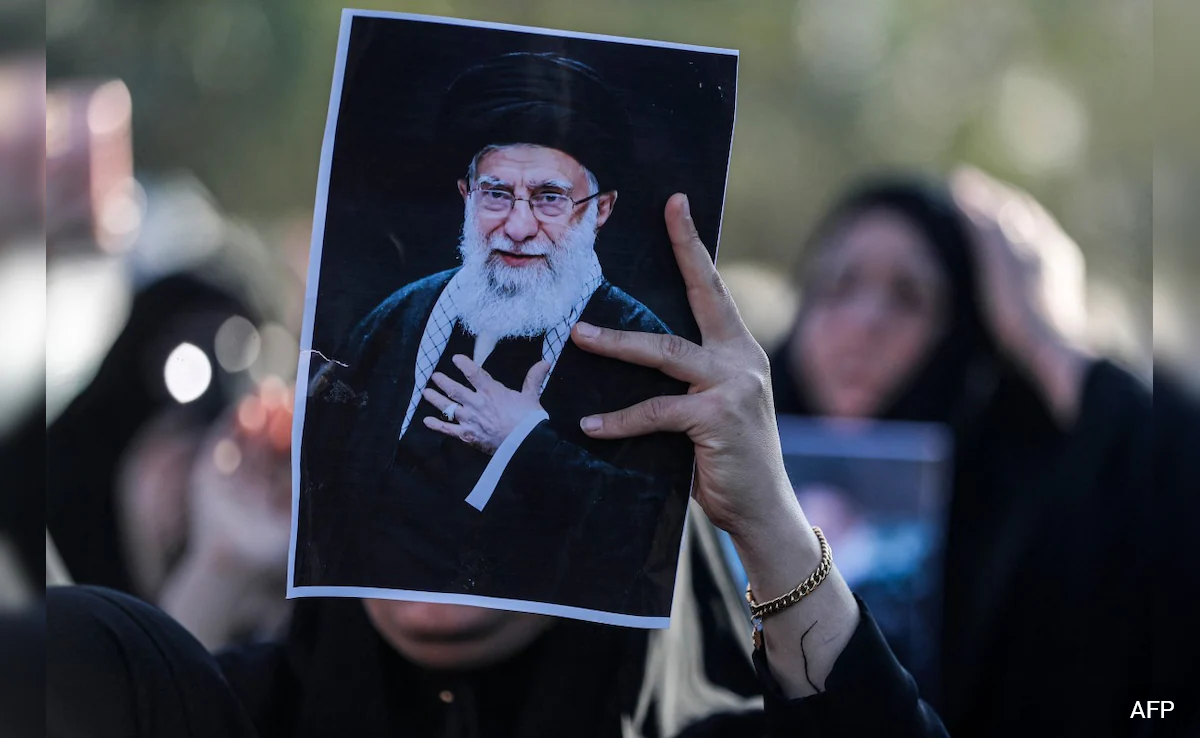
The US and Israeli assassination of Ayatollah Ali Khamenei, the head of the Iranian state, has left a momentary power vacuum in Tehran.
The Iranian government has declared a 40-day mourning period and vowed to avenge the 86-year-old leader's death.
The country will elect a successor to Khamenei soon. Till then, senior cleric Alireza Arafi, President Masoud Pezeshkian and Chief Justice Gholamhossein Mohseni have been tasked with exercising the supreme leader's authority.
There is no confirmed information about when the new leader will be chosen. Several names, including Khamenei's son, Mojtaba, have been seen as potential successors.
Follow LIVE Updates
What Is An Ayatollah?
Originating from the Arabic and Persian languages, the term Ayatollah symbolises a sign of god or religious authority. The title is granted to high-ranking clerics in Shia Islam to demonstrate their advanced theological knowledge and moral authority in the community.
The title emerged in the late 19th century and became more prominent due to the Safavid dynasty in Iran, which made Shia Islam the state religion. Notable personalities like Ayatollah Muhammad Baqir al-Majlisi helped cement the status of scholars, leading to the formalisation of the title.
Ayatollah Khomeini gained immense influence in the 1970s, particularly during the Iranian Revolution of 1979, which led to the establishment of a theocratic government in the country.
Can Any Shia Become An Ayatollah?
The title is generally given to those who have completed extensive studies in Islamic jurisprudence and theology. The Ayatollahs serve as spiritual leaders who provide guidance on both ethical and religious dilemmas. It usually requires years of education to gain the title.
In modern times, the title is still widely used in Shia communities in Iraq, Iran and Lebanon, with Ayatollahs continuing to shape Shia identity and political dynamics in the Middle East.
Are Ayatollahs Allowed To Have Families?
Yes, Ayatollahs can have families. Khamenei shared six children with his wife, Mansoureh Khojasteh Bagherzadeh. The late Supreme Leader's family remains based in Tehran, and details about them are still limited.
How Will The Next Ayatollah Be Chosen?
The ‘Assembly of Experts', an Iranian body of senior Shiite clerics elected every eight years, will choose the next Supreme Leader. Candidates to the 88-member body are approved by the Guardian Council, the country's constitutional watchdog.
In 2024, the Guardian Council barred former Iranian President Hassan Rouhani, a moderate whose administration signed the 2015 nuclear deal with world powers, from election for the Assembly of Experts.
Since the Iranian Revolution of 1979, there has been only one other transfer of power in the office of the supreme leader when Grand Ayatollah Ruhollah Khomeini died at the age of 86 in 1989.
Track Latest News Live on NDTV.com and get news updates from India and around the world


