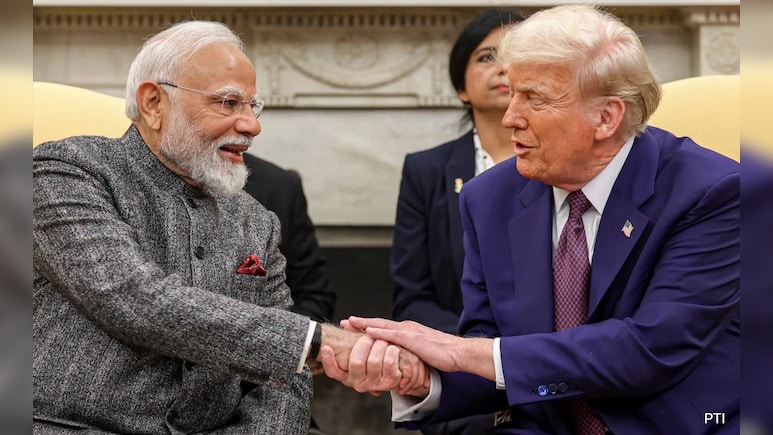
- India and the US have made significant progress in trade talks, nearing a positive outcome
- India-EU free trade deal was pursued independently, not as a tactic against the US
- India aims for multiple bilateral deals to secure market access amid global trade shifts
India and the United States have made "very significant progress" on their ongoing trade deal talks and are "very close" to a positive outcome, government sources have told NDTV, underscoring that work on the US track continued even as India closed the political landing zone on the India-EU free trade agreement.
Sources rejected the suggestion that the EU deal was driven by bargaining tactics vis-a-vis Washington. "There was not a single mention" of the US in the final-day restricted India-EU discussions, the sources said, arguing that the EU agreement was pursued on its own merits and timeline rather than as a reaction to parallel negotiations.
At the same time, the government signalled it is keeping "eyes on the ball" with the US, describing the American market as "as important, if not more important," and indicating that the two negotiating teams remained in touch throughout the EU endgame. "The trade negotiators were in touch with their US counterparts as well," one source said, adding that engagement is continuing and Delhi remains "hopeful of a positive outcome".
Sources framed India's trade strategy as a response to an increasingly fragmented global trading system. With the MFN-based WTO order "under stress", countries are increasingly prioritising bilateral and plurilateral arrangements with major partners, sources said. In that context, India's approach is to secure large-market access and predictability for exporters and investors through a network of deals rather than treating any one agreement as a substitute for another.
Sources emphasised that India does not view exports to the EU and the US as competing objectives. The government's preference, they said, is for exports to "grow both places" because that ultimately supports jobs and investment at home. Sources pointed to the EU's scale, described as the world's largest import market, and suggested India sees the EU agreement as a template for how it wants to approach major markets: front-loaded tariff advantages where possible, mechanisms to address non-tariff barriers, and a structure that can be reviewed and expanded over time.
While the sources did not disclose the precise architecture of the India-US deal under discussion, sources characterised negotiations as "robust" and ongoing, suggesting the remaining issues are narrow enough to allow a near-term conclusion. The key message was sequencing, not substitution: India will continue to pursue "multiple bilateral negotiations" in parallel and expects partners to do the same.
The government's public signalling is also aimed at industry. By arguing that the EU agreement is not a geopolitical "one-upmanship" move and that US talks are nearing fruition, Delhi is trying to reassure exporters and investors that trade policy is being shaped around commercial outcomes - market access, stable rules and supply-chain integration - rather than tactical signalling.
Track Latest News Live on NDTV.com and get news updates from India and around the world


