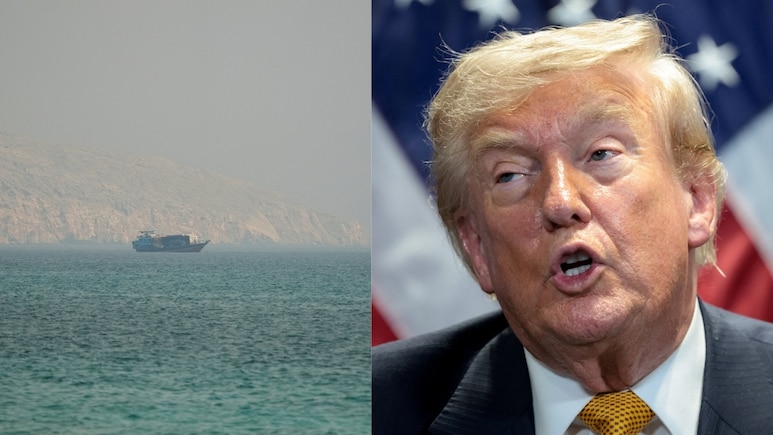
The Middle East is on the boil again after the US early Sunday launched a new round of strikes on Iran following Tehran's announcement that it's closing the Strait of Hormuz - the world's most vital energy conduit - "until further notice." Iran then responded with missile attacks at Bahrain, Kuwait, Qatar, and the United Arab Emirates.
The tensions escalated when Iran's Revolutionary Guards announced the closure of the strait after firing on a vessel it said was taking an "unauthorised route". It said multiple vessels “disregarded our warnings and instructions to correct their course and proceed along the approved route.” One of them “was struck by a warning shot and brought to a stop," it said.
"Following this incident... the Strait of Hormuz will be closed until further notice and until the end of American interventions in this region and no vessels will be allowed to pass through," Iran's Revolutionary Guards said in a statement carried by state news agency IRNA.
It warned that any retaliation over the incident would be met with a "severe response."
Shortly after the announcement, the US launched its third round of strikes on Iran this week, saying Tehran "blatantly attacked" a Cyprus-flagged container ship transiting the strait.
US launches third round of strikes after Iran announces strait closure | Video footage of US Central Command forces striking Iranian military targets after launching aircraft and cruise missiles in response to Iran's attack on commercial vessels transiting the Strait of Hormuz… pic.twitter.com/G2bQuov8eu
— NDTV WORLD (@NDTVWORLD) July 12, 2026
A civilian crew member is missing, and the vessel is unable to continue the journey due to an onboard fire and significant engineroom damage, US Central Command (CENTCOM) said in a statement posted on X.
The strikes began at 7:15 pm (2315 GMT) Saturday in Washington and were taking place at the direction of President Donald Trump, CENTCOM said.
"Iran was provided yet another opportunity to demonstrate adherence to the Memorandum of Understanding after being held accountable for earlier attacks on commercial vessels but has again failed. In response, the United States is imposing a heavy cost by continuing to degrade Iran's ability to attack civilian mariners and commercial ships freely transiting the strait," it said.
At 7:15 p.m. ET today, U.S. Central Command forces began launching the third round of strikes this week against Iran after Islamic Revolutionary Guard Corps forces blatantly attacked M/V GFS Galaxy, a Cyprus-flagged container ship transiting the Strait of Hormuz. A civilian crew…
— U.S. Central Command (@CENTCOM) July 11, 2026
US defense secretary Pete Hegseth said that "Iran made a poor choice".
"Now they pay," he said on X while responding to CENTCOM's post on X.
Iran made a poor choice. Now they pay. https://t.co/8m4fEfgrXv
— Pete Hegseth (@PeteHegseth) July 11, 2026
About four hours later, CENTCOM said the strikes were completed and claimed that it hit some 140 targets, far more than the last two rounds.
"Targets included Iranian missile and drone sites, naval capabilities, ammunition storage facilities, communication networks, and coastal surveillance locations," it said.
The attacks “degrade Iran's ability to attack civilian mariners and commercial vessels freely transiting the strait," it said.
Iran's state-run media reported explosions at multiple areas along the country's southern coasts, including the energy and petrochemical hubs of Bushehr and Asalouyeh. Blasts were also reported at the port cities of Bandar Abbas and Bandar-e Dayyer, and the Sirik area near the Strait of Hormuz.
Missile Alerts In Bahrain, Kuwait, Qatar, UAE
The United Arab Emirates defence ministry said that air defences were engaging missile and drone threats, while neighbouring Bahrain also sounded air raid sirens.
The UAE defence ministry said sounds heard across the country "are the result of ongoing engaging operations of missiles and UAV's".
Bahrain's interior ministry urged citizens and residents to remain calm and head to the nearest safe place.
Blasts were also heard in nearby Qatar, followed by a missile alert. Kuwait's military said it was intercepting incoming fire.
Iran has repeatedly attacked its Gulf neighbours that are home to US military assets since the war broke out on February 28.
The Hormuz Hurdle
The latest strikes threatened an already fragile interim agreement aimed at ending the Middle East war, which broke out with massive US-Israeli strikes that killed former supreme leader Ali Khamenei.
Trump and his Iranian counterpart, Masoud Pezeshkian, had signed a 14-point deal to end the war on June 17. The agreement provided for an immediate cessation of military operations, including in Lebanon, and commits both countries to pursuing a final agreement within 60 days.
Trump, however, on July 8 said the deal was "over."
A key roadblock to a final agreement is the future of Hormuz, which Iran closed to commercial shipping during the war. The waterway is a key conduit for oil and gas exports out of the energy-rich Gulf.
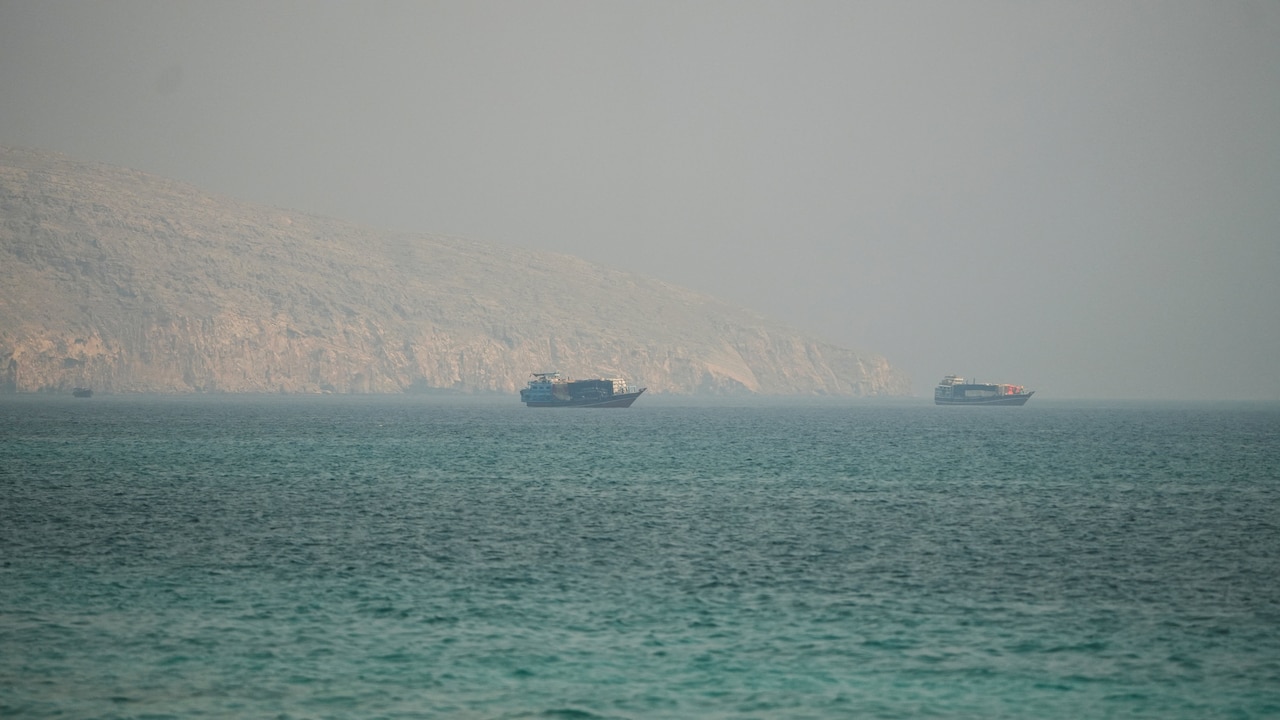
Photo Credit: REUTERS
Tehran insists on controlling the passage of ships and has announced plans to charge fees, saying there will be no return to the free navigation of the pre-war era.
Track Latest News Live on NDTV.com and get news updates from India and around the world


