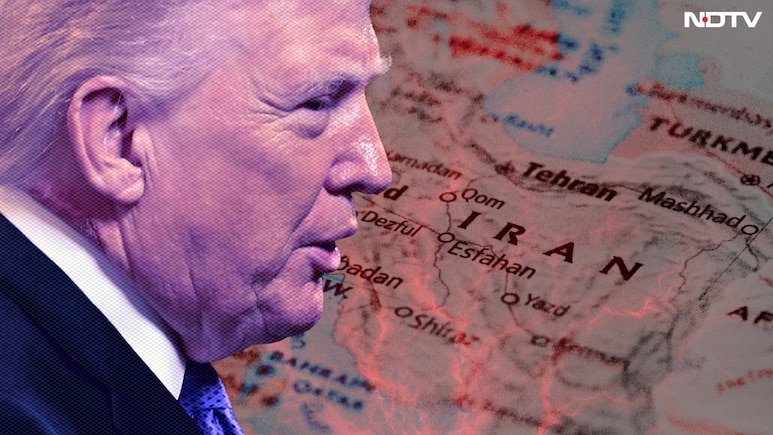
- The US-Iran ceasefire collapsed after weeks of escalating military exchanges and sanctions
- Trump declared the truce over following US strikes on over 80 Iranian targets
- Iran retaliated with missile and drone attacks on 85 US military sites in the Gulf
The ceasefire between the United States and Iran has effectively collapsed after weeks of military exchanges that steadily chipped away at the agreement, culminating in US President Donald Trump's declaration on Wednesday that the truce is "over".
Speaking on the sidelines of the NATO summit in Ankara, Trump said he believed the Memorandum of Understanding with Iran had run its course after Washington struck more than 80 targets inside Iran and reinstated sanctions on Iranian oil sales following attacks on shipping in the Strait of Hormuz.
Iran responded with one of its largest retaliatory operations, launching missiles and drones at 85 US military sites and facilities across the Gulf. Air defence systems were activated in Bahrain and Kuwait as the attacks unfolded.
Trump also made it clear that he no longer wanted to engage with Tehran, describing Iran's leadership as "scum", "sick people", and "vicious, violent people".
His remarks came only hours after another round of hostilities threatened a ceasefire that had struggled to hold from the very beginning.
Here's how the agreement gradually unravelled.
June 17: A Signing And An Early Warning
In an unexpected move during the G7 summit, Trump signed the ceasefire agreement at a dinner at the Palace of Versailles, catching even members of his own team off guard. Officials had expected the formal signing to take place two days later in Lucerne.
Iranian President Masoud Pezeshkian signed the document remotely from Tehran. The 14-point Islamabad Memorandum called for a permanent end to hostilities, a 60-day negotiating period for a broader agreement, and the phased reopening of the Strait of Hormuz.
Even after signing the deal, Trump warned Tehran of the consequences if it backed out.
"I don't want them to. I want them to honour the agreement," Trump said at a press conference.
June 18: Implementation Begins
The US started withdrawing its naval blockade while Iran began clearing mines from the Strait of Hormuz.
Iran's new Supreme Leader, Mojtaba Khamenei, endorsed the memorandum despite reported divisions within the country's clerical leadership.
In a written statement carried by Iranian state media, Mojtaba Khamenei said he had "a different opinion" on the agreement but approved it after President Masoud Pezeshkian and senior officials assured him they would protect "the rights of the Iranian nation and the resistance front" and accepted responsibility for the deal.
June 19-20: The First Cracks Appear
The planned signing ceremony in Lucerne was scrapped after Iran pulled out amid renewed fighting between Israel and Hezbollah in Lebanon.
Within days, Tehran temporarily closed the Strait of Hormuz again, arguing that continuing Israeli attacks violated the spirit of the agreement.
June 25: Military Exchanges Resume
The Singapore-flagged cargo vessel M/V Ever Lovely was struck by an Iranian one-way attack drone near the Strait of Hormuz.
Washington responded with airstrikes targeting multiple Iranian military facilities, including drone storage sites, air defence positions and coastal radar installations near Sirik.
July 7-8: The Ceasefire Collapses
Iran's Revolutionary Guard was accused of attacking three commercial tankers in the Strait of Hormuz.
The US answered by revoking Iran's oil-sale waivers and carrying out strikes on more than 80 targets across Iran, including air defence systems and naval assets.
Iran then launched missiles and drones at US-linked facilities in Bahrain and Kuwait. The attacks were intercepted, with no casualties reported.
The latest escalation came even as Iran was holding a multi-day state funeral for Ali Khamenei, whose remains were being taken through Najaf and Karbala before their final burial in Mashhad.
By Wednesday, Trump signalled there was little hope of reviving the agreement, saying the ceasefire was effectively "over".
Track Latest News Live on NDTV.com and get news updates from India and around the world


