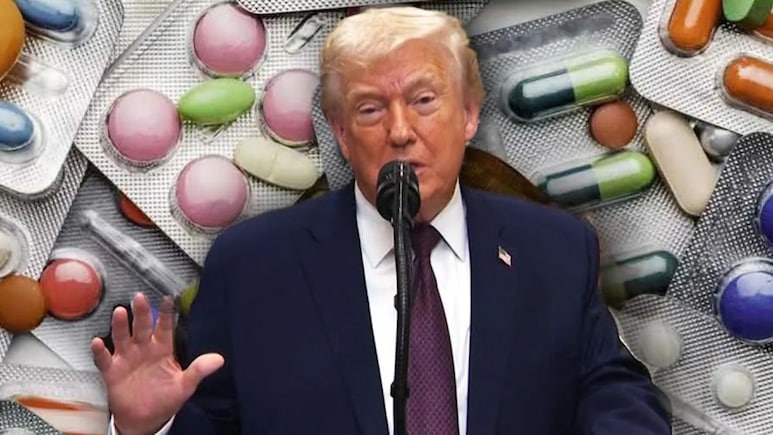
US President Donald Trump's executive order imposing up to 100 per cent tariffs on certain foreign-made patented pharmaceutical products from companies that don't reach deals with his administration has raised concerns. Trump said the move comes amid national security and supply chain issues.
What Does The New Order Entail?
Up to 100 per cent tariffs will be applicable on patented or branded drugs imported into the US.
Trump wrote that he deemed such actions necessary "to address the threatened impairment of the national security posed by imports of pharmaceuticals and pharmaceutical ingredients."
Companies that have signed a "most favored nation" pricing deal and are actively building facilities in the US to onshore production of patented pharmaceuticals and their ingredients will have a zero per cent tariff.
For companies that don't have a pricing deal but are building such projects in the US, a 20 per cent tariff will apply but will increase to 100 per cent in four years.
Generics, biosimilars, and most essential medicines are exempt for now.
A senior administration official told reporters bigger companies have 120 days and other have 180 days to negotiate before 100 per cent tariffs kick in. The official noted the administration had already reached 17 pricing deals with major drugmakers, 13 of which have signed.
The proclamation highlights that "approximately 53 per cent of patented pharmaceutical products distributed domestically are produced outside the country," while just "15 per cent of patented active pharmaceutical ingredients (APIs) by volume" are manufactured domestically. It warns that this reliance could "limit United States access to life-saving medications in the event of global supply chain disruption."
The US administration underscored that patented medicines are "pivotal for treating cancer, rare diseases, autoimmune disorders, infectious diseases, and other critical health challenges," and argued for "a self-sufficient domestic manufacturing and industrial base".
Where India Stands
Indian firms dominate globally in the generic drugs segment, which are exempt from the new set of tariffs. In the short term, the export of low-cost generics, which form the backbone of India's pharmaceutical trade with the US, will continue unhindered.
In the long term, the steep tariffs on patented drugs and active pharmaceutical ingredients could impact global supply chains, especially given India's role in contract manufacturing and as suppliers of intermediates to multinational pharmaceutical companies.
The bigger picture then threatens a move away from established production hubs like India. This will be buoyed by incentives tied to onshoring production and research and development and their role in redirecting future investments away from India's pharmaceutical sector and towards the US.
Further, the White House has stated that generic imports will be reviewed after one year under the same national security framework. This could likely impact complex generics, specialty injectables and biosimilars. Also at risk will be Indian firms whose portfolios extends beyond generics, like Dr Reddy's Laboratories, Sun Pharma and Biocon. They could face pricing pressure or compliance costs if they sell patented therapies in the US.
Track Latest News Live on NDTV.com and get news updates from India and around the world


