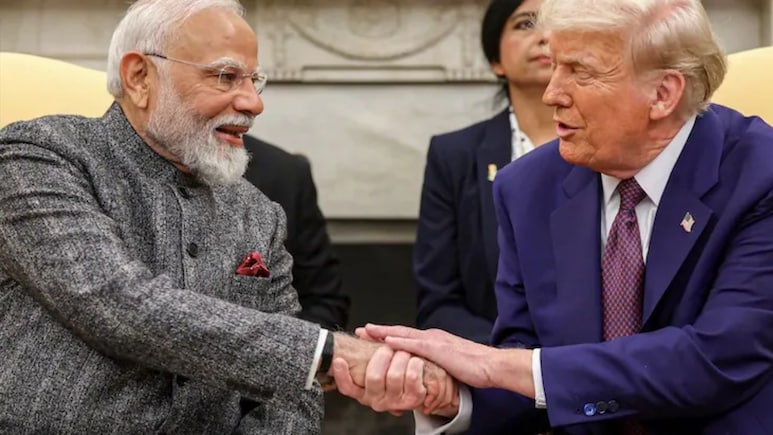
India and the United States have agreed to a new trade deal that reduces America's reciprocal tariffs on Indian goods to 18 per cent, President Donald Trump wrote on his social media platform, Truth Social.
Soon after, Prime Minister Narendra Modi thanked Trump, calling it a “wonderful announcement”. This is expected to improve India's export competitiveness in the US market, especially for sectors that were hit hard by earlier tariff hikes.
What Changes
Earlier, Indian goods entering the US were facing steep duties. In July 2025, Trump announced a 25 per cent tariff on Indian goods along with an additional 25 per cent penalty, taking the effective tariff to as high as 50 per cent. This was linked to India's imports of Russian crude oil.
Under the new trade deal, these tariffs have now been reduced to 18 per cent and the cut makes a big difference to costs.
For example, if an Indian exporter ships goods worth $100:
- At a 25 per cent tariff, the landed cost in the US becomes $125
- At an 18 per cent tariff, the landed cost falls to $118
This $7 difference per $100 of goods is crucial for sectors that operate on thin margins.
Sectors That Will Be Impacted By The India-US Trade Deal
Sectors such as gems and jewelry, textiles, auto OEMs, engineering goods, machinery, and fisheries are likely to react positively in the market.
- Textiles and Apparel: Around 32 per cent of India's textile exports go to the US, making the sector highly sensitive to tariffs. The earlier 50 per cent duty hurt competitiveness and stocks. With tariffs reduced, Indian exporters regain a pricing edge. Companies such as Gokaldas Exports, Arvind, KPR Mill, Welspun Living, and Indo Count Industries are likely beneficiaries.
- Fisheries and Shrimp: The US accounts for nearly 48 per cent of India's shrimp exports. Earlier high tariffs hit volumes. The cut to 18 per cent benefits players like Avanti Feeds, Coastal Corporation and Apex Frozen Foods.
- Chemicals: India exports about $4 billion worth of chemicals to the US annually. Lower tariffs improve net realisations and strengthen India's position in US supply chains, especially under China-plus-one strategies.
- Gems and Jewellery - About 25 per cent of diamond polishing revenues come from the US. High tariffs squeezed margins and slowed inventory movement. The tariff cut lowers landed costs and eases margin pressure. Companies such as Titan stand to gain.
- Auto Ancillaries and Engineering Goods: These sectors, hit by higher export costs, could gain from tariff cuts against East Asian suppliers. Still, Indian auto stocks fell (Mahindra 4.3 per cent, Hyundai 3.6 per cent, Maruti 1.5 per cent, Tata 1 per cent) amid worries that European brands like Mercedes, Audi, and BMW may now price more aggressively in the premium segment. NDTV Profit research shows some components may still face tariffs around 25 per cent.
- IT Sector: The IT sector is not directly affected by tariffs, as software exports fall under services. That said, improved trade ties and better sentiment toward the US market are positive for Indian IT companies.
- Pharmaceuticals: The pharmaceutical sector also stands to benefit from the improved trade environment. The Nifty Pharma Index has risen over 3 per cent since August, supported by tariff exemptions and stronger export orders to the US.
Track Latest News Live on NDTV.com and get news updates from India and around the world


