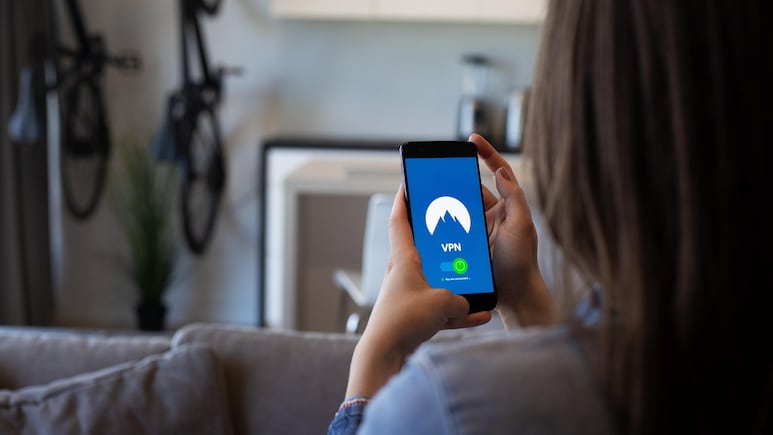
Internet users trying to bypass online restrictions by using Virtual private networks (VPNs) in Russia have come under the state radar, according to a report.
VPNs, which allow users to mask their location and access blocked websites, have long been a key tool for millions of Russians trying to stay connected to the global internet. Their use surged after sweeping restrictions were imposed on major international platforms following the invasion of Ukraine. Now, those same users are increasingly being monitored.
According to a report in The Guardian citing researchers, major Russian companies "have been conscripted into a witch-hunt" to identify and track VPN users.
An investigation by RKS Global found that banks and online platforms are collecting data linked to such activity.
The investigation examined 30 widely used apps in Russia, including those run by T-Bank, Sberbank, Yandex and VKontakte. It found that 22 of these apps were able to detect whether a user was connected to a VPN or even had one installed on their device.
In several cases, data is often retained on company servers where it could be accessed by security services.
"Any Android app released by Russian companies for the Russian market may now be spying. Moreover, the level of intrusion into the device can be very high," RKS Global said.
"It's one thing if Russian IT companies were to 'catch' users the moment they visit a site with a VPN enabled. It is quite another when even a closed application continues scanning the phone for VPN usage," Mazay Banzaev, founder of Amnezia, an open-source VPN company, told The Guardian.
Although VPN use itself is not formally illegal in Russia, the risks around it are increasing. The report noted that courts have begun treating VPN usage as an "aggravating circumstance" in prosecutions.
This comes at a time when control over internet access in Russia has been tightening in different ways. Over the past year, there have been repeated disruptions to mobile networks in several regions, including big cities like Moscow and St Petersburg. During such outages, some people have had to rely on basic options like paper maps or pagers to stay connected and find their way.
Limits have also affected messaging services. Telegram, which is widely used across the country, has faced blocks in recent months. At the same time, authorities have been pushing a state-backed "superapp" called Max, which combines multiple services in one platform and is believed to come with strong monitoring features.
Track Latest News Live on NDTV.com and get news updates from India and around the world


