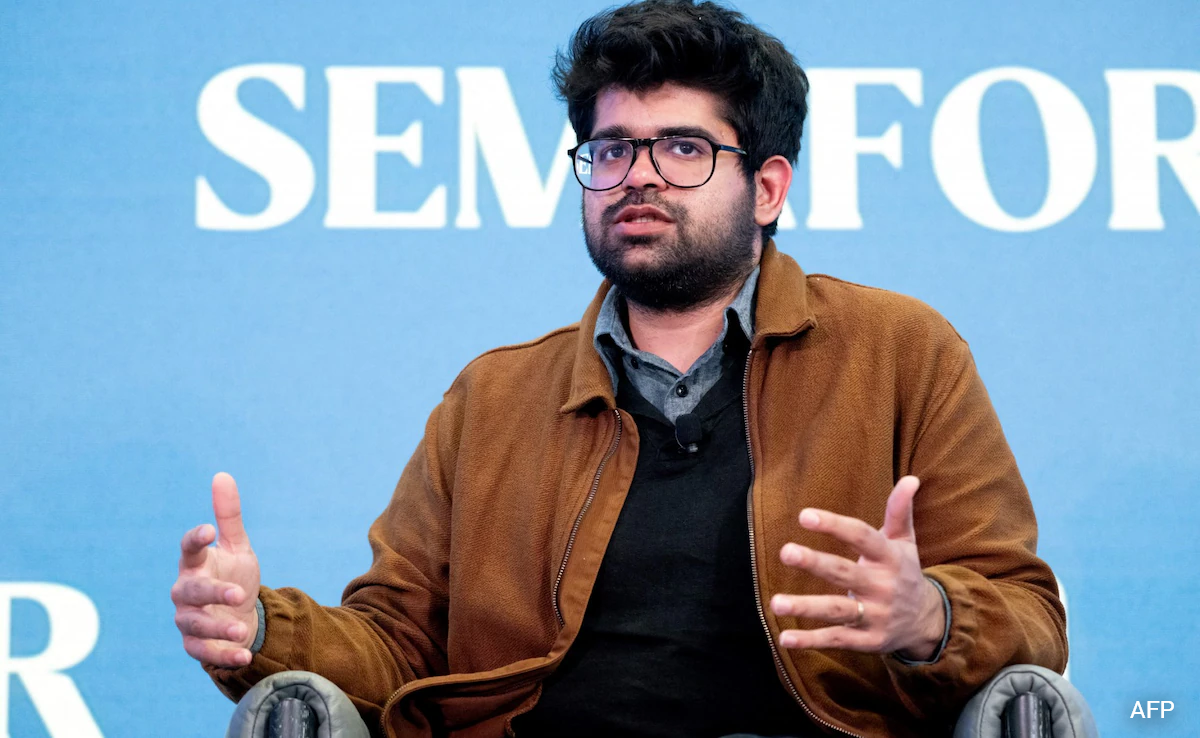
The rise of artificial intelligence may change how computer science is taught, Perplexity AI CEO Aravind Srinivas believes. The shift may push the field back towards its foundational roots in mathematics and physics.
Srinivas endorsed a post on X by a physics and AI/ML student that argued large language models (LLMs) are automating routine coding tasks. The post suggested that as AI handles much of the repetitive programming work, the focus of computer science could shift toward deeper reasoning, logical thinking and problem-solving rather than writing syntax-heavy code.
“Well said,” he wrote on X, sharing the post.
The original post by a physics and AI/ML student said that LLMs are gradually taking over boilerplate coding tasks. As a result, software engineers may increasingly rely on stronger foundations in mathematics and physics to design systems and solve complex problems.
This automation is expected to change the nature of software engineering work, focusing more on foundational reasoning, logical thinking and problem-solving rather than syntax and boilerplate coding.
Well said. https://t.co/W1OSsYabZo
— Aravind Srinivas (@AravSrinivas) March 13, 2026
“The field's centre of gravity is shifting away from manual code writing and toward deeper theoretical thinking, mathematical insight, and systems-level reasoning,” the post read.
AI models are already being used to generate code, fix bugs and help developers search through large codebases. These tools can speed up routine programming tasks and improve productivity. Some estimates suggest developer productivity can increase significantly when AI assistants are used for repetitive coding work.
This isn't the first instance of AI industry leaders endorsing the idea that LLMs are revolutionising coding tasks. Earlier, Anthropic CEO Dario Amodei spoke about AI replacing software engineers in "6 to 12 months."
During an interactive session at the World Economic Forum, Amodei said, “I have engineers within Anthropic who say I don't write any codes anymore. I just let the model write the code, I edit it. I do the things around it."
He added, "I think… I don't know… we might be six to twelve months away from when the model is doing most, maybe all of what SWEs (software engineers) do end to end.” He added, “Then it's a question of how fast does that loop close.”
Track Latest News Live on NDTV.com and get news updates from India and around the world


