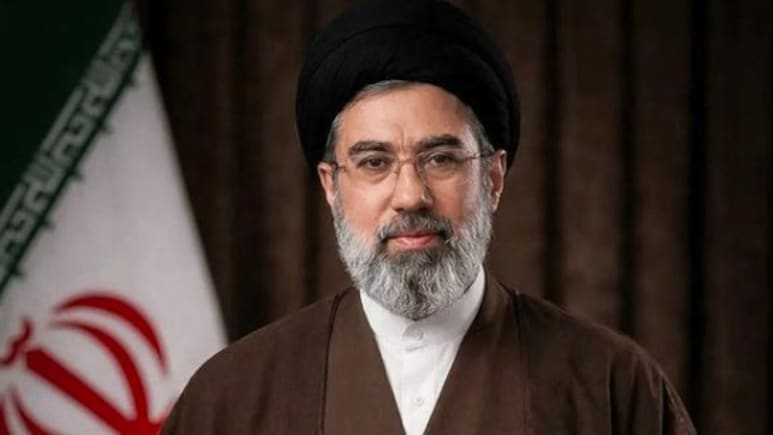
- Iran's Supreme Leader Mojtaba Khamenei announced a new phase in Strait of Hormuz policy
- He vowed Iran will seek reparations for damages and blood of "martyrs" from attacks
- Khamenei said Iran does not want war but will not relinquish its rights in the region
Iran's Supreme Leader, Mojtaba Khamenei, has signalled a significant strategic shift in the country's approach to the Strait of Hormuz. In a statement broadcast by state media, Khamenei declared that Iran is entering a new phase in its management of the strait, vowing that those who attacked the country would not go unpunished.
He further affirmed that Tehran intends to seek reparations for damages sustained, marking what he described as a pivotal new chapter in Iran's management of one of the world's most critical waterways.
"We will certainly demand compensation for each and every damage inflicted and the blood price of the martyrs and the compensation for the wounded of this war," he said.
Khamenei expressed Iran's unwavering resolve to "take revenge" for the death of his father, Ayatollah Ali Khamenei, who fell victim to US-Israeli strikes on February 28.
He claimed that although Iran did not want a war, he said that it would not give up its rights.
Traffic through the Strait of Hormuz remained extremely limited despite the announcement of the ceasefire between the United States and Iran.
A fragile two-week ceasefire between the United States and Iran is currently in effect, though it is under severe strain following renewed hostilities in Lebanon.
15 Ships A Day, IRGC Approval Required
Under the ceasefire terms, Iran will allow no more than 15 vessels per day to transit the Strait of Hormuz, a senior Iranian source told Russian news agency TASS ahead of talks in Islamabad. Each passage will require Iran's approval and compliance with a specific protocol.
"Under the current ceasefire, fewer than 15 ships per day are permitted to transit the Strait of Hormuz. This movement is strictly contingent upon Iran's approval and the enforcement of a specific protocol. This new regulatory framework, operating under the supervision of the IRGC, has been officially communicated to regional parties. There will be no return to the pre-war status quo," the source said.
The Strait handles roughly a fifth of the world's seaborne crude oil trade.
Track Latest News Live on NDTV.com and get news updates from India and around the world


