High-resolution satellite imagery accessed by NDTV shows the scale of destruction inflicted on Tehran after a wave of coordinated American and Israeli strikes. The images -- captured before and after the bombardment -- show damage across a broad swathe of the Iranian capital, including government compounds, security installations, judicial buildings and a major hospital.
The photographs provide some of the clearest independent visual evidence yet of the intensity of the attacks on the fifth day of a widening regional war that has already killed more than a thousand people and shaken oil markets across the world.
From the Presidential Complex in central Tehran to the headquarters of Iran's powerful Revolutionary Guards, satellite pictures show several high-profile Iranian buildings badly damaged or reduced to rubble.
At the same time, the war has widened well beyond Iran's borders. Iran says it now has full control of the Strait of Hormuz, a crucial route for global energy supplies, while missile and drone attacks have struck targets across the Gulf. Israel has expanded strikes in Lebanon, and NATO air defences intercepted an Iranian missile heading toward Turkish airspace.
Satellite Evidence
The before-and-after satellite images accessed by NDTV reveal significant structural damage or complete destruction across multiple key facilities in Tehran.
Presidential Complex
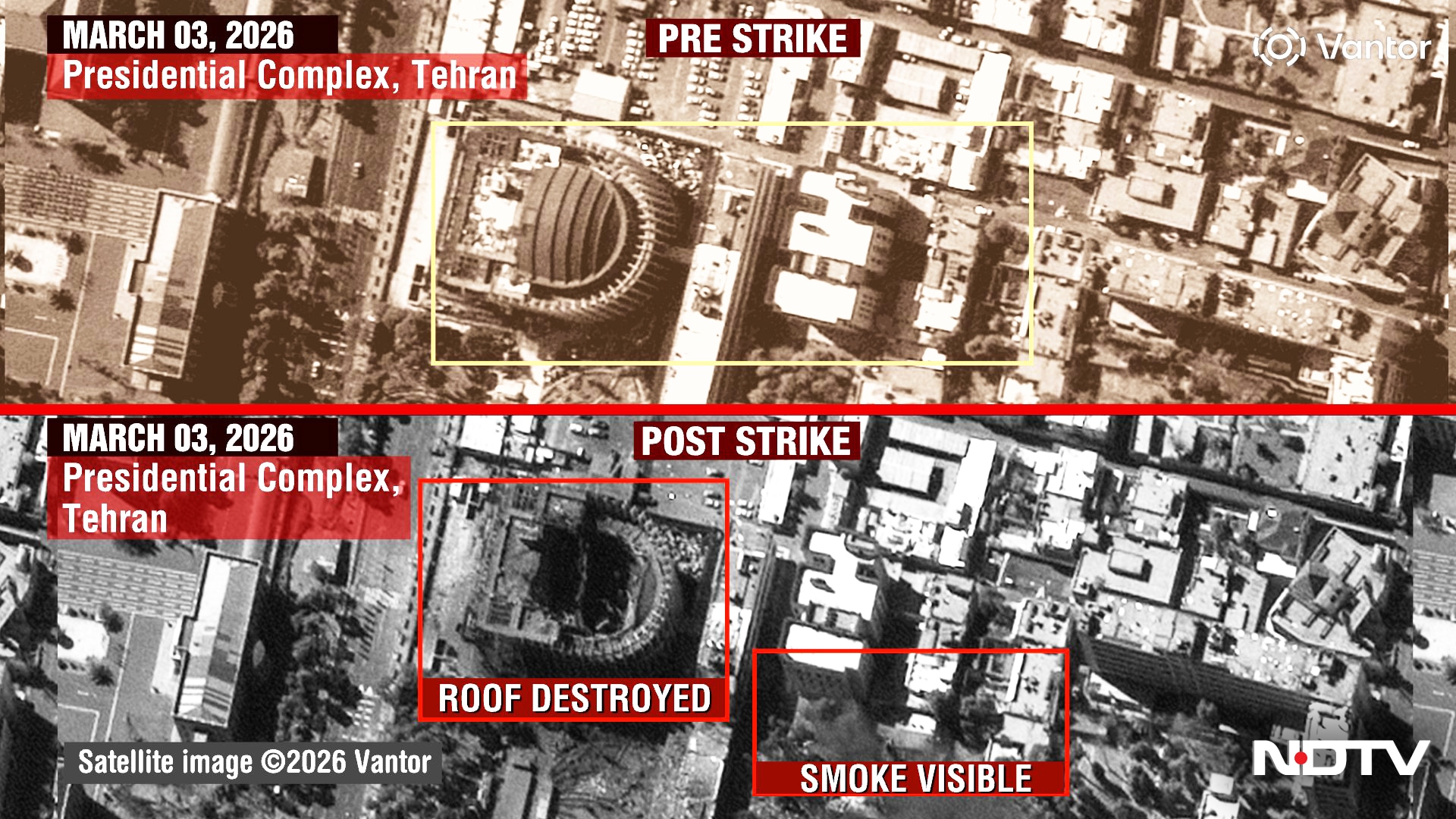
Satellite imagery of the Presidential Complex shows the roof of the main structure destroyed following the strikes. High-res pic here
Smoke is visible rising from the area in the post-strike photograph. In contrast, the earlier image of the same site shows the complex intact before the attack.
The complex serves as a key administrative hub of the Iranian presidency and is located in the heart of Tehran.
The destruction of the roof suggests a direct impact from precision-guided munitions.
Intelligence Ministry
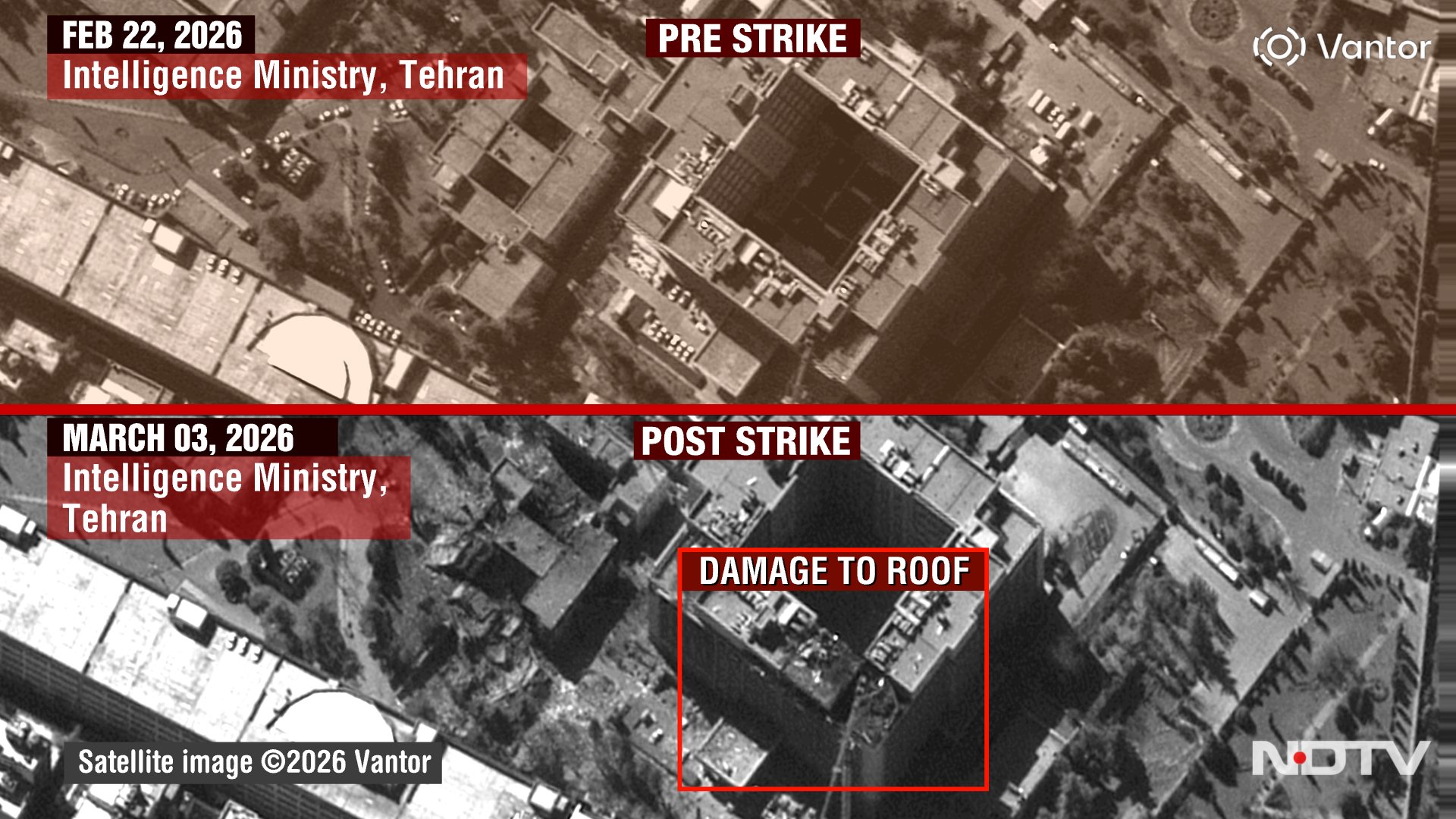
The Intelligence Ministry building also shows clear signs of structural damage. High-res pic here
Satellite imagery indicates impacts on the roof, along with debris scattered across the top of the structure.
The ministry oversees Iran's domestic intelligence and counter-espionage operations and plays a central role in the country's security architecture.
IRGC Headquarters
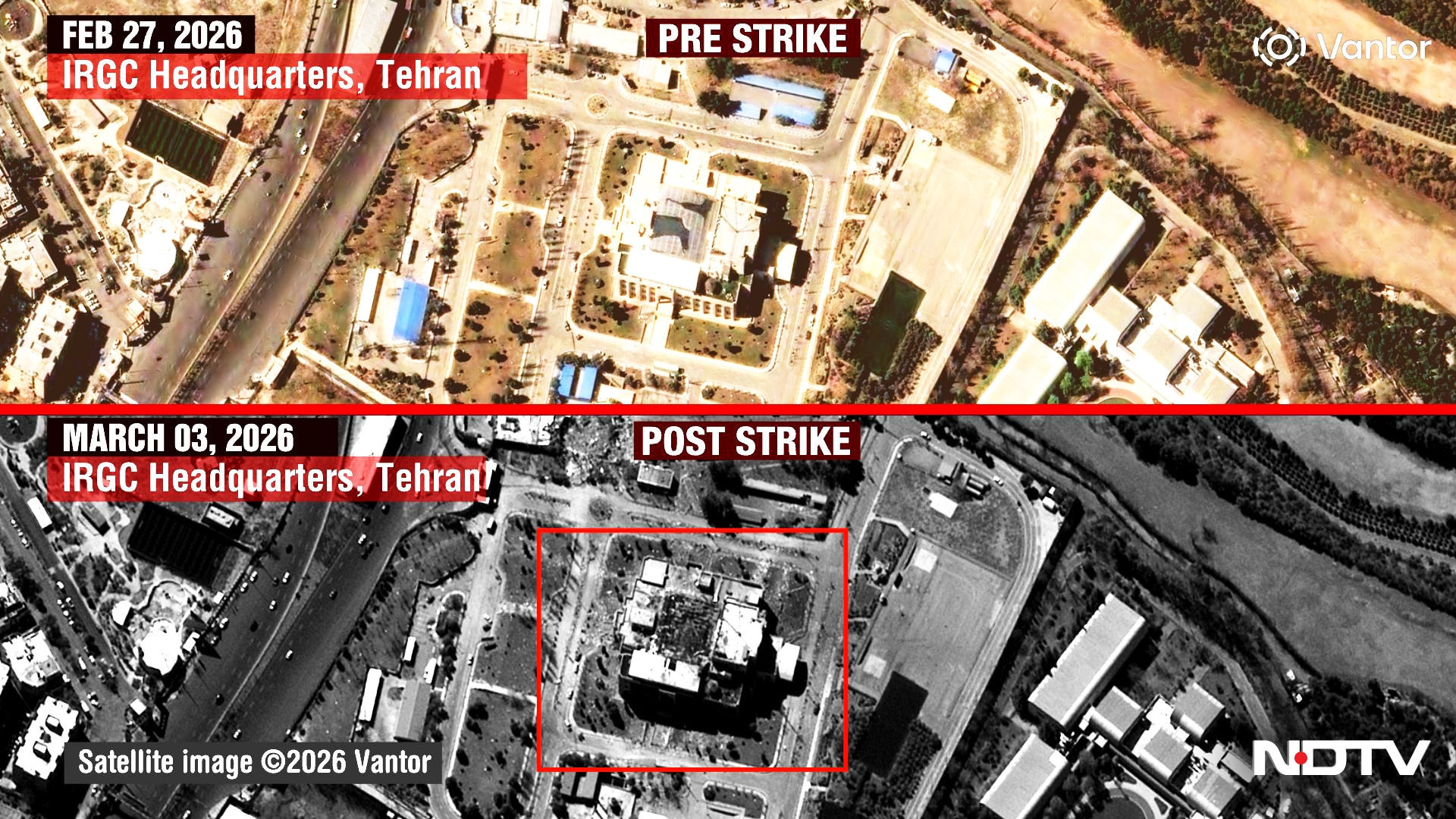
Among the most heavily damaged sites is the headquarters complex of Iran's Revolutionary Guards. High-res pic here
Satellite imagery shows extensive devastation across the compound, with large sections reduced to rubble.
The IRGC is Iran's most powerful military and political institution, responsible for overseeing ballistic missile forces, regional proxy groups and internal security units such as the Basij militia.
Judiciary Complex
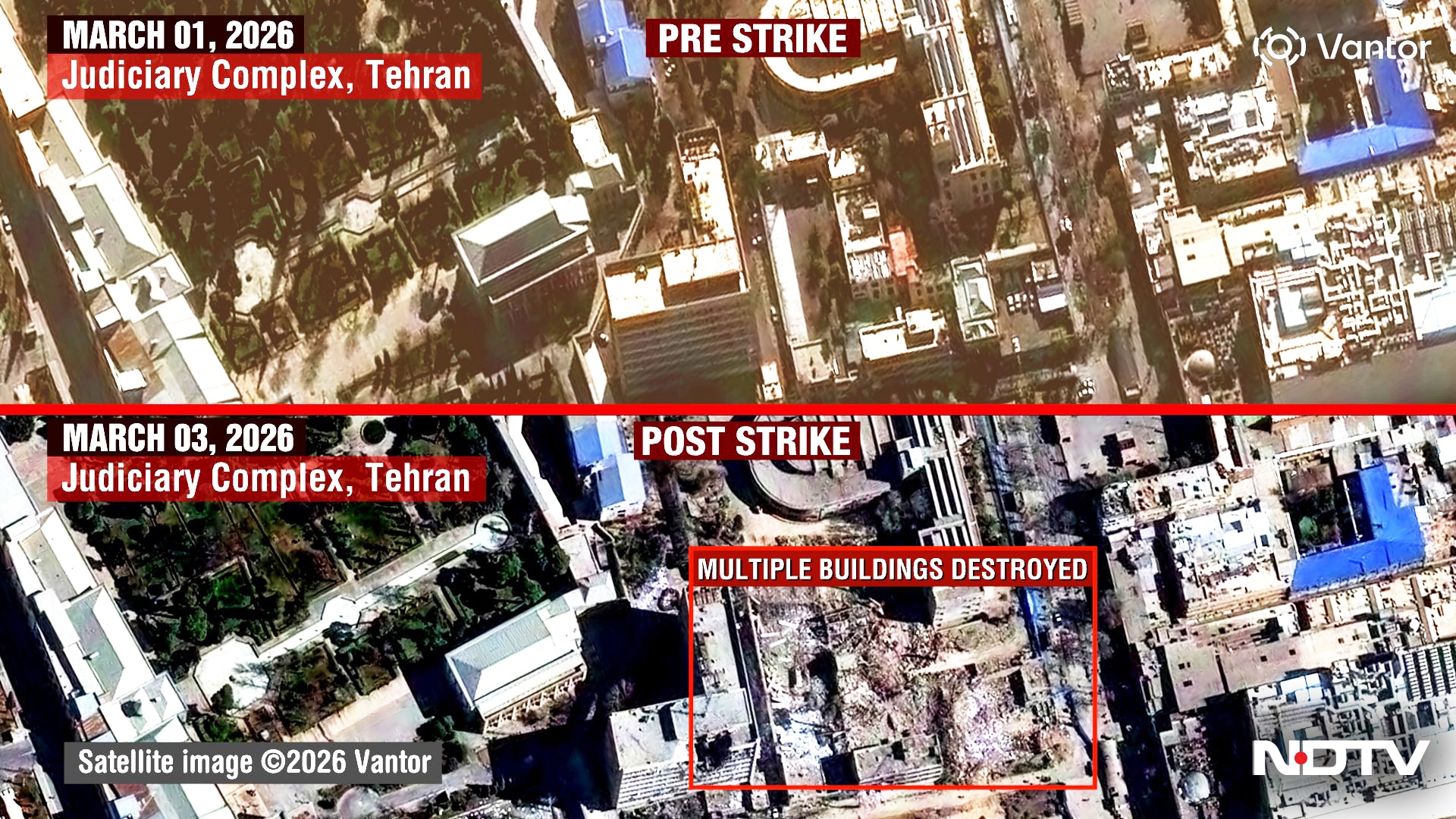
Images of the Judiciary Complex show that multiple buildings within the compound have been destroyed. High-res pic here
Large areas of collapsed structures and rubble are visible across the site.
The complex houses courts and offices linked to Iran's judicial system, which has played a central role in prosecuting political dissidents and enforcing state security laws.
Gandhi Hospital
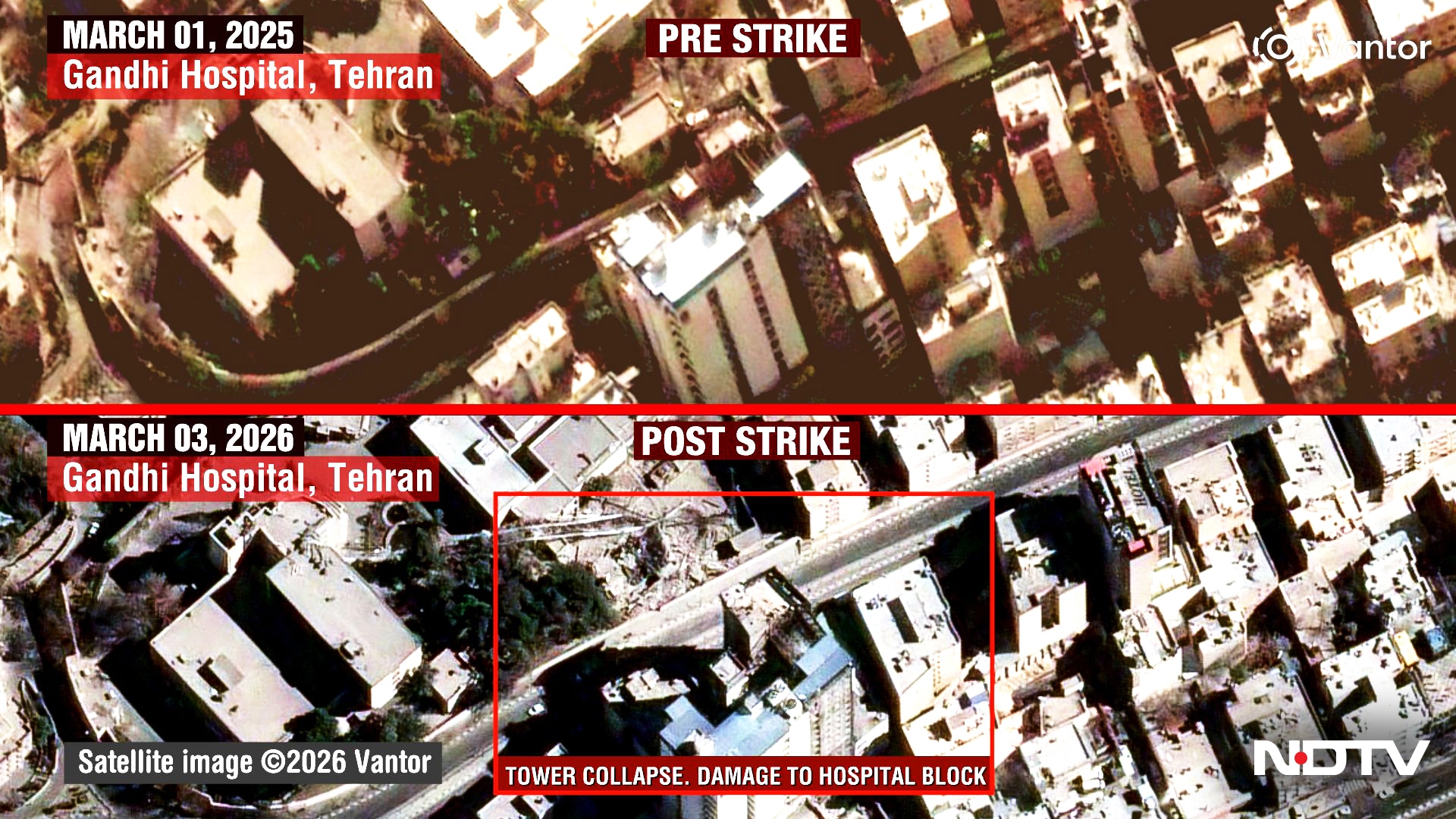
One of the most striking images shows damage to Gandhi Hospital in Tehran. High-res pic here
The hospital block and an associated tower show visible structural impacts on the facade and surrounding areas.
The imagery indicates that the hospital complex was affected by the strikes, though it remains unclear whether it was directly targeted or damaged by nearby explosions.
Islamic Revolutionary Court
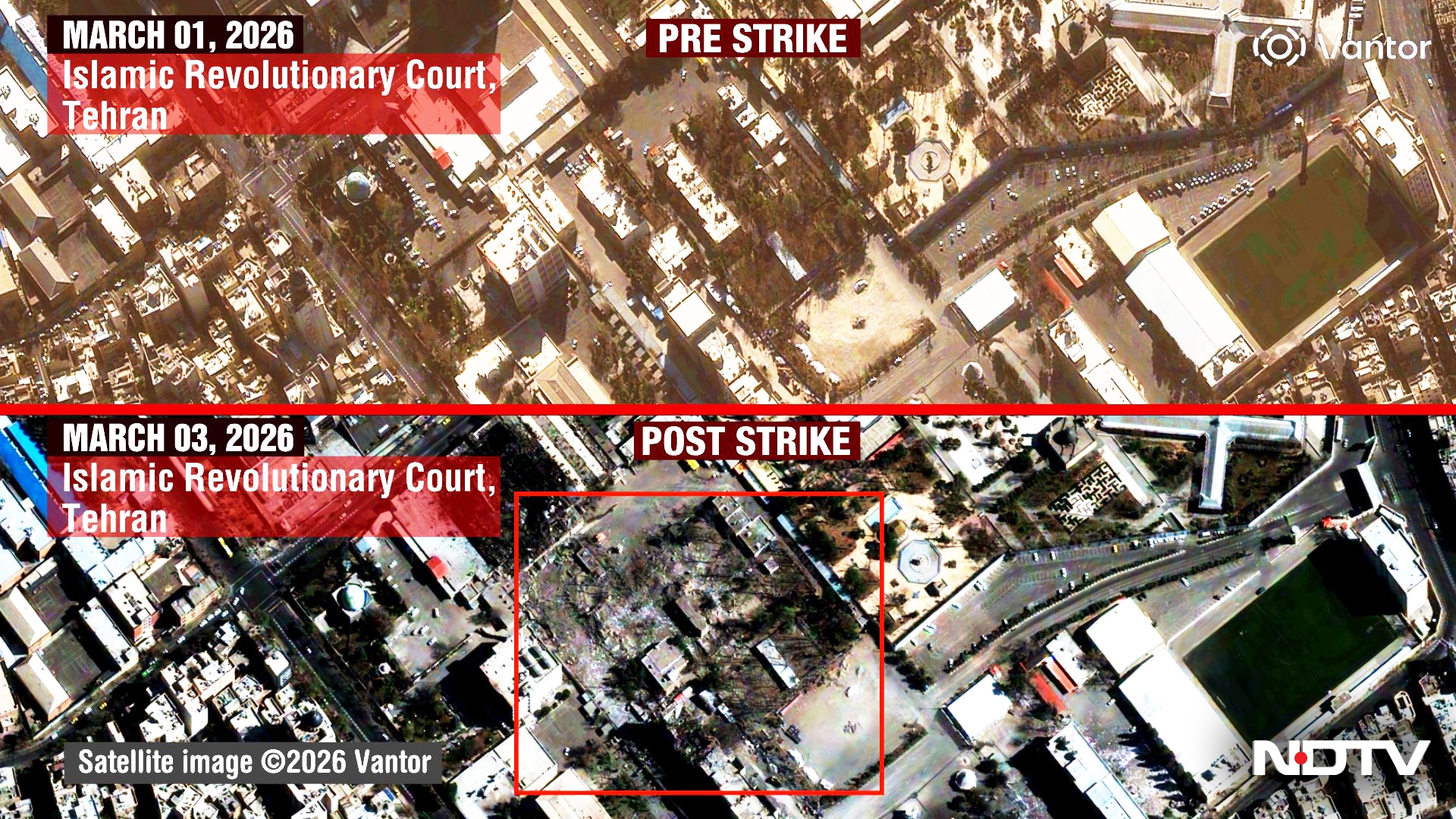
Satellite photographs show widespread destruction across the compound housing the Islamic Revolutionary Court. High-res pic here
Rubble and debris are visible throughout the site in the post-strike imagery.
The court system has historically handled political and national security cases and is closely linked to Iran's security apparatus.
National Defense University
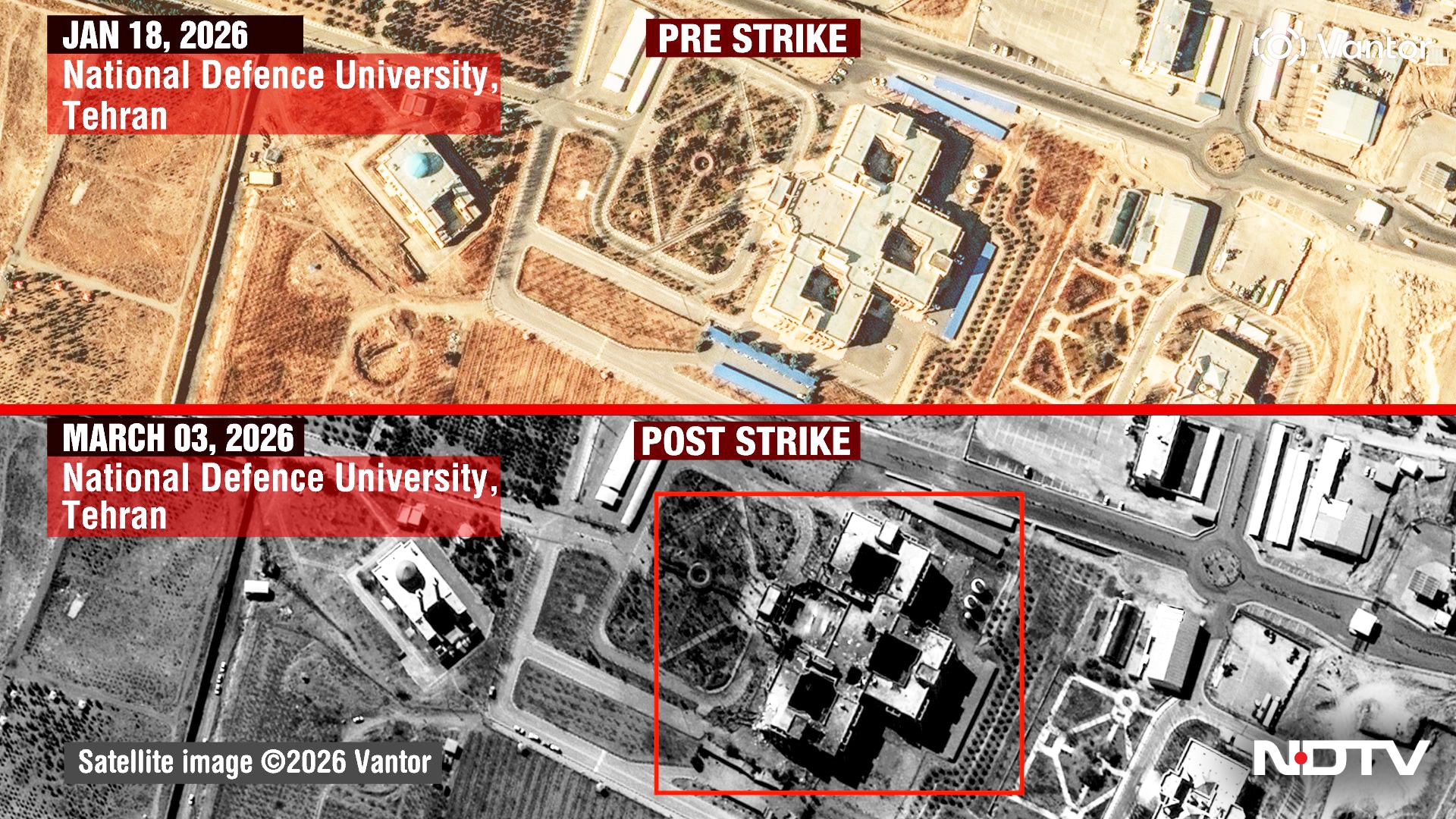
Satellite imagery of the National Defense University campus also shows extensive structural damage. High-res pic here
Several buildings appear damaged, particularly in the central area of the campus.
The institution is responsible for training senior Iranian military officers and defence officials.
War Across The Region
Iran's Revolutionary Guards said on Wednesday that they had taken full control of the Strait of Hormuz, the narrow waterway connecting the Persian Gulf to global shipping lanes.
About one-fifth of the world's oil supply passes through the strait.
Earlier, the Guards warned ships against entering the passage, and several major shipping companies have already suspended transit through the area after reports that vessels were attacked.
With oil prices already rising sharply, US President Donald Trump said the US Navy was prepared to escort oil tankers through the waterway.
Brent crude rose to $84 a barrel, more than 15% higher than before the conflict began and its highest level since July 2024.
Global stock markets have also fallen amid concerns that rising energy costs could slow the world economy.
Missile And Drone Attacks Across Gulf
Iran has responded to the strikes on its territory with missile and drone attacks across the Middle East.
Saudi Arabia said it intercepted two cruise missiles and a drone targeting the Ras Tanura refinery, one of the largest oil processing facilities in the world. The kingdom said the attack caused no damage.
In the United Arab Emirates, drones struck near the US consulate in Dubai, starting a fire.
Qatar said a missile struck the US military's Al-Udeid air base, though there were no casualties.
Air defence systems across the Gulf were activated as Iran launched waves of missiles and drones.
The UAE said it intercepted three ballistic missiles and 129 drones targeting Abu Dhabi, though eight drones were able to get through.
Kuwait reported that an 11-year-old girl was killed by falling shrapnel during interceptions of aerial targets.
The Pentagon said four of six US troops killed in the conflict died in a drone attack in Kuwait.
NATO Intercepts Missile Near Turkey
Turkish officials said NATO air defence systems destroyed a ballistic missile launched from Iran before it entered Turkish airspace.
The missile had travelled through Iraqi and Syrian airspace.
The interception reflects the growing risk that the conflict could draw in additional countries.
Track Latest News Live on NDTV.com and get news updates from India and around the world


