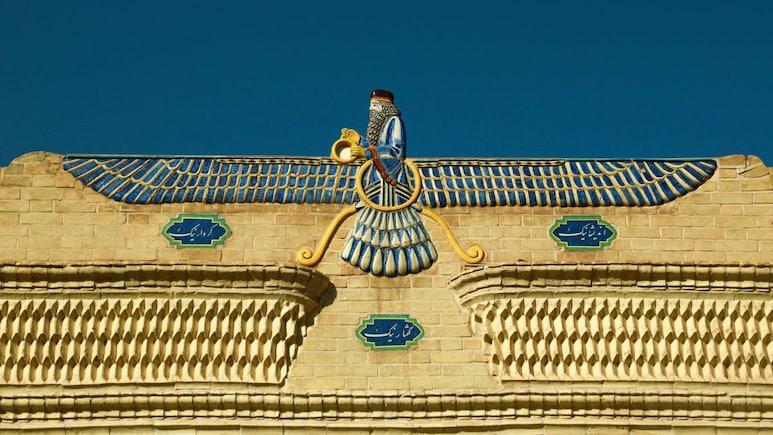
Before Islam reached Iran in the 7th century, the country had a long and complex religious history. The best-known of these earlier religions is Zoroastrianism, but it was not the only one.
Over thousands of years, different beliefs rose, mixed, and changed.
Long before Islam and even before Zoroastrianism, Iranian tribes followed an ancient Indo-Iranian religion. This was a shared religious tradition that also influenced early Indian beliefs found in the Vedas.
Ideas included:
- A belief in cosmic order (called Asha in Iranian tradition).
- Worship of different divine beings.
- Ritual ceremonies led by hereditary priests.
- Animal sacrifice and sacred drink rituals (haoma/soma).
Religion was closely tied to tribal life. It was not yet centered on one prophet or one clear moral struggle between good and evil.
The Rise Of Zoroastrianism
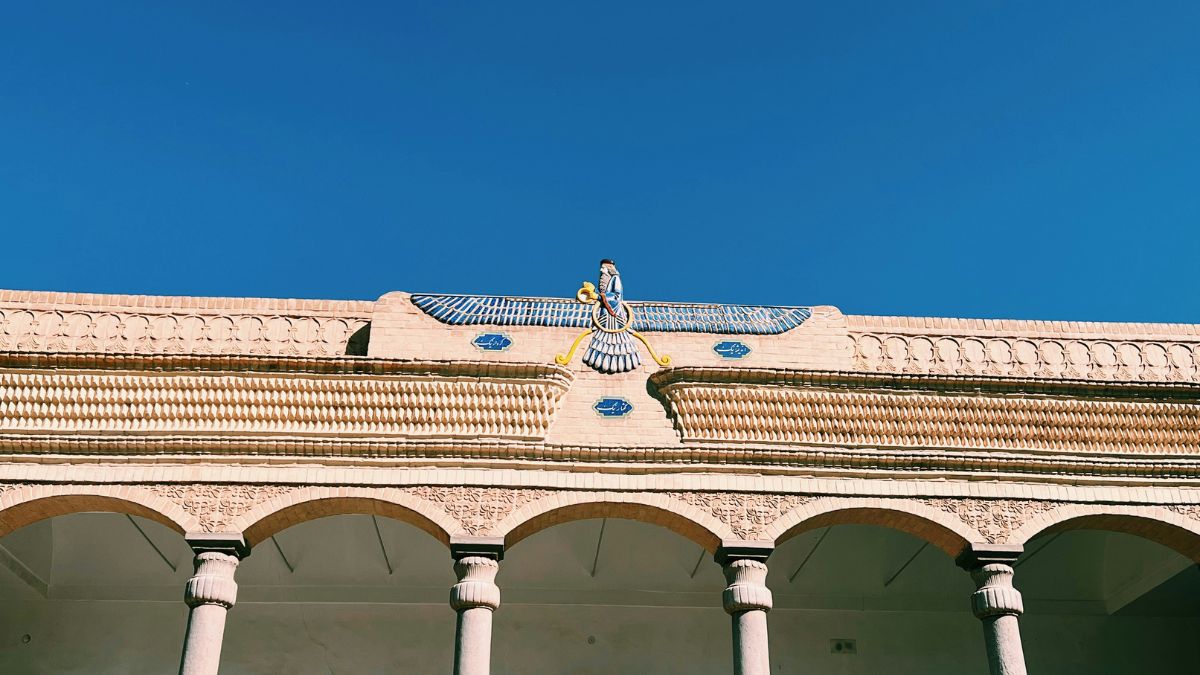
At some point between 1800 BCE and 1200 BCE, a priest named Zoroaster (also known as Zarathustra) taught a new message.
He said people should worship Ahura Mazda, the “Wise Lord,” as the supreme God. He also taught that -
- The world is a battleground between good and evil.
- Evil is represented by Ahriman (Angra Mainyu).
- Humans must choose good thoughts, good words, and good deeds.
- At the end of time, good will defeat evil.
His hymns were preserved in the Avesta, especially in the oldest section called the Gathas.
Unlike earlier tribal religions, this faith focused on moral choice and belief. It was one of the earliest religions centred on a prophetic figure and a moral worldview.
Zoroastrianism Becomes A State Religion
Zoroastrianism spread slowly at first. It became especially important under the Achaemenid Empire, which included rulers like Darius and Xerxes.
Later, it became firmly established as the official state religion under the Sasanian Empire.
During the Sasanian period:
- Fire temples were built across the empire.
- Priests gained strong political power.
- Religious texts were organised and written down.
- Zoroastrian identity became closely tied to Persian state power.
At this point, Zoroastrianism was the dominant religion across much of Iran and parts of Central Asia.
Other Religions In Pre-Islamic Iran
Even when Zoroastrianism was strong, Iran was never religiously uniform.
Other traditions existed, including:
- Local Western Iranian religions.
- Manichaeism was founded in the 3rd century.
- Christianity, which spread eastward.
- Buddhism, especially in eastern Iranian regions like Bactria and Sogdia.
Iran was a crossroads of trade and ideas. Religious exchange was common.
When Islam Arrived
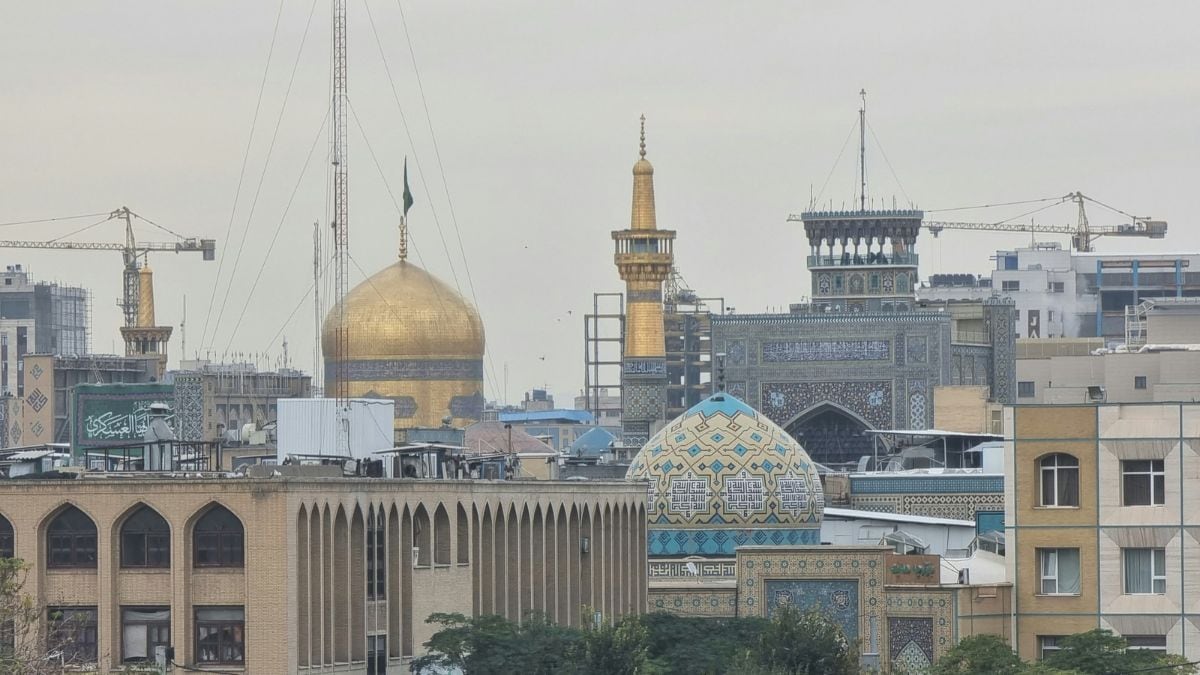
Islam began in the 7th century with the Prophet Muhammad. After his death, Muslim armies expanded rapidly. By the mid-600s, they defeated the Sasanian Empire.
This did not mean Zoroastrianism disappeared overnight. In his book Zoroastrians in Early Islamic History: Accommodation and Memory, historian Andrew D Magnusson explains that early Muslim rule was more complex than later stories suggest.
According to Magnusson,
- Muslims debated how to classify Zoroastrians.
- Zoroastrians were generally allowed to live under Islamic rule.
- They paid a special tax (jizya).
- They were not fully recognised as “People of the Book,” like Jews and Christians.
- Some restrictions existed, but they were not always strictly enforced.
Magnusson said that early Islamic sources show flexibility and practical coexistence.
Why Zoroastrianism Declined
Over centuries, many Zoroastrians converted to Islam. Conversion to Islam was a slow process that took over 400 years, with about 40 per cent of the population Muslim by the mid-9th century and around 80 per cent by the end of the 11th century.
Many Zoroastrians converted to avoid paying the jizya tax, to improve their social and economic status, and to better fit into the new Muslim-ruled society.
Although Zoroastrians were initially treated as protected people (dhimmis), they sometimes faced persecution, which encouraged more conversions.
Zoroastrians captured as slaves during wars were often granted freedom if they converted to Islam. Many Zoroastrian fire temples, known for their four-arched design, were converted into mosques by adding a mihrab (prayer niche) facing the qibla (direction of Mecca), as per reports.
Temples changed in this way could be found in Bukhara, as well as in and around Istakhr and other Persian cities.
Between the 8th and 10th centuries, many Zoroastrians migrated to India to preserve their religion, where they became known as Parsis.
Those who remained in Iran became a small minority over time.
While Persian language and culture continued, the religious makeup of the region shifted from mainly Zoroastrian to predominantly Muslim.
Zoroastrianism Today
Zoroastrianism still exists in Iran, India, and diaspora communities worldwide.
In modern Iran, Zoroastrians have one reserved seat in parliament. They can maintain fire temples and face some limits in education and employment.
The Persian New Year, Nowruz, which predates Islam, remains widely celebrated by Muslims and Zoroastrians alike. Today it is often seen as a Persian cultural tradition rather than a religious one.
Track Latest News Live on NDTV.com and get news updates from India and around the world


