
Iran, the ancient homeland to the Parsis, is once again in the middle of a crisis after the recent US-Israel attack. Tehran has responded with attacks on US military bases in the Gulf countries.
Centuries ago, the same land witnessed a historic departure. In the 7th century, after Muslim forces conquered Persia (now Iran), many Zoroastrians faced pressure to convert. So, fearing persecution, a section of the community chose to leave their homeland.
-

-
 NDTV World Summit 2026: AI, Chips, Warfare And The Future Of The World | Key Conversations
-
 Kriti Sanon On Situationships, Open Relationships And Being Old-School
-
 'AI Scares Me': Kriti Sanon On Personality Rights And Need For Laws
-
 'This Time I Wanted Gold': Savita Punia Reflects On Historic Asiad Success
-
 Favourite Bollywood Actor To 5-Year Plan, Kriti Sanon Interviews AI Actor Tilly Norwood
-
 Neeru Dhanda Carried Homemade Churma To Asiad, Returned With Two Gold Medals
-
 Inside The Mind Of Archer Kumkum Mohod, Who Dared To Challenge South Korea
-
 India's Golden Girls: Asian Games Champions On Sacrifice, Success And LA 2028
-
 RBI Governor Was Asked About Tata Sons' Listing. He Read The Rulebook
-
 "High Inflation Is Like Tax On Everyone": RBI Governor At NDTV World Summit
These Zoroastrians sailed away from their homeland in search of a place where they could practice their religion without fear and eventually found a safe spot in India. They reached India's western coast, where a local ruler allowed them to settle peacefully.
Over time, they became known as Parsis. They were not just given shelter but also received permission to build their own fire temples. This encouraged more Zoroastrians to migrate from Iran to India.
The Parsis first settled in Sanjan, a coastal town in present-day Gujarat. From there, they slowly moved to other towns such as Navsari, Ankleshwar and Surat as their population grew and trade opportunities expanded. After settling in Gujarat, the Parsis quickly adapted to their new surroundings and started speaking Gujarati.
The Parsis also adopted several local Hindu customs and followed certain social practices common in Gujarat.
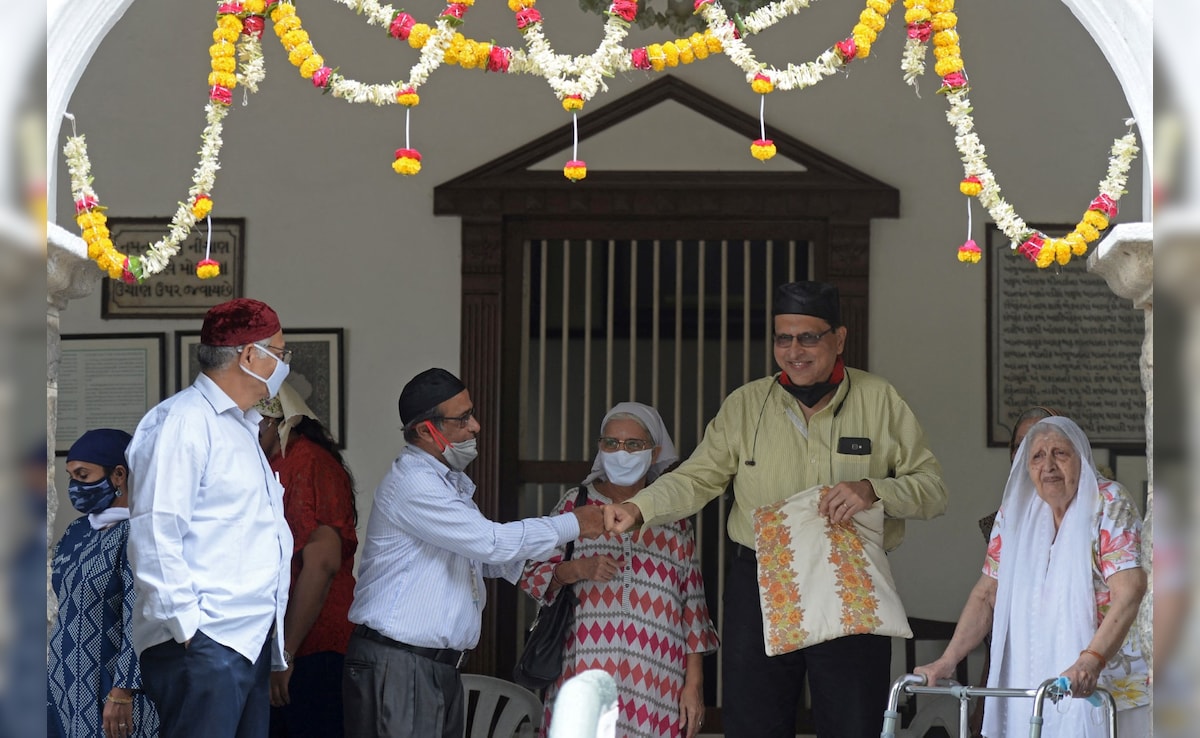
One of the most important moments in Parsi history in India was the establishment of their sacred fire temple in Sanjan.
They built an Atash Behram, the highest grade of fire temple in Zoroastrianism, known as Iranshah Atash Behram, which continues to burn there even today and remains one of the holiest sites for Parsis worldwide.
Some even decided to move to the north, to places like Dehradun, and even to the Sindh and Punjab provinces (now part of Pakistan).
When the Parsis first settled in India, they made an important promise to their Hindu hosts that they would not try to convert others to their religion, which helped them live peacefully and earn trust. However, later conversion turned into a strict rule in their culture.
According to The Guardian, Parsis are marrying later, having fewer children, and many are choosing not to marry at all. Since outsiders cannot convert easily, the community is shrinking fast.
Jehangir Patel, who has edited the community's monthly magazine Parsiana for nearly 50 years, said, "You've heard of four weddings and a funeral. For Parsis today, it's four funerals and a wedding."
By the 20th century, especially around the time India was moving towards Independence, Parsis had become deeply involved in almost every part of public life.
They had started their own hospitals and medical centres, boy scout groups, ambulance corps, educational institutions, housing colonies and community organisations and also ran newspapers, magazines and literary groups.
Track Latest News Live on NDTV.com and get news updates from India and around the world


