Iran has likely earned hundreds of millions of dollars of extra income from oil sales since the start of the war, benefiting from a surge in the price of its crude after it became the only major exporter able to use the Strait of Hormuz.
The Islamic Republic is benefiting twofold from price moves since the start of the war. Its flagship crude grade is selling to customers, mostly in China, at the slimmest discount in more than 10 months to Brent. And the international benchmark itself has surged above $100 a barrel since the bombing began.
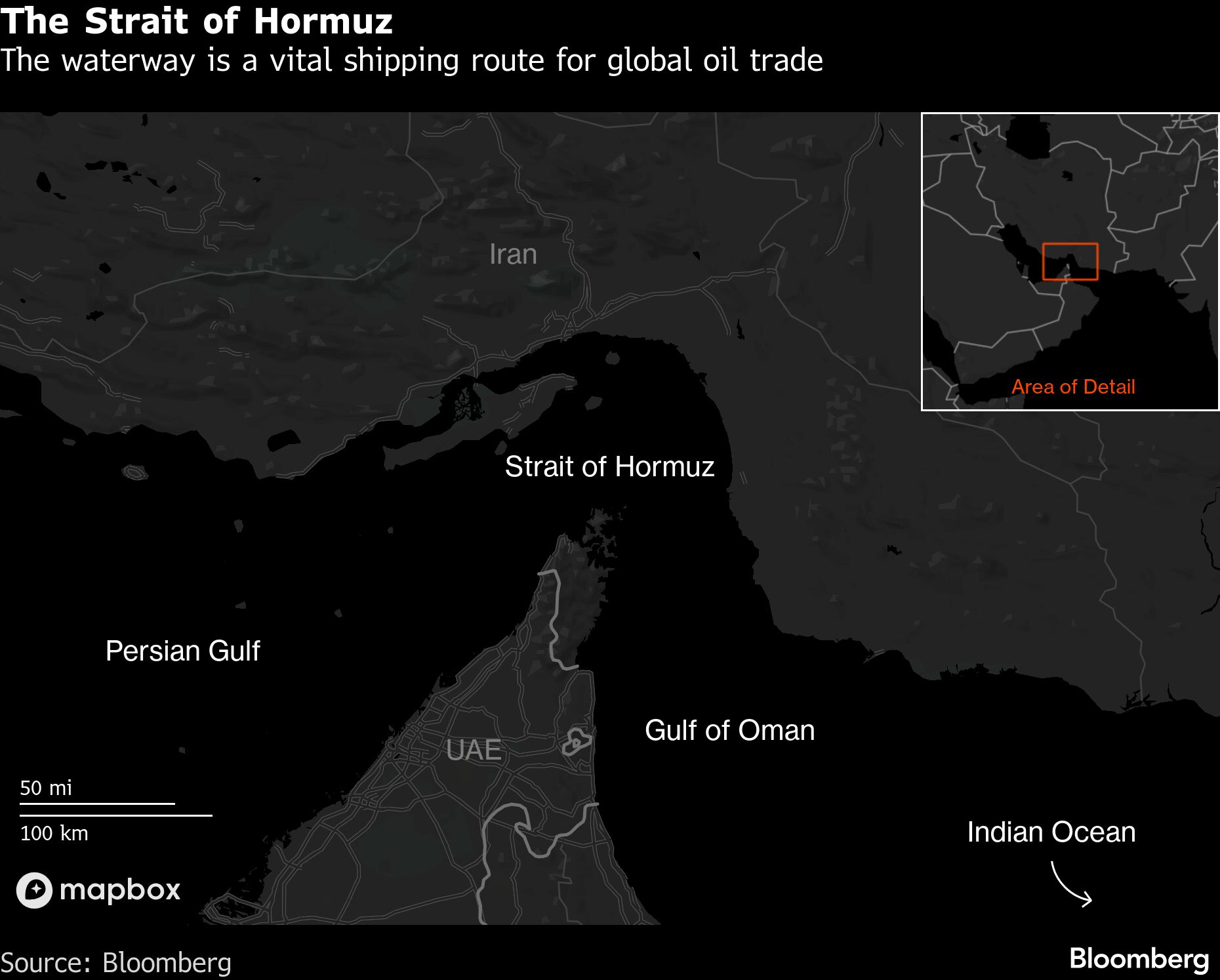
Iran's exports are estimated to have remained close to prewar levels of about 1.6 million barrels a day this month. Ships carrying Iranian crude continue to load at the Kharg Island terminal and exit the Persian Gulf through the Strait of Hormuz - with activity gaining pace recently.
That's in stark contrast to the effective blockade imposed on shipments from other Gulf producers.
Even as the US and Israel have battered Iran with daily airstrikes, their military efforts have been blunted by Tehran's ability to maintain its financial lifeline. Tehran stands to gain even further after Washington, seeking to mitigate the war's impact on oil prices, took the surprising step of temporarily suspending sanctions on a trove of Iranian oil that was already at sea in tankers.
"The Trump Administration is practically begging Iran to sell oil," said Richard Nephew, senior research scholar at Columbia's Center on Global Energy Policy, who has served at the US Department of State as a deputy envoy for Iran and a coordinator for sanctions policy. "I would have thought that interdicting Iranian oil sales would have been a priority for the United States."
Based on export estimates from Tankertrackers.com and prices for the country's flagship grade Iranian Light, Tehran would have earned about $139 million a day from sales of its main Iranian Light crude blend so far in March, up from $115 million in February.
Iran's oil has grown more valuable compared with international benchmark Brent, narrowing to a discount of $2.10 a barrel at the start of this week, the smallest in almost a year. The differential was wider than $10 before the war.
The higher selling price for each barrel is key for Iran, which has suffered major damage from US and Israeli airstrikes and will have to make significant investments to rebuild and prop up its ravaged economy. The country has also expended many weapons in retaliatory strikes around the Middle East that will need to be replenished.
Kharg Island
As countries like Iraq and Kuwait have been forced to sharply cut production, and the United Arab Emirates and Saudi Arabia have scrambled to use alternative export routes, Iran has continued to load tankers and sail them out of the Persian Gulf.
From March 1 to 23, Iran exported about 1.6 million barrels a day on average, close to prewar levels, according to TankerTrackers.com. Even before the war started on Feb. 28, the country's shipments were unusually high, with February loadings at the highest level since around July 2018, Kpler data show.
Oil infrastructure at Iran's main export hub, Kharg Island, has been spared by the US - which only hit military targets there. Satellite photos from the European Union's Copernicus Browser from between March 2 and March 22 show very large crude carriers moored at the terminal on each occasion.
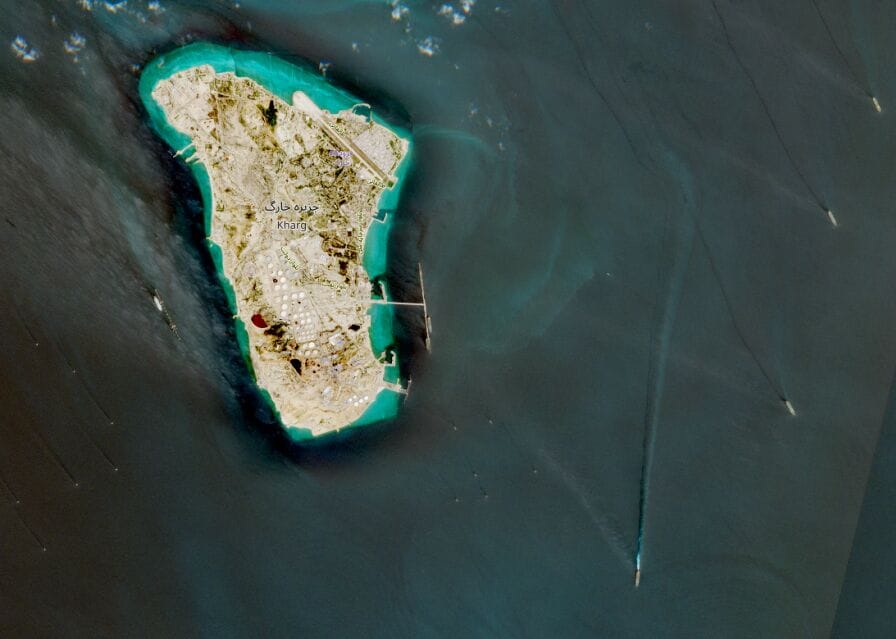
And the activity appears to be gaining pace - an image from March 2 shows a single supertanker moored at Kharg, while pictures from March 7 and March 17 show two of the vessels taking on cargoes. The most recent picture, from Sunday, shows two VLCCs moored and a third that appears to have recently left the terminal.
Iran has also shipped crude from its Jask terminal which is beyond the Hormuz chokepoint. A satellite image from March 5 shows a supertanker approaching the loading buoy at he terminal. A second image, captured three days later, shows the same ship moored at the buoy.
Crude shipments from Jask are usually infrequent, with only five ships loaded there since the terminal was officially opened in 2021.
Iran is also bringing in extra income by charging transit fees of as much as $2 million on some commercial ships crossing the strait.
In contrast, the oil-export earnings of other Persian Gulf nations have suffered considerably through the war. Costly strikes have hit a range of energy assets from oil and gas fields to refineries and ports. Billions of dollars of damage was inflicted on Qatar's Ras Laffan facility, the world's largest liquefied natural gas export hub, curtailing production for years.
Iran's energy infrastructure has largely escaped attack during the war, with the exception of Israeli airstrikes on the massive South Pars gas field last week. That drew retaliatory attacks by the Islamic Republic on Gulf Arab oil and gas assets.
Over the weekend, President Donald Trump threatened to target Iran's energy infrastructure if it didn't reopen the Strait of Hormuz. On Monday he rowed back, citing "very good and productive conversations" with Tehran on an end to the war.
Iranian officials have denied that talks are taking place and rejected a US cease-fire proposal and maintained attacks on Israel and Gulf Arab states, delivering a blow to Washington's efforts to end a war.
(Except for the headline, this story has not been edited by NDTV staff and is published from a syndicated feed.)
Track Latest News Live on NDTV.com and get news updates from India and around the world


