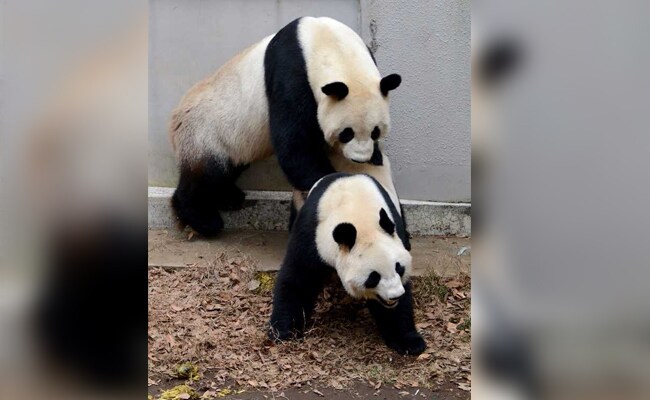
Popular twin pandas at a Tokyo zoo are set to return to their homeland in China in late January, officials said Monday, leaving Japan without a panda for the first time in about half a century.
Prospects for their replacement are also unfavourable, as ties between the two countries have deteriorated.
The twins, Xiao Xiao and his sister Lei Lei, were born at Tokyo's Ueno Zoological Gardens in 2021 and were raised there, but they remain on loan from China and must be returned by February.
Their parents, Shin Shin and Ri Ri, returned home last year after China loaned them for breeding research in 2011.
The last day of public viewing for the 4-year-old twins will be Jan. 25, according to the Tokyo metropolitan government.
Japan's Chief Cabinet Secretary Minoru Kihara said pandas have long been loved by Japanese people, and he hoped friendship through panda diplomacy between the two countries would continue.
"Exchanges through pandas have contributed to improving the public sentiment between Japan and China, and we hope the relationship will continue," Kihara said. He noted that a number of local municipalities and zoos have expressed hope that new pandas will be loaned soon.
China sent the first pair of pandas to Japan in 1972 to mark the normalisation of diplomatic ties between the two countries. Since then, Japan has never been left without a panda.
Giant pandas are native to southwestern China and serve as an unofficial national mascot. Beijing lends them to other countries as a sign of goodwill but maintains ownership over them and any cubs they produce.
Relations between Japan and China have worsened since Japan's Prime Minister Sanae Takaichi said in early November that its military could get involved if China were to take action against Taiwan, the self-governing island that Beijing claims as its own.
China has since restricted tourism to Japan, and cultural events and exchanges between local governments have been cancelled. The row escalated this month when Chinese drills involving an aircraft carrier near southern Japan prompted Tokyo to scramble fighter jets. It also protested that Japanese aircraft were targeted by repeated radar-locking - a move considered as possible preparation for missile firing.
Track Latest News Live on NDTV.com and get news updates from India and around the world


