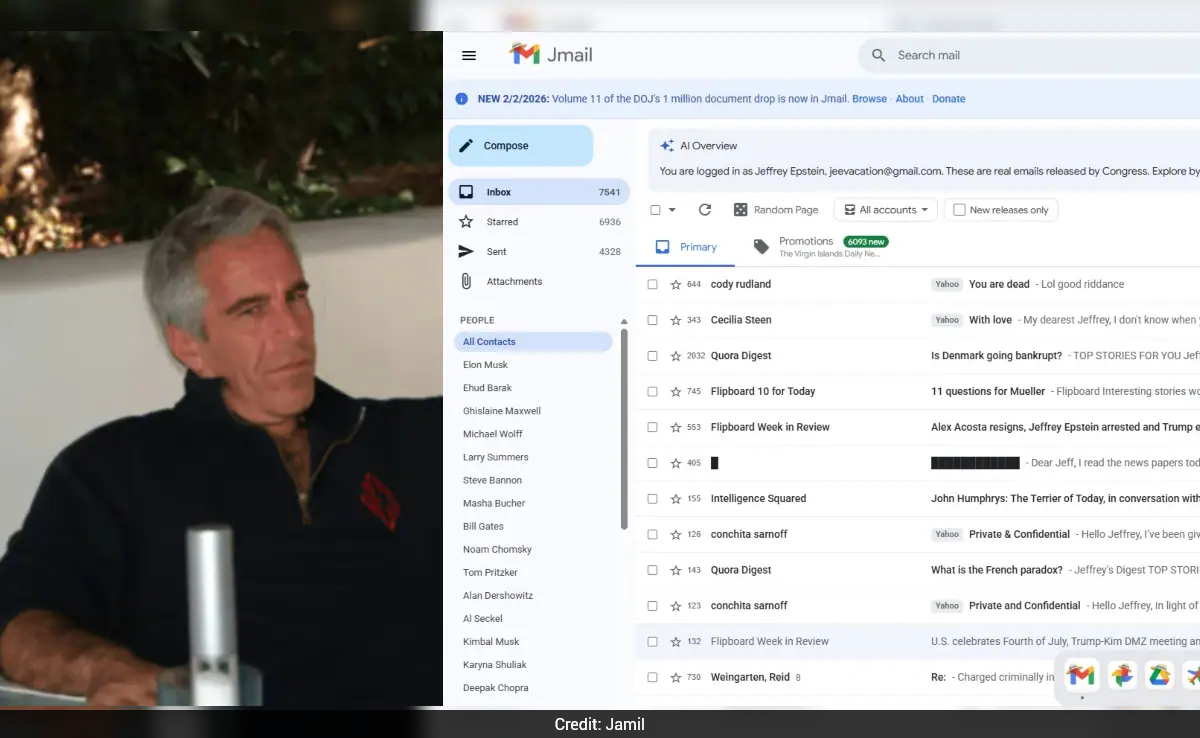
The US Justice Department has publicly released thousands more documents from the estate of registered sex offender and disgraced financier Jeffrey Epstein. The latest drop of material—dubbed the Epstein files—released last week included three million pages, around 180,000 images, over 2,000 videos, and a number of household names like Bill Clinton, Bill Gates, and Elon Musk.
But browsing through large data dumps is a tedious task, even if the material is of major public interest. But the task has been made easy by a web tool that lets people browse all those documents just like you would on your own email account.
Jmail is a website that looks a lot like Google's Gmail, except there is a little hat hanging on the 'M' in the logo, and the profile picture on the top right corner is of smiling Epstein. It also has hanging hat logos labelled 'JPhostos,' 'JDrive,' and 'JFlight.
JPhotos takes users to a photo gallery that contains an image database of pictures released by the Justice Department related to the convicted sex offender. Similarly, JDrive lets users access millions of pages of documents, and JFlights is flight tracking software for Epstein's flights. It also has a 'more' option, which takes users to additional tabs like 'Jotify'-- which is similar to Spotify - which contains hours of audio recordings released by the Justice Department, and 'Jamazon,' a website similar to Jmail that tracks Epstein's Amazon orders.
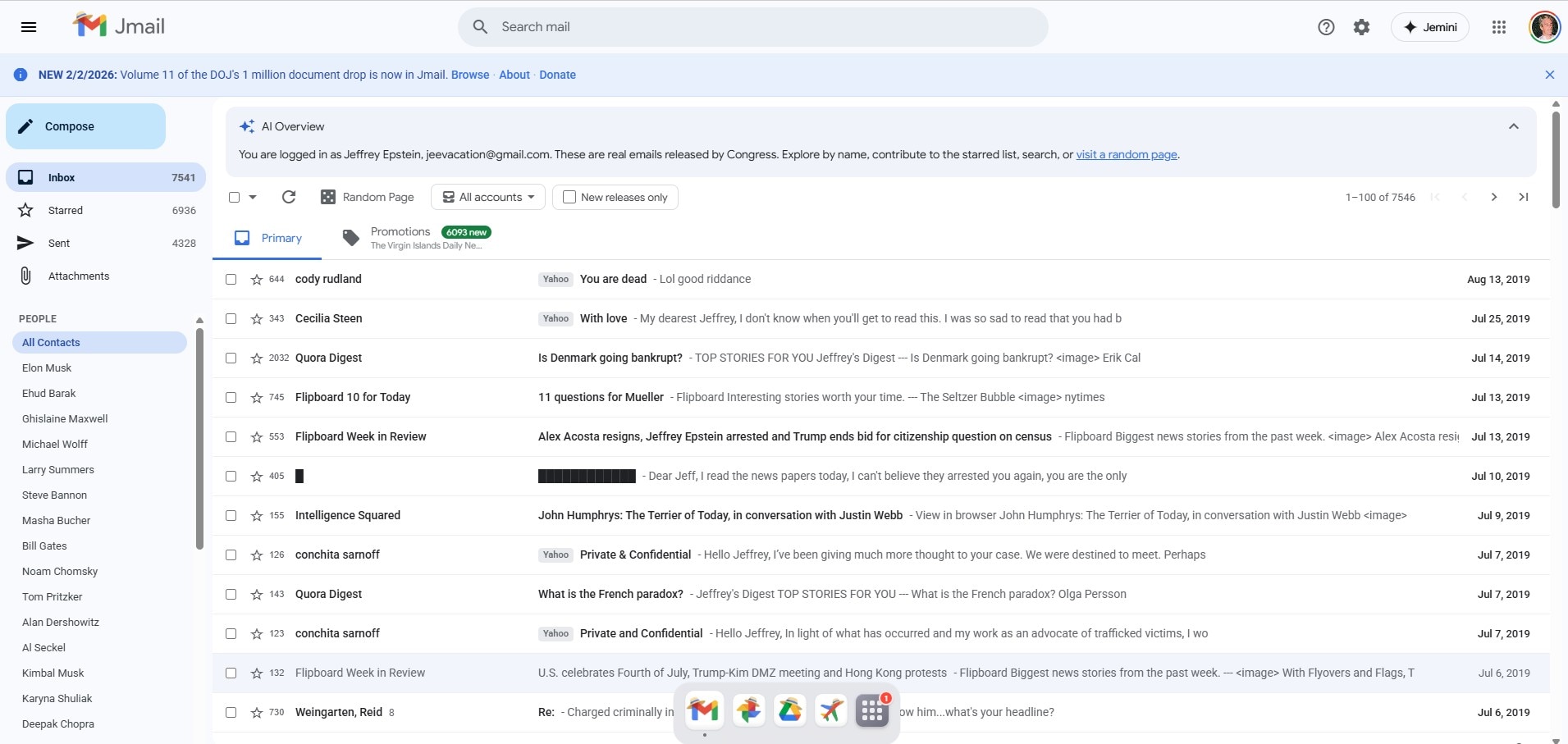
In Jmail, the inbox lets users click through thousands of emails, formatted to look exactly like a regular message. In the sidebar, one gets to sort the emails under categories like Inbox, Starred, and Sent. The lower sidebar section provides the list of people who corresponded with Epstein.
Jmail was started by an internet artist, Riley Walz, and a web developer, Luke Igel. It was unveiled by Walz in late November 2025 after the first batch of Epstein files was released via an X post, where he said, "We cloned Gmail, except you're logged in as Epstein and can see his emails."
Igel told Wired in an old interview that he brought the idea to Walz, and then the two of them put the website together with Cursor in a single night.
"The emails were just so hard to read," Igel said.
"It felt like so much of the shock would've come if you saw actual screenshots of the actual inbox, but what you were seeing was these really low-quality, poorly scanned PDFs. You have to do a few steps of imagination to remind yourself that this is indeed a real email," he added.
Track Latest News Live on NDTV.com and get news updates from India and around the world


