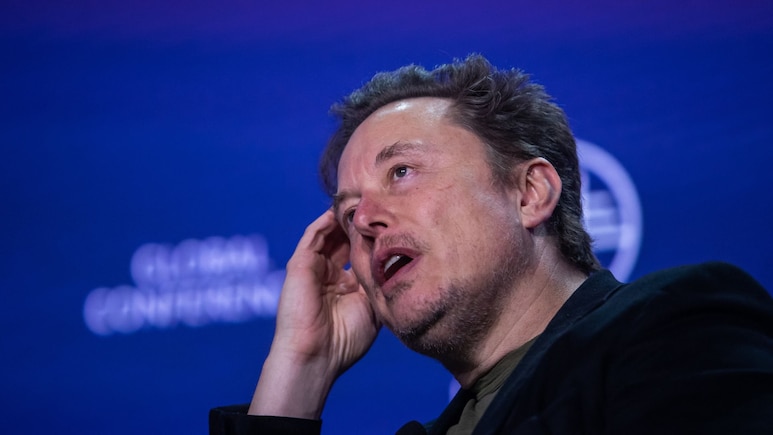
Elon Musk has said that his experience with the COVID-19 vaccine was far more severe than the virus itself. His remark came in response to a post on X (formerly Twitter) that cited claims by a former Pfizer toxicologist about vaccine-related deaths in Germany.
Replying to the post, Musk wrote, “The vaccine dosage was obviously too high and done too many times. I had the original Wuhan virus before there was any vaccine and it was much like any other cold/flu. Bad, but not terrible. But my second vaccine shot almost sent me to the hospital. Felt like I was dying.”
-

-
 World-Class Chefs, Food And Music: The Fun Side Of NDTV World Summit 2026
 -
 AI, Consciousness And Dharma: Why Ancient Indian Wisdom Matters Now
 -
 NDTV World Summit: What To Expect From PM Modi's Keynote Address
 -
 NDTV World Summit 2026: What To Watch Out For | PM Modi, Jaishankar, AI And Global Power Shifts
 -
 A World Between Orders: What To Expect At NDTV World Summit 2026
 -
 Who Is Rajiv Mehta? Lilavati Hospital Trustee To Speak At NDTV World Summit 2026
 -
 Alain Ebobisse, Africa50 CEO, To Attend NDTV World Summit 2026. All About Him
 -
 Kriti Sanon At NDTV World Summit: A Look At Her Career And Business Ventures
 -
 Ex-CIA Director To Decode 'War In Times Of AI' At NDTV World Summit
 -
 Who Is Vikram Rai, CEO, South Asia GE Aerospace, Set To Attend The NDTV World Summit 2026
The vaccine dosage was obviously too high and done too many times.
— Elon Musk (@elonmusk) April 12, 2026
I had the original Wuhan virus before there was any vaccine and it was much like any other cold/flu. Bad, but not terrible.
But my second vaccine shot almost sent me to the hospital. Felt like I was dying. https://t.co/rFuUpzBkKH
The toxicologist referenced is Dr Helmut Sterz, who previously headed toxicology centres in Europe for Pfizer. During a deposition linked to Germany's pandemic inquiry, he raised concerns about how Pfizer's Comirnaty mRNA vaccine was developed and tested in a quick manner.
“The carcinogenic risk was not investigated due to time constraints. Incidentally, I find it very concerning and also regrettable that no alternative investigations were carried out,” he said as quoted by TCW.
Dr Sterz also pointed to a drop in birth rates following vaccination campaigns in several countries.
According to him, studies conducted before approval were limited in scale. Tests on animals, including rats, were not “reliable” to estimate the vaccine's effect on pregnancy.
Germany's public health body, the Robert Koch Institute (RKI), was also criticised for prioritising speed over thorough evaluation.
“This meant that essential toxicity studies were sacrificed to speed, without acceptable justifications. I know of no case with a comparable indication in which all these studies were omitted. The approval led to prohibited human experiments,” Dr Sterz said.
According to the report, RKI had internally noted that side effects were largely intended to be monitored only after the vaccine had already been rolled out widely.
Sterz also cited early post-approval data from Pfizer that mentioned over 1,200 suspected deaths within a short period, saying that the vaccine “should have been taken off the market then.”
In Germany, more than 2,000 deaths have reportedly been recorded following vaccination, according to the Paul Ehrlich Institute. Sterz argued that underreporting could mean the actual numbers are significantly higher.
“For Germany, that would correspond to 60,000 deaths from the vaccination,” he added.
Another point he raised was about the differences between the vaccine tested during trials and the one later distributed to the public. He alleged that the mass-produced version involved bacterial components such as Escherichia coli, which could potentially lead to contamination with bacterial DNA, and “the consequence could be a significantly increased cancer risk.”
Track Latest News Live on NDTV.com and get news updates from India and around the world


