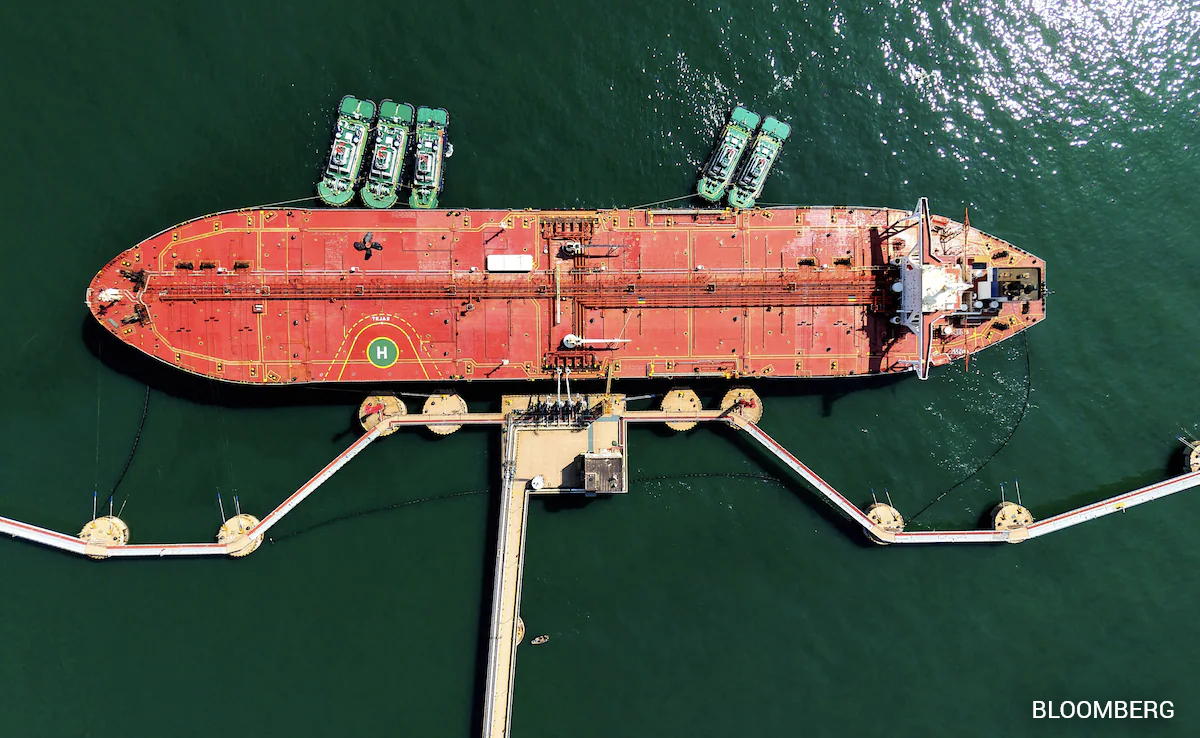
US President Donald Trump's move to blockade the Strait of Hormuz risks deepening an unfolding economic crisis for Asia's energy-dependent economies, including America's allies in the region and China.
"For the global economy and markets, the latest developments shift the focus back toward downside risks - pointing to higher oil prices and a larger blow to growth and boost to inflation," Bloomberg Economics' analysts including Jennifer Welch wrote in a note. Global benchmark Brent crude oil rallied as much as 8.6% on Monday to more than $103 a barrel, while European gas futures spiked almost 18% at one point.
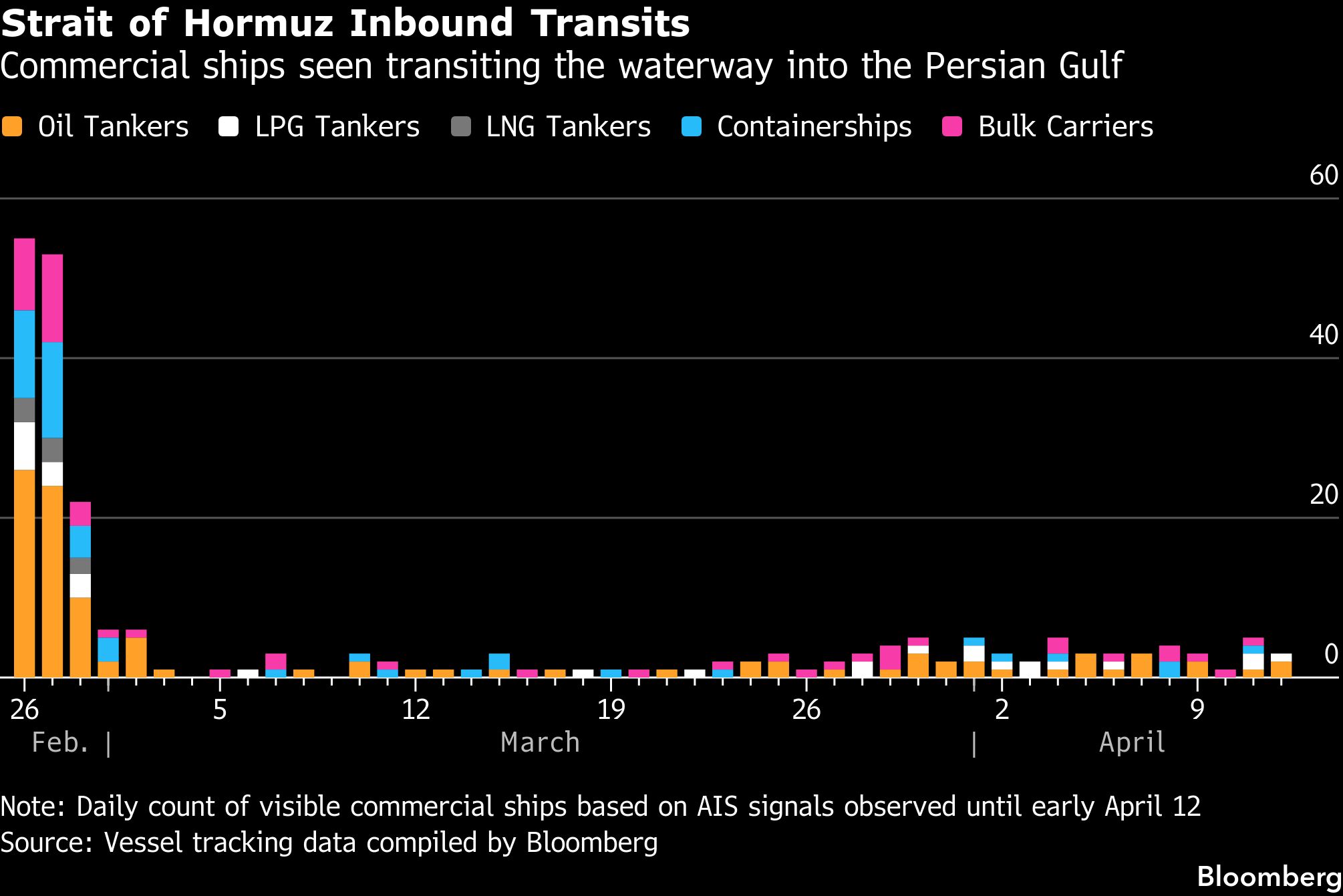
US forces will begin implementing the blockade, which applies only to vessels entering or departing Iranian ports, from 10 a.m. New York time Monday, the US Central Command said. The president's announcement of the blockade plans came hours after the US and Iran failed to reach a deal in direct talks in Pakistan.
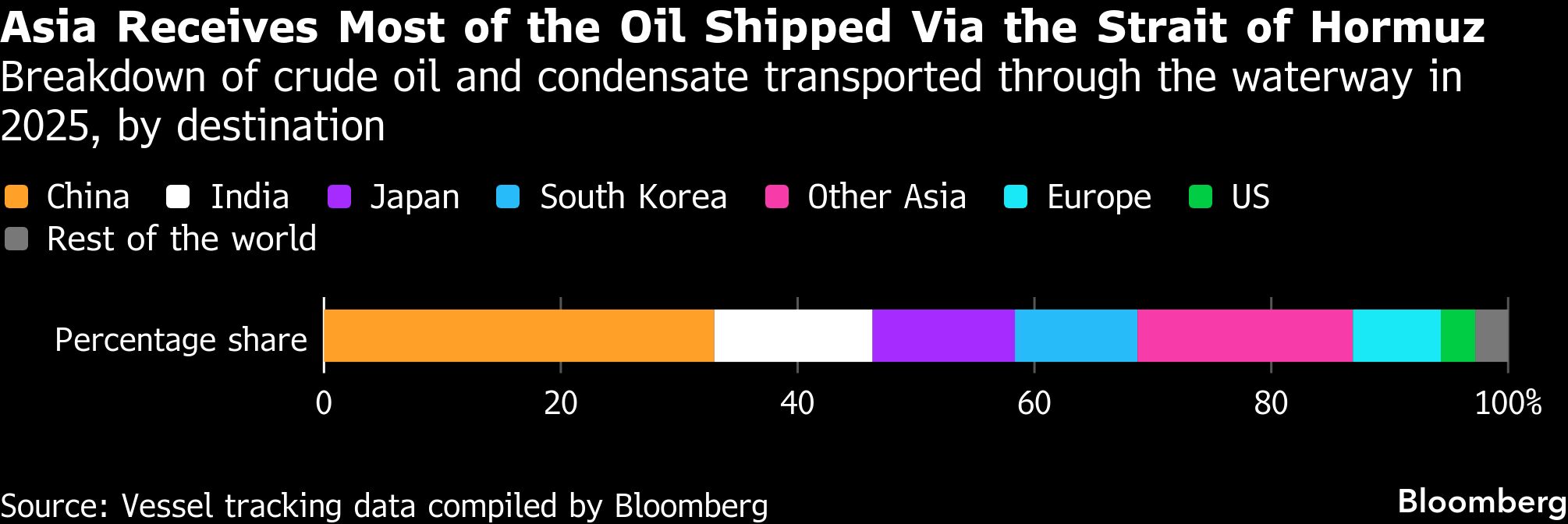
Asian nations including US allies such as Japan and South Korea use more than 80% of the energy that usually transits the strait. Governments across the region have been scrambling to arrange alternative oil and gas supplies, trying to cut back energy use with steps like running air conditioners at warmer settings, and rolling out measures to soften the blow to consumers and businesses.
Iran-linked tankers as well as others from nations including China had been transiting the key waterway - movements that the blockade would target. Coming ahead of Trump's planned trip to China in mid-May, Beijing may look to impose pressure on Washington to lift the blockade, with BE's analysts saying it could leverage its dominance of critical minerals if needed.
The problem for Asia isn't just energy, with downstream industries from fertilizers to packaging and even fabric supplies set to take a hit from the blockade, said Deborah Elms, head of trade policy at the Hinrich Foundation in Singapore.
"This means that this disruption is not a temporary problem," she said. "This is a potentially long-term issue, and unfortunately, particularly for Asia, there aren't a lot of alternatives."
In a separate report, Bloomberg Economics explored three scenarios for the war and global economy.
In the base case, the conflict continues at a lower intensity, with oil averaging $105 a barrel in the second quarter before falling to $85 in the fourth quarter. Global GDP grows 2.9% this year in that scenario, while inflation prints at 4.2% in the fourth quarter.
Higher intensity fighting, with the Strait of Hormuz mostly shut for several months, would see oil prices rising to $170. Global growth slows to 2.2% and inflation ends the year at 5.4% in that scenario. A lasting ceasefire or collapse of Iran could see the strait open sooner and oil costs falling back to pre-war levels, with global growth at 3.1% and inflation ending the year at 3.7%, the BE analysts including Tom Orlik wrote.
"The latest developments provide little clarity on which scenario is most likely to play out," they wrote. "We'll see how things play out, but right now our base case feels about right on the trajectory - even as details continue to evolve."
(Except for the headline, this story has not been edited by NDTV staff and is published from a syndicated feed.)
Track Latest News Live on NDTV.com and get news updates from India and around the world


