The conflict in the Middle East is beginning to disrupt food supply chains as ships avoid the Strait of Hormuz, a critical maritime chokepoint. Since the escalation of US-Israeli military operations against Iran, the Strait has seen a sharp fall in vessel movement, significantly increasing freight and insurance costs. Multiple analyses show that shipping through Hormuz has slowed to a near standstill, with tanker traffic dropping by over 70 per cent and many vessels choosing to reroute or remain anchored due to security risks.
This disruption poses a serious threat to Gulf nations, which depend heavily on maritime routes near or through Hormuz for essential food imports, especially rice. Exporters in India, the world's largest rice exporter, say they can still load old orders at ports, but securing vessels for new shipments has become difficult as ship owners avoid the conflict zone. This aligns with broader shipping data, which shows major global carriers suspending Gulf-bound bookings due to heightened risk.
Some Gulf buyers have temporarily slowed new purchases because they still have consignments already in transit. However, traders warn that this pause cannot hold if the disruption persists, given the region's high dependence on Indian food imports.
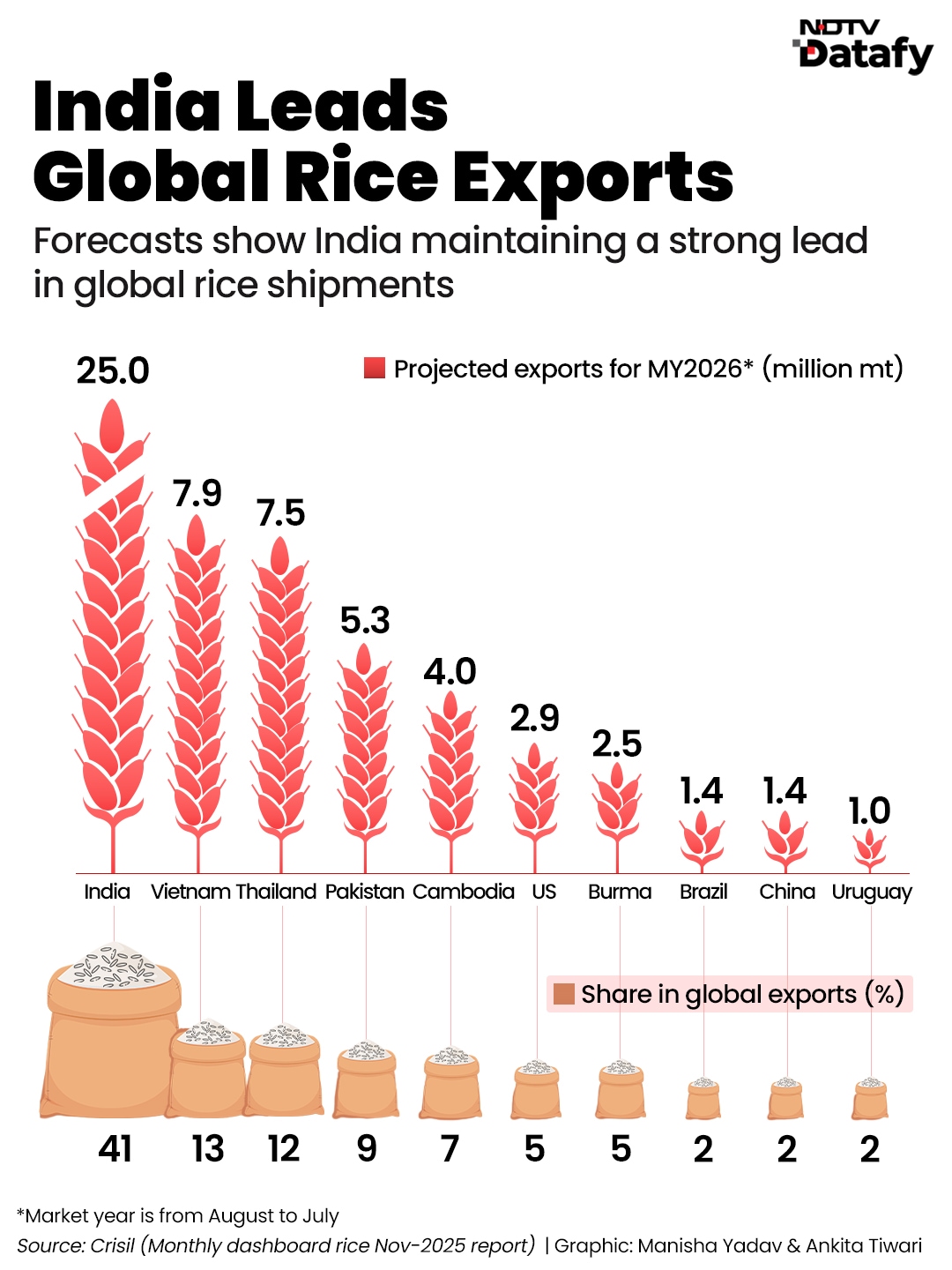
India, which accounts for around 40 per cent of global rice exports, or approximately 22 million tonnes in 2025, is the world's largest supplier of both basmati and non-basmati rice. India usually exports more rice than Thailand, Vietnam, and Pakistan combined, making it essential for maintaining stable rice supplies across the Middle East and the broader Gulf region.
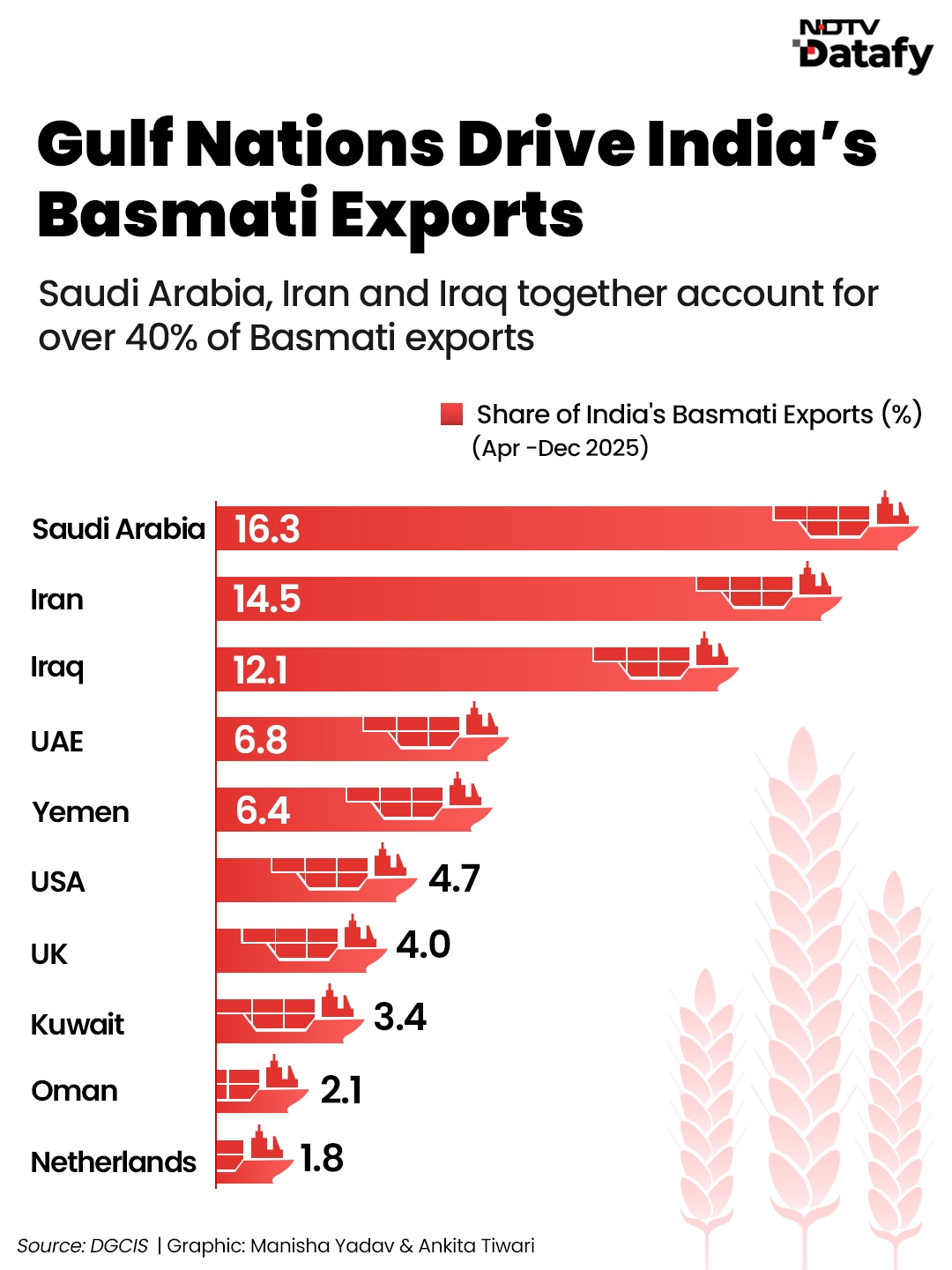
This dominance means any disruption in Indian shipments is immediately felt across the Middle East. Countries such as Saudi Arabia, Iran, Iraq and the UAE collectively form India's strongest basmati markets, and Saudi Arabia alone accounted for 16.3 per cent of India's basmati export value in FY26 (data from April to December 2025), followed by Iran (14.5 per cent), Iraq (12.1 per cent) and the UAE (6.8 per cent).
For Gulf nations, the emerging concern is clear. If shipping around the Strait of Hormuz remains restricted, they may face delays in both basmati and non-basmati shipments. Rising freight and insurance costs, which are already spiking due to war-risk premiums, could push rice prices higher across the Gulf. Some basmati consignments have already been reported stuck or slowed, and industry analyses show exporters may have to pass increased costs on to buyers.
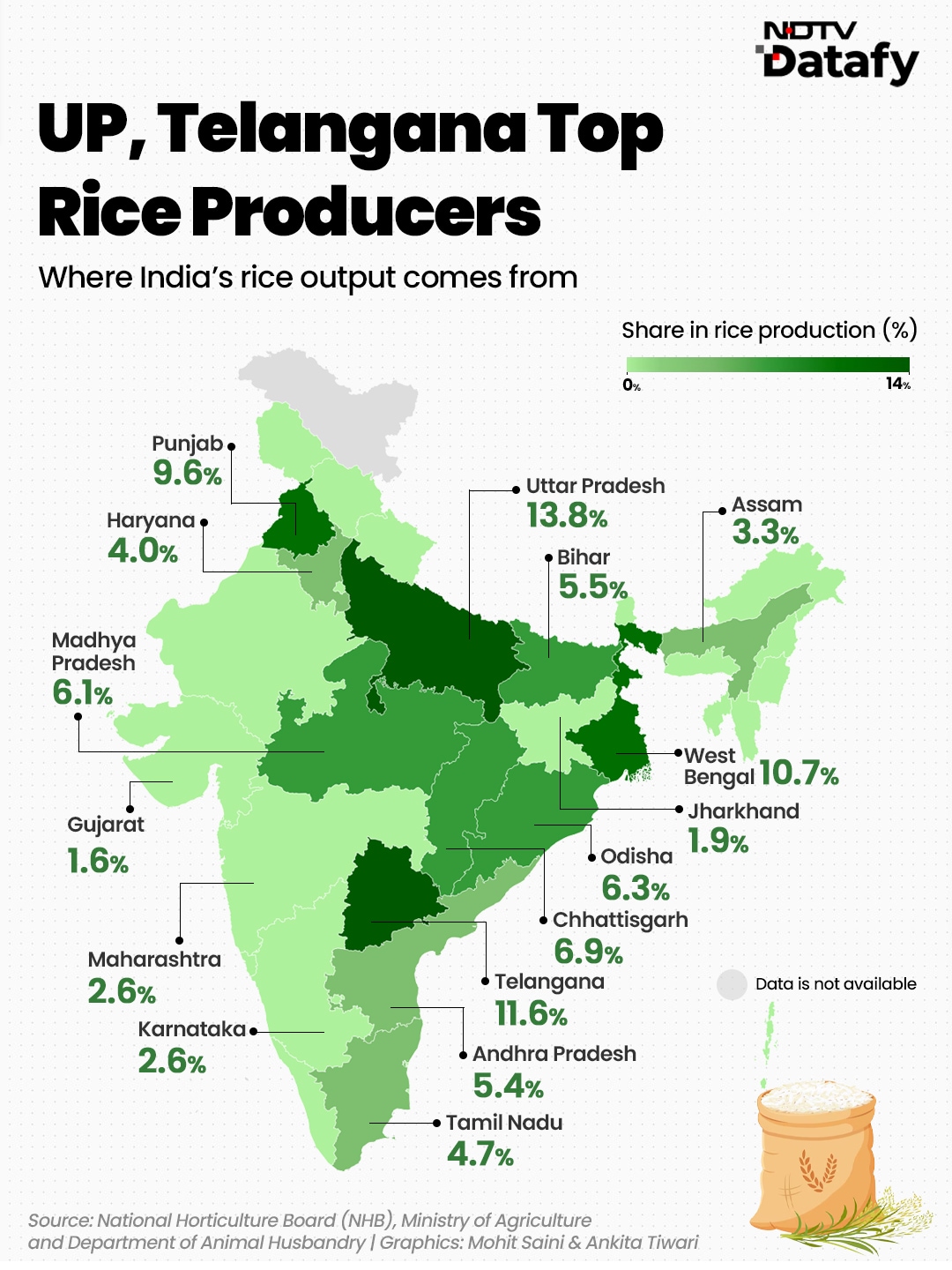
India's ability to serve these markets consistently comes from its strong production base. State-wise rice production data shows that Uttar Pradesh holds the highest share, followed by Telangana, West Bengal, Punjab, and Chhattisgarh. These states help India maintain its position as the world's top rice exporter.
The situation underscores how a geopolitical conflict thousands of kilometres away can disturb food security in import-dependent regions. With India holding the largest share of the global rice market, any prolonged disruption in Hormuz doesn't just challenge trade logistics; it risks reshaping staple food availability across the Gulf.
Track Latest News Live on NDTV.com and get news updates from India and around the world


