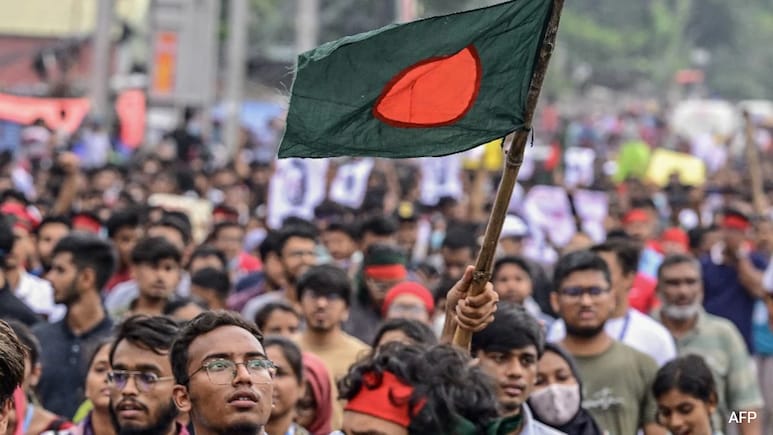
Born out of the protests against ousted prime minister Sheikh Hasina, the National Citizen Party (NCP) in Bangladesh has recently lost prominent faces because of its tie-up with the hardline Jamaat-E-Islami Bangladesh, considered a pro-Pakistan and radical Islamist party.
Critics of the interim government led by chief adviser Mohammad Yunus say the July 2024 anti-government protests in Bangladesh were aimed at bringing anarchy to the streets so that security forces would open fire, leading to anger against the government, leading to its fall. Hasina and her government's ouster would facilitate the lifting of the ban on the Jamaat and pave way for its return to the political mainstream.
Mohammad Ali Arafat, a former minister in the Sheikh Hasina government, said the alliance is not a new development but a confession. "They were never different forces, just different masks," he wrote in a post on X.
I am glad that The NCP–Jamaat-e-Islami lie is over…..
— Mohammad Ali Arafat (@MAarafat71) December 29, 2025
The electoral alliance between @NCP_bd25 and @BJI_Official isn't a new development. It's a confession. They were never different forces—just different masks.
Several voices within the NCP have spoken out against the alliance with Jamaat-E-Islami Bangladesh. A key party leader Mahfuj Alam said that he is not going to be a part of the NCP after the tie-up and also refused a seat he was offered for the 13th national election in February next year. Another key NCP leader Tajnuva Jabeen also resigned from the party and announced she would not contest the elections. She was the party's candidate for the Dhaka-17 parliamentary constituency.
Tasnim Jara, a key face during the protests against Hasina, resigned from the NCP and said she will contest as an independent candidate from the Dhaka-9 constituency.
The NCP emerged as a political force earlier this year with the backing of interim government chief Muhammad Yunus, following the July uprising in 2024 led by students under the banner of Students Against Discrimination.
The Jamaat has been blamed for the violence unfolding on the streets, with cultural institutions, minorities and journalists coming under attack.
The course this alliance is taking has also lent credibility to claims by the banned Awami League that the student's movement in Bangladesh was a front for the Jamaat, and the students who participated in violent protests last year were actually members of the Chhatra Shibir, the Jamaat's student wing. The alleged plan came into existence after Sheikh Hasina banned Jamaat-E-Islami Bangladesh for terrorist activities under the country's anti-terror law.
Track Latest News Live on NDTV.com and get news updates from India and around the world


